
We are reader supported. When you purchase through links on our site, we may earn an affiliate commission. Also, as an Amazon affiliate, we earn from qualifying purchases.
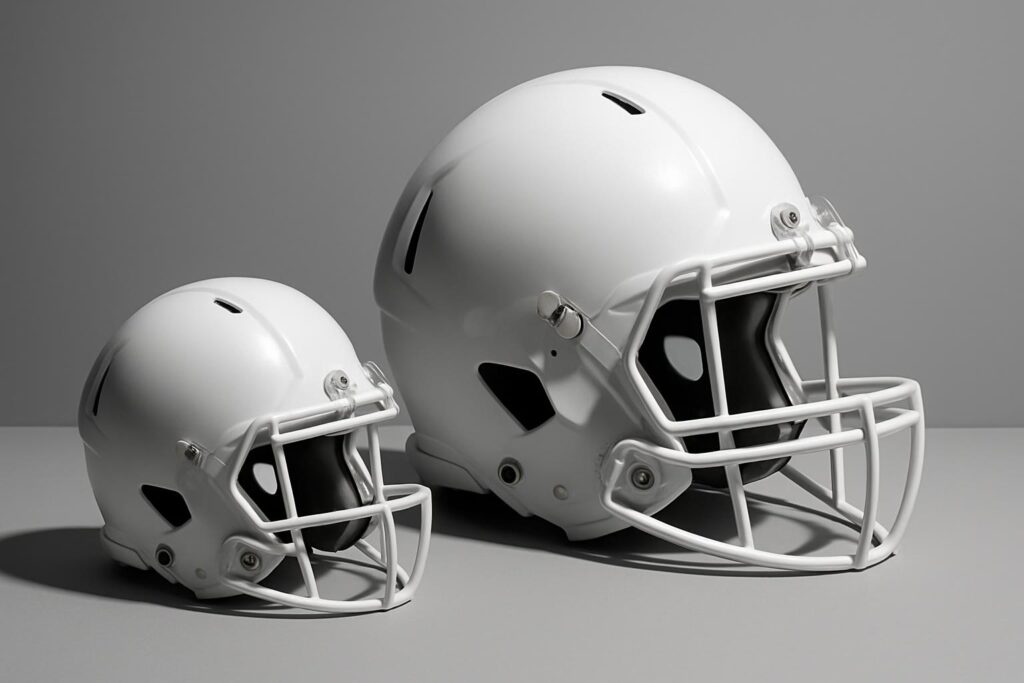
Adults sometimes look at youth football helmets because they are cheaper, lighter, or available in smaller sizes. The question is simple but serious: can an adult safely wear a youth helmet? The short answer is that it depends on head size, certification, fit, and league rules. A poor fit can raise injury risk, while the right sizing and certification can make play safer. This guide breaks down the differences between youth and adult helmets, what makes a fit safe, when a youth helmet could be acceptable for an adult, and how to choose gear that protects well and meets rules. You will also find product picks that help you get a lawful, stable, and comfortable fit.
Why This Matters
Football impacts are complex. A helmet that does not sit correctly can rotate, shift, or dig into the skull at a single point. That movement and pressure reduce how the helmet manages energy. If you are an adult considering a youth helmet, the goal is not just to make it feel snug. The goal is to secure a stable shell and liner system that stays centered over the crown, aligns the jaw pads, and keeps the facemask in the right place while meeting certification and league rules.
Youth vs Adult Helmets: What Actually Differs
Shell size and interior volume
Youth helmets are built with smaller shells and different internal volume ranges to match smaller head shapes. Adult shells scale up not only in circumference but also in depth and ear-to-jaw geometry. Even if a youth helmet can be pulled on, the crown height, ear hole alignment, and jaw pad angles may not match an adult head.
Liner materials and energy management
Modern helmets use TPU, RHEON, or multi-density foams tuned for typical athlete mass and speed at each level. Youth systems expect lower impact speeds and lighter bodies. Adult liners frequently use stiffer or multi-stage systems designed to manage higher energy loads. A mismatch can undermine performance, even if the helmet feels tight.
Weight and neck strain
Youth helmets are often lighter to reduce neck fatigue for younger athletes. Adult helmets can be heavier due to larger shells, thicker liners, and added hardware. If an adult uses a youth helmet to chase lower weight alone, the tradeoff in impact management and fit can be unacceptable.
Certification and standards
Both youth and adult helmets can carry NOCSAE certification. However, reconditioning, recertification availability, and model-specific approvals differ. Many leagues require a current NOCSAE seal, and some specify adult-rated models for adults. Always verify current certification and follow your league’s rules.
The Safety Risk Of Wearing A Youth Helmet As An Adult

Fit mismatch and rotational movement
A helmet that does not properly cradle the crown and lock the occipital region can rotate during contact. Rotation means more relative motion between the brain and skull. Even if the chinstrap feels tight, rotational slop across the forehead and temples signals poor control of impact forces.
Pressure points and numbness
If a youth helmet is too small for an adult head, expect pressure points on the temples or forehead. Over time that pressure can cause headaches, numbness, and skin irritation. In a hit, the helmet may bottom out at those tight points rather than distributing energy through the liner system.
Vision, jaw coverage, and facemask alignment
Eye-port height and jaw pad placement must line up with your eyes, cheekbones, and jaw. Misalignment reduces field of view and can expose your jaw. A misaligned facemask can also increase the chance of catching or snagging during play.
League compliance and liability
Adult leagues often specify minimum helmet standards, reconditioning timelines, and NOCSAE labeling. Using a youth helmet when your league specifies adult gear can lead to disqualification, loss of insurance coverage, or legal complications after injury.
When Could A Youth Helmet Be Acceptable For An Adult?
Adults with small head circumference
Some adults have head measurements within a youth XL range. Brand size charts often show overlap. For example, adult Small can sit around 20.5 to 21.5 inches, while youth Large or XL often covers a similar band. If your head fits firmly within the youth size range and the helmet sits correctly with proper jaw pad engagement, you may achieve a safe fit.
Overlap zones require careful try-on
Even in overlapping measurements, shapes differ across brands. Two heads with the same circumference can have different widths and crown heights. A proper try-on checks crown pressure, ear alignment, and jaw pad contact simultaneously. Without all three, do not use a youth shell for adult play.
Must-have checks before using a youth helmet
- A current NOCSAE seal intact on the helmet
- Reconditioning status in line with league requirements
- Correct eye-port height and facemask alignment
- Jaw pads that contact the mandible, not just soft tissue
- Stable crown with minimal rotational play when the chinstrap is buckled
Step-by-Step Fit Checklist
1) Measure first
Use a soft tape around the head, just above the eyebrows and ears. Write down the circumference in inches and centimeters. Use manufacturer charts to shortlist sizes before you try on.
2) Crown fit and ear alignment
Put the helmet on by expanding the opening with your hands at the ear holes and rolling it over the crown. The crown should sit level, not high. Ear holes should line up with ears without pinching.
3) Jaw pad engagement
Jaw pads should touch the bony jawline, not just cheeks. If they float or only compress soft tissue, the helmet may rotate or shift during contact.
4) Eye-port and facemask position
Your eyebrows should be just below the top of the eye-port with clear forward and peripheral vision. The facemask should not obstruct view or sit too close to the nose.
5) Chinstrap security
All four points buckled. Adjust until the strap sits centered on the chin with firm tension. Shake test the helmet with your hands; the skin of your forehead should move with the helmet, and there should be minimal independent rotation.
6) Pressure check
Wear the helmet for several minutes. Watch for hot spots on forehead and temples. If you feel sharp pressure that worsens, try different jaw pads, air adjustments, or a different shell size.
7) Movement test
Look up, down, left, right. The helmet should track without lag. If it shifts, change pad sizes or consider a different model.
Safer Alternatives To A Youth Helmet For Adults
Adult models that fit small heads
Several adult helmets offer sizes that fit smaller heads while keeping adult-level liners and shell geometry. This is the best path for adults who fall near overlap sizes.
Adjustable air-liner systems
Helmets with inflatable or adjustable liner systems allow fine-tuning fit around the crown, sides, and rear. This can resolve small gaps without over-tightening the chinstrap.
Professional fitting and reconditioning
Teams and retailers with trained fitters can measure, fit, and recommend the right shell and pad set. Follow manufacturer guidance on reconditioning intervals to protect the liner performance and keep certification current.
Common Sizing Overlaps And How To Use Them
If your head measures near 20 to 21 inches, you may sit at the boundary between youth XL and adult Small for some brands. Use overlap to try both shells, but make the decision by fit behavior, not by label. The correct pick is the one that meets all fit checks without pressure points, aligns the facemask and ear holes, and meets your league’s equipment rules.
Reconditioning And Certification: What To Check
Know your league’s requirements
Most adult leagues require a current NOCSAE seal and adherence to manufacturer reconditioning intervals. Ask your league for written equipment rules to avoid surprises on game day.
Reconditioning intervals
Depending on usage and model, helmets often need reconditioning every one to two seasons. Reconditioning inspects the shell, replaces worn padding, and verifies hardware integrity. Keep documentation for coaches and officials.
Facemask and hardware
Use compatible facemasks and hardware specified by the helmet manufacturer. Mixing parts can change energy pathways and violate certification.
Troubleshooting Fit Problems
Helmet rocks front to back
Increase crown support or rear padding, and recheck chinstrap tension. If the shell sits too high, size up or change the model.
Helmet rotates side to side
Increase jaw pad thickness in small steps and verify ear hole alignment. Inflate side pads if available. Re-test with game-speed movements.
Forehead pressure and headaches
Depressurize or reduce pad thickness at the front and ensure the crown is not sitting too low. If pressure persists, try a different shell size or shape.
Quick Answers
- Can adults wear youth helmets? Only if head size truly fits the youth shell and all fit checks and league rules are met. For most adults, an adult model is safer and more compliant.
- Is snug the same as safe? No. Safe fit means crown stability, jaw pad engagement, proper eye-port position, and minimal rotation.
- Do accessories fix a wrong size? No. Pads and straps fine-tune a correct shell size; they cannot compensate for a major mismatch.
- Do mouthguards reduce concussions? No. They protect teeth and may help jaw comfort and stability.
- Should I modify padding beyond manufacturer instructions? No. Unapproved modifications can compromise protection and certification.
Putting It All Together
An adult can safely wear a youth football helmet only in a narrow set of cases where head size truly matches the youth range and all fit criteria are met. The helmet must carry proper certification and comply with league rules. For most adults, a small adult helmet with adjustable liner systems is the safer and more reliable path.
Start with accurate measurements. Use the fit checklist to verify crown stability, jaw pad engagement, and eye-port alignment. Use adult-certified models where possible, then fine-tune with air adjustments, chinstrap upgrades, and correct jaw pad sizing. Recondition on schedule and document compliance. With the right shell, pads, and setup, you protect yourself better, see the field clearly, and play with confidence.
Conclusion
Helmet fit is not about a label that says youth or adult. It is about geometry, liner performance, and league compliance working together. If you are an adult on the cusp of youth XL and adult Small, test both, but commit only to the model that passes every fit checkpoint without compromise. For most players, that will be an adult helmet sized and tuned correctly. Use the product options above to lock in a secure, stable setup, and keep your gear maintained and certified so your protection works when you need it most.