
We are reader supported. When you purchase through links on our site, we may earn an affiliate commission. Also, as an Amazon affiliate, we earn from qualifying purchases.
A backstop is the quiet hero of a ballfield. It stops wild pitches, foul tips, and overthrows. It protects fans, speeds up play, and shapes how a field looks and feels. If you build, upgrade, or manage a diamond, you need to understand what a backstop is, how big it should be, and what rules keep people safe. This guide breaks it down with clear ranges, practical choices, and field tested safety standards you can use today.
What Is a Backstop
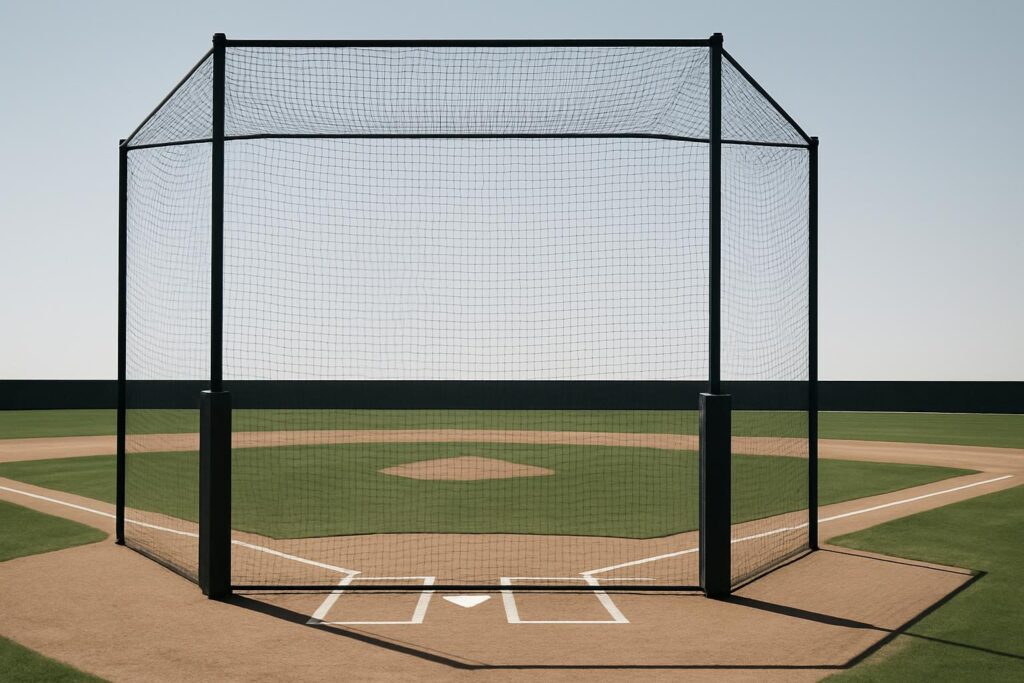
A backstop is a fixed barrier behind home plate designed to block and contain baseballs or softballs. It is usually built from tensioned netting or chain link fencing with posts, rails, and gates. It extends up and out to the sides to protect spectators and keep balls in the field area. A well designed backstop balances safety, sightlines, and maintenance needs. It also gives catchers and umpires enough room to work without turning every missed pitch into extra bases.
Why Backstop Placement Matters
Safety for spectators and staff
The backstop is the first line of defense between high speed balls and the crowd. Its placement and height decide how often balls enter the seating area. Proper angles and overhangs reduce ricochets and pop ups that climb the fence and drop into walkways. Padding reduces impact injuries when players chase foul balls at full speed.
Game flow and operations
Distance from home plate affects passed ball outcomes and how quickly balls return to play. Gates and access points control how dugout staff and umpires move. Clear, gap free construction means fewer delays and fewer game stoppages for ball retrieval or repairs.
Spectator experience
Good net choice and correct post spacing protect fans without ruining views. An overbuilt fence with glare or thick mesh can frustrate fans. A modern low profile net, installed with proper tension, can almost disappear to the eye while still stopping the ball.
Core Dimensions at a Glance
Dimensions vary by level, site constraints, and league guidance. In community and school fields, you will often see the backstop 25 to 40 feet from home plate. Many college and professional venues push that distance farther, often 50 to 60 or more feet, to create seating zones and camera wells. Heights commonly range from 20 to 30 feet for amateur fields, with taller structures in bigger venues. Width should wrap well past the foul lines to catch line drive fouls and overthrows. Overhangs and backward tilts help catch looping fouls that would otherwise clear a vertical wall.
These are working ranges, not rigid codes. Always check local building requirements and your governing body before you build.
Baseball and Softball Backstop Dimensions
Distance from home plate to the backstop
For youth diamonds and many high school fields, a distance in the 25 to 40 foot range is common. At that range, a missed pitch does not always advance a runner, yet there is enough foul ground for catchers to track pop ups without crashing into the barrier on every play. In college and professional parks, you will often find more space, in the 50 to 60 plus foot range, to support premium seating, broadcast positions, and wider walkways.
Field constraints may force compromises. If your site is tight, choose a distance that preserves safety first, then adjust height and overhang to reduce ball loss and spectator risk. If you have room to spare, do not overdo foul territory to the point that it distorts play. Consistency across a complex is valuable for training and fair competition.
Height of the backstop
Heights in the 20 to 30 foot range are common for amateur fields. Taller systems are used where seating is close, where foul pops are frequent, or where nearby roads and sidewalks need extra protection. Height works best when paired with a backward angle or short overhang near the top. A vertical wall alone can let looping fouls climb and escape. Aim for a balance that protects without becoming a wind sail that is hard to maintain.
Width and wrap around the plate
A good backstop does more than sit behind the catcher. It should wrap beyond each foul line to catch line drives and errant throws that head toward the dugouts. Many fields carry the side wings 20 to 30 feet or more past each line. Curved or angled wings help redirect balls downward rather than ricocheting them toward spectators. The total width should feel generous in front of the primary seating zones and walkways.
Overhang and angle
A backward lean or an overhang near the top reduces balls that climb the fence and land behind it. Even a modest backward tilt can change outcomes. Some fields add a three to six foot overhang with secondary netting angled toward the field. The goal is to capture lofted fouls without blocking the sky view for fans.
Openings, gates, and access
Plan gates for umpire access, maintenance, and emergency egress. Gates should be wide enough for small equipment but secure when closed. Hinges and latches must not leave gaps big enough for a ball to pass. Gates should swing away from the field of play. Cover or pad any protruding hardware inside the player area.
Materials and Construction Choices
Netting versus chain link fencing
Netting offers better sightlines and absorbs ball energy well. Modern knotless or low profile nets can nearly vanish to the eye, which improves the fan experience. They tend to reduce glare and harsh shadows. They also demand correct tension and regular inspection for wear points.
Chain link is rugged and familiar. It resists vandalism and needs less frequent tensioning. It can produce more ricochets and can be harder on balls and equipment. Visibility can suffer under certain light angles. If you use chain link, choose a mesh size that reliably stops your game balls and use padding on the rails and posts to reduce injury risk.
Posts, footings, and rails
Posts set in proper footings anchor the system. Heavier posts reduce sway and vibration, which lowers noise and fatigue on connections. Top and bottom rails prevent the net or fence from billowing. For netting, include a tensioning system with cables, turnbuckles, and attachment points that allow even load and clean alignment. For fencing, brace corners and gate posts to stop sag over time.
Padding and edge protection
Players will chase fouls into the backstop at speed. Pad the lower sections where impacts are likely. Cover posts, corners, and the bottom rail to limit injury risk. Padding should be durable, weather resistant, and continuous with no sharp transitions. Extend padding far enough along each wing to protect players on foul pops near the lines.
Safety Rules You Should Put in Writing
Field setup rules
Install the backstop with no gaps large enough for a ball to pass. Cover or cap all exposed hardware on the field side. Latch all gates during play unless used for active access by authorized staff. Maintain a clear zone between the backstop and spectator seating or walkways where practical. Mark restricted areas for players and media to prevent crowding near gates.
Game day rules for players and coaches
Only rostered players, coaches, and umpires are allowed in the area behind the plate and along the inner face of the backstop. Do not lean equipment against netting or chain link. Do not climb or hang from the structure. Keep on deck circles and bat racks far enough from the fence to avoid ricochet injuries. Report any loose panels, torn netting, or broken latches immediately.
Spectator and venue rules
Keep walkways behind the backstop clear. Post warnings at entrances about foul ball hazards. Strollers, coolers, and chairs should not block gates or routes used by emergency staff. Spectators should not stand or sit in unprotected zones behind the wings. Venue staff should monitor sections where balls routinely land and remove standing crowds in these areas.
Maintenance and inspection rules
Inspect the backstop before each game day. Check net tension, cable clamps, turnbuckles, and anchor points. Look for corrosion at posts and footings. Confirm padding is secure and covers all strike zones. Test all gates for smooth operation and full closure. After severe weather, repeat checks before play resumes. Document inspections and repairs.
Weather and temporary nets
High winds can stress tall structures. If your design includes removable or retractable nets, follow the manufacturer procedure to lower or secure them when wind thresholds are met. When using temporary or portable backstops for practice, stake and weight them properly, and limit use to conditions they are rated for.
Youth, School, College, and Pro Differences
Youth leagues
Youth fields often use shorter distances from home plate to the backstop, in the 25 to 35 foot range, with heights around 20 feet. The focus is safety first and easy ball retrieval for volunteer crews. Use generous padding and avoid hardware exposure at kid height. Choose netting or fenced systems that stand up to heavy community use.
High school
Many high school fields sit in the same distance range as youth fields but may extend height and width to cover larger spectator sections. Camera platforms, bullpens, and batting tunnels near the backstop create more traffic and call for extra gates and clear markings. Netting upgrades can improve visibility for bigger crowds.
College and professional
Expect longer plate to backstop distances, taller structures, and wide wrap to protect premium seating and media positions. Netting systems are common to improve the fan view. Materials, anchors, and tension hardware scale up to handle greater loads and more complex geometry. Regular professional inspections are standard practice.
Softball Notes
Fastpitch specifics
Fastpitch softball uses a smaller field with shorter foul territory, so the backstop is often on the closer side of the typical range. Many fields keep 25 to 35 feet from the plate to the barrier to preserve the running game while still limiting passed ball advancement. Height and wrap remain important because slap hitters and bunts generate sharp fouls toward the wings. Good padding and a modest overhang pay off in safety.
Slowpitch and recreational fields
Recreational softball fields can use flexible solutions if space is tight. Durable chain link with padding works well in parks with heavy public use. Where multipurpose use is common, a netting system with removable panels may help with off season events. Keep gate rules simple and visible, since mixed user groups change daily.
Multi Sport and Practice Backstops
Soccer and lacrosse ball stop nets
Behind soccer goals and lacrosse creases, tall ball stop nets protect roads, houses, and walkways. Heights can match or exceed baseball backstops when neighbors are close. Use similar safety practices, including secure tensioning, clear zones behind the net, and routine inspections for wear.
Batting cages and portable backstops
In practice areas, portable backstops and batting cage ends function like mini backstops. They must be anchored, weighted, or staked to prevent tip over. Netting should be free of holes and grommets should be intact. Position portable units far enough from walls and fences to avoid rebounds toward hitters and catchers.
Special use and higher energy sports
Some sports and training environments produce higher energy impacts. In these cases, increase standoff distances, reinforce frames, and confirm that net or fence specifications match the expected loads. Keep spectators behind rated barriers at all times.
Common Mistakes and How to Avoid Them
Too close or too far
Placing the backstop too close to the plate can create frequent collisions and ricochets. It can also distort the running game. Pushing it too far back can send every passed ball to the screen and slow play. Work within the common ranges for your level and test sightlines and catcher movement during scrimmages before you commit.
Gaps and ricochets
Small gaps add up to big risks. A ball size gap under the bottom rail or at gate edges will be found within an inning. Close all seams, pad all posts, and angle wings to redirect balls downward. For chain link, avoid cut edges that face the field side. For nets, use proper lacing at panel joints.
Poor sightlines and glare
Thick fence wires or shiny finishes can block views and cause glare. Choose netting or finishes that reduce visual noise. Align cables cleanly and keep tension even so the surface stays flat. Test from several seating angles before finalizing the design.
Skipping maintenance
Loose cables, torn net corners, and rusted bases grow from small issues to big failures. Schedule checks, record them, and fix problems fast. After storms, assume a second inspection is needed. Keep spare laces, clips, and padding on hand to avoid game cancellations.
Planning Your Backstop: A Step by Step Checklist
Define your level of play, typical crowd size, and nearby hazards that need protection. Map clearances to dugouts, walkways, and seating. Choose a target plate to backstop distance within the common range for your level. Select height and wrap to cover the real spectator footprint. Decide on netting or chain link based on sightlines, security, and maintenance capacity. Design for gates, access routes, and emergency egress. Add padding to all impact zones and cover exposed hardware. Specify tension systems or braces that match your region’s wind and weather. Plan inspection routines, spare parts, and a repair workflow. Confirm compliance with local codes and league guidance before you build.
Budget and Lifecycle Costs
Upfront costs include posts, footings, panels or nets, cables or rails, padding, and gates. Netting can cost more to install due to tension systems but can save money on spectator experience and broadcast quality. Chain link can be simpler to install and harder to damage, but may need more padding and can reduce the premium value of seats behind the plate. Over the lifecycle, expect to retension nets, replace worn panels, refresh padding, and repaint or treat steel components. Plan an annual budget line for inspections and minor repairs. Over time, a well chosen system that matches your true use will cost less than a mismatched one that needs constant work.
Conclusion
A backstop is a safety system, a performance feature, and a fan experience tool in one. Get the distance, height, and wrap within proven ranges for your level. Choose materials that fit your venue and operations. Write and enforce clear safety rules. Inspect and maintain the structure like the critical equipment it is. Do this well, and your field will be safer, games will move faster, and fans will enjoy better views with less risk.
FAQ
Q: What is a backstop and why do fields need it
A: A backstop is a barrier behind home plate that stops errant pitches, foul tips, and overthrows. Fields need it to protect spectators, speed up play, and create a safe work area for catchers and umpires.
Q: How far should the backstop be from home plate
A: In community and school fields, a distance in the 25 to 40 foot range is common. College and professional venues often use 50 to 60 or more feet to create seating and media space. Always check local requirements before you build.
Q: How tall should a baseball or softball backstop be
A: Heights in the 20 to 30 foot range are common for amateur fields, with taller structures used where seating is close or nearby areas need extra protection. Height works best with a backward angle or a modest overhang.
Q: Should I use netting or chain link for a backstop
A: Netting offers better sightlines and absorbs ball energy well but needs correct tension and regular checks. Chain link is rugged and familiar but can create more ricochets and reduce visibility. Choose based on safety, maintenance capacity, and fan experience.
Q: What safety rules should be posted for the backstop area
A: Keep gates latched during play, eliminate gaps, pad posts and rails, restrict access to rostered personnel, keep walkways clear, post foul ball warnings, and inspect the structure before each game day.