
We are reader supported. When you purchase through links on our site, we may earn an affiliate commission. Also, as an Amazon affiliate, we earn from qualifying purchases.
The squeeze play is one of baseball’s most direct ways to turn a runner on third base into a run. It looks simple. The batter bunts. The runner sprints home. The defense has seconds to react. But beneath that simple picture are details that decide success. There are two versions you must understand. The suicide squeeze and the safety squeeze. They share a goal but use different timing and risk. Master both and you add a tool that wins close games.
What the squeeze play is in one clear idea
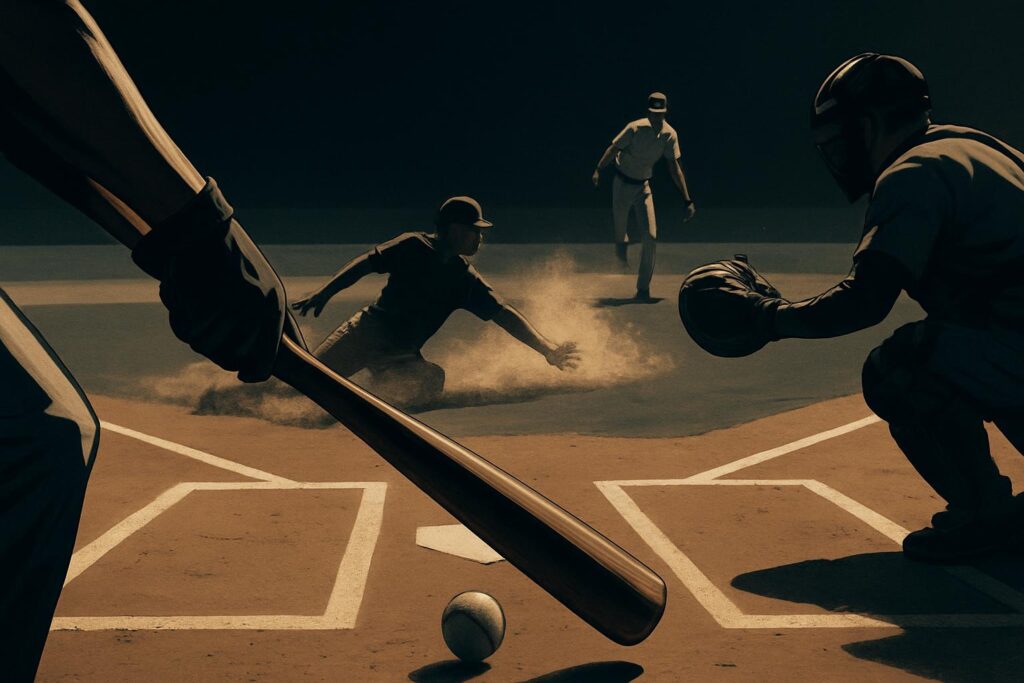
A squeeze play is a planned bunt with a runner on third base designed to score that runner. The offense trades the batter’s swing for controlled contact and placement. The bunt forces the defense to field a moving ball while a fast runner crosses home.
Why the squeeze works
The squeeze uses pressure, timing, and geometry. A soft bunt on the ground makes the pitcher, corner infielders, or catcher move off their spots. That movement creates time. The runner needs only that fraction of a second to touch home plate. The best squeezes make the defense choose between an out at first or a desperate, low percentage play at the plate.
Suicide squeeze explained
Core definition
In a suicide squeeze, the runner on third breaks for home as the pitcher commits to the plate. The batter must get the bunt down. If the batter misses or pulls back, the runner is usually out by a wide margin. The risk is high, but so is the pressure it places on the defense.
Setup and timing
Timing is the play. The runner at third leaves on the pitcher’s first move to the plate. The batter squares early enough to be under control yet late enough to avoid tipping. Many teams square when the pitcher starts forward, not during the set. The bunt must be deadened on the ground. Pop ups lose the run and often get a double play.
Runner responsibilities
The runner commits. No hesitation. Get a lead you can trust. Watch for inside moves and daylight plays. Once the pitcher goes home, explode. Slide feet first unless a hook slide or headfirst slide helps you avoid a tag. Your eyes go to the angle of the bunt. If it dies out front, aim for a hard, straight line to the plate. If it goes toward first, aim for the front edge of the plate to beat a toss. Your job is to score. Do not stop to read the play. The call removed the read.
Batter responsibilities
Your bunt must be on the ground. Prefer first base line if the first baseman is deep or slow to charge. Prefer third base line if the third baseman is back or shaded. Avoid the pitcher. Deadening the ball is more important than perfect placement when the runner is in a full commit. Use a relaxed grip high on the bat. Control the angle with the barrel and your top hand. Bend the knees to meet the ball, do not stab. On high pitches, adjust with your legs but keep the bat above the ball. Anything to get it down fair.
When teams call a suicide squeeze
– One out or sometimes two outs if the batter has strong bunting skill.
– Tie game or one run game late.
– Bottom of the order or a hitter in a slump.
– Pitcher on the mound struggles to field bunts or rushes throws.
– Infield back or corners slow to charge.
Risks and penalties for failure
– Missed bunt almost always means the runner is out at the plate.
– Pop up bunt can become a double play.
– Strike zone pressure increases. Pitchers throw high fastballs to force pop ups.
– Early square can tip the defense, leading to a pitch out.
Safety squeeze explained
Core definition
In a safety squeeze, the runner at third waits to see the bunt down before breaking hard for home. The batter still bunts with the goal to score the runner, but the runner retains a read. If the bunt is too hard back to the pitcher, or it pops up, the runner can hold and avoid a cheap out at the plate.
Setup and timing
The batter squares later than in a suicide squeeze. The runner stretches a controlled lead and commits only when the ball is deadened on the ground. The offense trades some scoring certainty for reduced risk. The play can still score the run if the bunt pulls the ball to the corners and away from the pitcher.
Runner read and break
Your eyes go to the angle and speed off the bat. If the bunt is soft and toward first or third, break. If the bunt is hard to the pitcher, stop and return. The safety squeeze protects the runner from an automatic out. It demands discipline. Do not drift too far down the line on a bad bunt. Trust the read. Go hard when you commit.
Batter plan and placement
You still need a ground ball. In a safety squeeze, placement becomes more important than in a suicide squeeze. You win when the bunt forces a defender other than the catcher or pitcher to field it. Soft bunts hugging the first base line are ideal because the first baseman must field and then throw an awkward flip to the catcher, or the pitcher must cover. Third base line bunts force long throws across the runner’s lane. Up the middle is the worst because the pitcher has an easy play at the plate.
When to call a safety squeeze
– Less than two outs when you want to protect the runner.
– Early or middle innings when you do not want to burn a sure out at the plate.
– Batter has average bunting skill, runner has above average speed.
– Defense plays back or is out of position.
Risks and tradeoffs
– If the bunt is not well placed, the defense can get an out at first and hold the runner.
– Late squares can lead to strikes if the batter is not comfortable bunting with two strikes.
– The play can look passive if execution lacks conviction.
Suicide squeeze vs safety squeeze
– Commitment level: Suicide is full commit by the runner. Safety is read and react.
– Risk: Suicide is high risk and high pressure. Safety is moderate risk with protection.
– Timing: Suicide trigger is pitcher’s move. Safety trigger is ball on the ground.
– Bunt priority: Suicide values any fair ground bunt. Safety values placement away from the pitcher.
– Use case: Suicide late and close with a skilled bunter. Safety more flexible across innings and lineups.
Game context and decision framework
Inning, score, and outs
– Early innings: Safety squeeze fits better. You want the run but do not want to gift an out at the plate.
– Middle innings: Either play can work based on matchups.
– Late innings: Suicide squeeze can be the difference in a one run game. One out is the sweet spot because the ground ball double play risk remains if you swing away.
Batter profile
– A confident bunter who deadens the ball is key for a suicide squeeze.
– For a safety squeeze, average bunt skill is enough if the batter can aim to the corners.
– Left handed batters often execute bunts up the first base line more easily because momentum carries them that way. Right handed batters may be more comfortable bunting toward third.
Runner profile
– For suicide, choose a runner with quick first step and confidence in contact sliding. Fearless and decisive matters.
– For safety, choose a runner with good reads and quick decision making. Pure speed helps but good instincts turn close plays.
Defensive alignment
– Corners playing back: Both squeezes gain value.
– Corners in or charging: Suicide still works if the bunt is soft and angles away. Safety needs sharper placement.
– Pitcher fields well: Favor safety or consider other options.
Pitcher and pitch mix
– High fastball tendency: Harder to deaden. Better for safety where the runner can hold on a miss.
– Off speed or sinkers: Easier to get down. Favors suicide if you trust timing.
Execution details that decide races at the plate
Signs and concealment
Use clear, simple signs in the dugout and on base. Add decoys to avoid tipping. Do not overcomplicate. Some teams use verbal triggers or timing cues. Practice with real tempo so everyone recognizes the moment. Concealment matters. The less often you square early in other counts, the harder it is for the defense to sniff a squeeze.
Bunt technique fundamentals
– Grip the bat with the top hand near the label and bottom hand relaxed. Do not choke too tight.
– Angle the barrel toward your target line. Do not jab. Cushion the ball.
– Lower with your legs to meet high pitches. Rise with your legs to meet low pitches. Keep the bat head above your hands to reduce pop ups.
– Track the ball into the barrel. Avoid last second stabs.
– Bunt strikes. With two strikes, many hitters will still attempt the bunt on a squeeze because the play is on. Know your coach’s policy.
Placement targets based on defense
– First base line: Ideal against a right handed pitcher who falls off to third. Forces the first baseman or pitcher to make a touch play at the plate.
– Third base line: Ideal if the third baseman is deep or guarding the line. Longer throw across home.
– Dead zone in front of the plate: Works on suicide if it dies perfectly. Risky on safety because the catcher can jump on it.
– Middle: Avoid. Pitcher fields and throws home easily.
Runner lead, shuffle, and lane
– Start with a lead you can defend against pickoffs. Read the pitcher’s rhythm.
– On suicide, time your first step with the pitcher’s front side move. On safety, gain rhythm steps but hold until the bunt is down.
– Run in a straight path to the front edge of the plate. Give the batter’s bunt space. Slide to the outer edge if the throw beats you.
Communication and contingency
– Pre pitch plan: If the pitcher throws over, reset. If the defense crashes, decide whether to keep the play on or switch to a slash or fake.
– Batter awareness: If you get a pitch out of the strike zone you can still bunt it if you can control it. On a suicide squeeze, reaching a ball off the plate can be the difference between a run and an easy tag.
– Runner awareness: If the batter misses on a safety squeeze, slam on the brakes. On a suicide squeeze, continue through and try to create a rundown to extend the inning for the next hitter.
Defensive counters and offensive responses
Corners charging or playing in
Defenses bring corner infielders in or on the grass to shrink angles. The offense responds with harder fake square, slash plays, or bunts aimed behind the charging fielder. With corners in, a soft bunt that passes the first wave can still work.
Pitch out and high fastball
Pitchers will pitch out or aim high in the zone. Pitch outs ruin most squeezes. The offense counters by varying the square timing and by not overusing obvious squeeze counts. High fastballs require the batter to stay above the ball with the barrel and use the legs to absorb contact. On a safety squeeze, the runner can hold if the pitch is unhittable.
Catcher tactics
Catchers cheat forward, call for high heat, or spring on anything near the plate. They may fake to first after looking the runner back. Offenses answer with earlier bunts, angle discipline, and runs on clear placement. The goal is to keep the catcher moving laterally, not straight ahead.
Pickoffs and timing plays
Teams target the runner at third with daylight plays or timing looks. The best counter is clean rhythm and no flinch. Do not lean. If the pitcher steps off, reset and keep the call if the coach still wants it.
How the offense adjusts mid at bat
– If the defense shows bunt coverage early, consider switching to a safety squeeze from a suicide squeeze.
– If the corners are reckless, bait them with a slash play later in the game.
– If the pitcher cannot throw strikes under pressure, fake squeeze and take a pitch to force a mistake.
Coaching points and common mistakes
Youth and amateur focus
Keep it simple. Teach the difference between suicide and safety first. Emphasize bat control and soft hands. In young levels, bunts that simply hit dirt can win you games. Practice on real dirt and grass so players learn how balls die or push forward. Teach runners proper slides to protect themselves at the plate.
Practice drills that build success
– Angle drill: Batter sets different bat angles to push toward first or third. Work on holding the angle through impact.
– Deaden drill: Toss high fastballs for batters to absorb with the legs while keeping the bat head stable.
– Runner read drill: Coach rolls balls to spots. Runner at third reads break or hold. Repeat until the break becomes instinctive.
– Full rep squeeze: Simulate with live pitcher. Runner and batter learn game speed timing and communication.
Avoid these errors
– Stabbing at the ball. It leads to pop ups.
– Bunting too hard at the pitcher. It kills the play.
– Runner hesitating on a suicide squeeze. It guarantees an out.
– Batter pulling the bat back late and getting called on strikes. Commit to the plan and know the count policy with two strikes.
Metrics and expectations
What success looks like
On a suicide squeeze, a fair ground bunt in almost any direction creates a strong chance to score because the runner leaves on the pitch. On a safety squeeze, a soft bunt toward first or third that draws a fielder away from the plate gives the runner the go cue. Success is not only the run. It is also avoiding a double play and flipping momentum in your favor.
Tradeoffs vs swinging away or a standard sacrifice
Swinging away risks strikeouts and pop ups. A standard sacrifice bunt moves a runner from second to third or first to second but does not score the run. A squeeze directly targets the run on third. The tradeoff is sacrifice of power contact for controlled contact. It is a choice to value one run now over a potential bigger inning.
When not to squeeze
– Two outs with a weak bunter against a pitcher who fields well. The risk outweighs the odds.
– Hitter is hot and the pitcher is on the ropes. Let the batter swing.
– The defense clearly expects it and shows a pitch out or extreme charge tendencies.
Variations and wrinkles
Slash play
The batter shows bunt early, then pulls back and swings if the corners crash. This punishes aggressive bunt coverage. It also forces defenses to think twice the next time you square.
Drag squeeze with a lefty
A left handed batter drags a bunt up the first base line while the runner breaks on contact or on read. It looks like a normal drag bunt but with an added scoring threat. It can act like a safety squeeze if the runner reads down angle.
Fake squeeze and steal
Show bunt to draw attention. Pull back and send the runner from third on a delayed break if the defense drifts. This is niche and needs practice. It works best when the defense overreacts to bunt looks.
Step by step checklists
Suicide squeeze checklist
– Confirm the call and count. Everyone on the same page.
– Runner locks a safe, aggressive lead. Read the pitcher’s first move.
– Batter squares on pitcher’s forward move. Quiet body, soft hands.
– Bunt any strike you can deaden on the ground. Prefer corners, avoid the pitcher.
– Runner explodes on the move to the plate. Commit to the slide. Do not hesitate.
– Batter drops the bat and runs to first. Force the defense to make a choice.
Safety squeeze checklist
– Confirm the call and runner read rule.
– Batter squares later, focuses on placement to a corner.
– Runner extends a ready lead and stays balanced.
– Once the bunt is down and soft, runner commits. If hard to the pitcher, hold or return.
– Batter runs through to first. Runner slides at the plate based on the throw angle.
Putting it together
A squeeze play is not luck. It is a deliberate, rehearsed answer to a tight game. The suicide squeeze is a bold choice that forces the issue and trusts the batter to make contact. The safety squeeze is measured, keeps a layer of protection, and still leverages pressure. Both plays demand timing, discipline, and clear roles. When you train them with intent and pick smart moments, you convert third base into a run with a high rate and shake the other team’s confidence.
Conclusion
If you can define the squeeze, choose the right version, and execute the basics, you add a real scoring weapon. Teach your hitters to control the barrel. Teach your runners to read and commit. Learn to read defenses and pitcher habits. Use suicide when you need to force the run and trust your bunter. Use safety when you want the run but will not give the defense an easy out. Practice signs, rehearse at game speed, and build conviction. The squeeze is clear, direct, and powerful when you master the details.
FAQ
Q: What is the difference between a suicide squeeze and a safety squeeze
A: In a suicide squeeze the runner breaks for home as the pitcher commits and the batter must get the bunt down. In a safety squeeze the runner waits to see the bunt on the ground and then breaks based on the read.
Q: When is a suicide squeeze a good choice
A: It is strong late in a one run game with one out when you trust the batter’s bunting and want to force the defense to make a quick play.
Q: Where should the batter try to place the bunt on a squeeze
A: Aim for the first or third base line to pull a corner infielder away from the plate and avoid the pitcher. Soft placement is more important than perfect aim on a suicide squeeze.
Q: What is the main risk of a suicide squeeze
A: If the batter misses the bunt the runner is usually out at the plate because the runner is already committed.
Q: How does the runner decide when to go on a safety squeeze
A: The runner reads the bunt. If it is soft and toward a corner the runner breaks. If it is hard to the pitcher the runner holds or returns.