
We are reader supported. When you purchase through links on our site, we may earn an affiliate commission. Also, as an Amazon affiliate, we earn from qualifying purchases.
Sticky stuff check is a simple idea with big impact. Umpires stop the game for a short moment, walk to the pitcher, and check for illegal grip-aids. They feel the hands. They look at the glove. They touch the cap and belt. If anything feels too sticky, the pitcher is in trouble. This routine scene has changed modern pitching and it starts with one focus point many fans miss. The glove.
This guide breaks down how glove inspections work, why they matter, and what counts as legal or illegal. You will learn what umpires look for, what players can do to stay compliant, and how these checks affect the flow and fairness of the game. Keep reading to understand the full picture, one clear step at a time.
Introduction
Pitching is control. A firm grip leads to sharper spin, better location, and safer at-bats. But too much grip changes the sport. Sticky stuff checks are designed to set a fair boundary. They limit unfair spin boosts without removing all grip help. The policy targets substances that create extreme tack. The glove inspection is central because the glove can hide residue and transfer it back to the ball or fingers.
Fans see the quick inspection and move on. Coaches and players know it is not minor. A failed check means an ejection and league review. Even a clean check can shift a pitcher’s rhythm. Understanding the process helps you read the moment, judge the calls, and follow the changes in performance that often follow.
What Is a Sticky Stuff Check
A sticky stuff check is an on-field inspection by umpires to confirm pitchers are not using prohibited grip-aids. Umpires check the hands, glove, cap, belt, and sometimes other uniform areas. The purpose is simple. Keep the game balanced, protect hitters, and enforce existing rules about foreign substances.
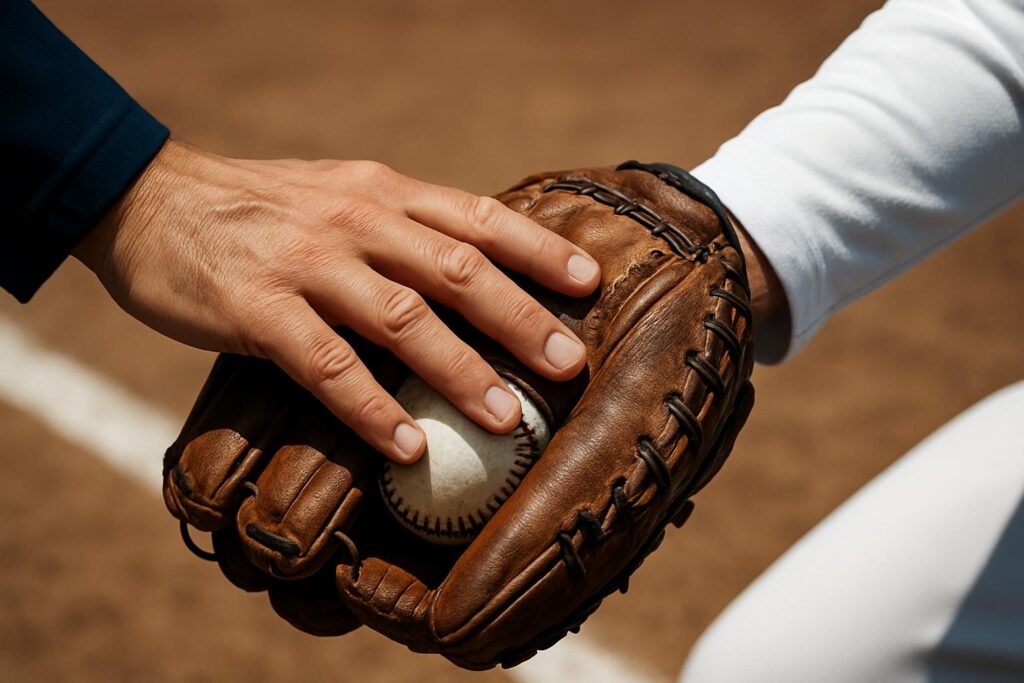
The check focuses on feel and visual cues. Umpires press fingers to the pitcher’s palms and fingertips. They run hands across the glove surface and inside the webbing. They may touch the cap brim and belt buckle area. If anything feels unusually tacky, thick, or residue-heavy, they escalate.
Why the Glove Matters Most
The glove is a prime hiding place. Its leather absorbs residue. Sticky zones can live along the thumb, the inside of the web, or the heel pad. Pitchers might tap that spot between pitches, reloading tack without obvious motion. Loose fibers on leather can also trap residue and reapply it later. A glove with a shiny patch that looks out of place often draws attention. A glove that leaves dust or dirt clinging in clumps can also be a signal of sticky areas.
Umpires know the patterns. They start with the hands, then move right to the glove. They check the stitch lines, the fingers, and the area that contacts the hand between pitches. If the feel is wrong, they take the glove for further review.
Legal vs Illegal: The Core Idea
Legal grip is minimal and predictable. It comes from sweat, the approved rosin bag, and the ball’s natural seams. Illegal grip is engineered to boost spin and control beyond that baseline. It produces tack that pulls skin, leaves residue strings, or coats the leather.
Common legal elements
Rosin from the official bag is legal use. Pitchers can tap rosin to reduce moisture and improve feel. This is allowed on the hands. Using rosin in a way that coats the glove or uniform can lead to questions. Too much rosin mixed with other substances can feel like something else.
Common illegal elements
Any adhesive-like compound aimed at high tack is out. These substances create a strong stick that is obvious on touch. If hands or glove surfaces feel like tape or glue, umpires act. Even a legal item can become illegal by how and where it is applied. The standard is feel and effect.
When and How Checks Happen
Umpires run routine checks at predictable times. Starters typically get checked at the end of certain innings. Relievers often get checked when they leave the mound or after their inning. If there is a specific concern, umpires can check mid-inning. They do not need a complaint from the other team.
The step-by-step look
First, the pitcher stops near the foul line or mound edge. The umpire checks the cap brim, back panel, and sweatband area. Next, the hands and fingers. Palms, fingertips, and the thumb pad get a quick press-and-release. Then the glove. The umpire pinches the webbing, presses the heel, and feels the finger stalls. The belt and waistband come last. If everything is normal, play resumes in seconds.
What umpires notice
- Unusual shine or dark patches on the glove
- Residue that threads or strings when pulled
- Sand or dirt that clumps and sticks to leather or skin
- A chemical or sweet smell from the glove or hands
- Skin that grips the umpire’s fingers too strongly
Any one flag does not prove a violation, but a cluster does. Umpires judge the whole picture, not just a single cue.
The Glove Inspection Close-Up
During a glove check, umpires look for three things. Surface look, surface feel, and transfer risk. Surface look covers odd gloss on leather, build-up along seams, and discolored lines in the web. Surface feel covers how sticky the leather is compared to a normal glove. Transfer risk means whether the glove can deposit material onto the ball or fingers.
The inside finger stalls draw special attention. This is where the index or middle finger might carry residue to the ball. The pocket gets pressure to see if tackiness increases under heat from the hand. The webbing is pinched and slightly pulled apart. If there is gummy give, it stands out.
Consequences of a Failed Check
If a pitcher fails a sticky stuff check, the umpire ejects the player and reports the incident. The league can review the glove and hands and hand out discipline. This can include a suspension. A flagged glove may be kept for testing. Teams and players learn from each case. Patterns form, and the league refines guidance based on what shows up in reviews.
A failed check does more than remove one player. It forces bullpen changes, exposes depth, and reshapes the series. It can prompt league-wide adjustments if a new method appears. That is why policy enforcement is strict and public.
Gray Areas and Common Mistakes
Not every sticky feel is a planned cheat. Some are accidents or poor routines. Two areas create the most confusion. Rosin management and environmental mix.
Rosin management
Rosin helps with sweat and grip. But if a pitcher cakes rosin into the hand and then presses the glove, that layer can transfer. Over time the glove heel can feel tacky. Umpires see this. The fix is simple. Keep rosin use moderate. Apply it to the hand, not to the glove. Wipe off excess before touching leather.
Environmental mix
Heat and sweat can change rosin. Cold and wind can change it in other ways. The texture can shift from dry to sticky if combined with lotions or spray. Pitchers should avoid adding anything else. Stick to the approved bag and clean towels. Do not handle the brim or glove right after heavy rosin use.
How Pitchers Adapt Legally
Legal adaptation focuses on technique, routine, and maintenance. Pitchers can gain grip without illegal tack by refining how they use their hands and the ball.
Finger pressure and seam use
Pitchers can adjust finger pressure, seam contact, and hand speed to create spin. Working with the ball’s seams gives traction that does not need added stick. This demands practice and consistency, but it holds up under checks.
Targeted rosin use
Use the rosin bag sparingly and often. Tap lightly, then clap off extra. Keep the feel dry, not sticky. Reapply as needed, but resist caking. This keeps hands ready without drawing attention to the glove.
Clean hand routine
Build a habit before every inning. Wipe with a dry towel. Tap rosin. Dry again. Avoid touching cap and glove until the hand feels set. During cold weather, warm the throwing hand with safe methods approved by the league, not with products that can leave film.
Glove rotation and care
Gloves slowly build residue. Rotate gloves during the season. Wipe leather surfaces with approved cleaners that do not add tack. Pay attention to the thumb pad, the pocket, and inside finger stalls. If a spot feels odd, clean it before the next outing.
What Fans Should Watch For
Checks move fast, but you can read them. Watch the umpire’s hands. If the check is quick and routine, the umpire taps fingers, pinches the glove, and steps away. If the umpire pauses at the glove web or brings it to the crew, there is concern. If the pitcher changes gloves and stays in the game, the issue may be excess residue but not a violation. If the pitcher leaves with the umpire pointing to the dugout, that is an ejection.
You can also watch the pitcher’s pattern between pitches. Excessive touching of the same glove spot can draw attention. A pitcher who keeps wiping hands on pants, then going to rosin, then shaking off may be adjusting legally. A pitcher who goes to the cap brim often may face a brim check later.
Impact on Performance and Strategy
Sticky stuff checks changed how pitchers plan outings. Without extreme tack, spin rates may settle toward the pitcher’s natural range. Breaking balls that depended on tack may need new grips. Command can dip as pitchers relearn finger pressure and release timing. On the other side, hitters gain confidence as pitch movement becomes more predictable.
Managers adjust too. They watch how a pitcher holds late-inning command without unusual grip. They time mound visits to reset the routine after a check. They plan bullpen roles for arms that rely more on location and movement from seam use instead of raw spin.
How Umpires Balance Speed and Fairness
Fans want fast games. Teams want fair ones. Umpires walk that line with short, consistent checks. The goal is to avoid long delays while keeping standards clear. Routine checks take seconds and do not change pace much. Targeted checks may take longer, but still aim to finish fast. Communication helps. When umpires explain actions to managers right away, everyone moves on without confusion.
The Science Behind Tack and Spin
Grip affects friction. Friction affects spin and release timing. More tack can raise spin and reduce slip, which helps command. But beyond a point, tack distorts normal ball flight and creates a gap between natural talent and engineered help. Sticky stuff checks try to set the limit at a reasonable grip that supports control and safety without inflating performance.
Legal rosin gives a mild effect. It dries sweat and adds a light texture. Illegal tack creates a stronger bond. You can feel the difference in the first touch. That is why hands and glove surfaces are the first targets in every check.
Preventive Habits for Players and Coaches
Passing checks is not luck. It is habit. Coaches and players can set clean routines that avoid gray areas.
Pre-game setup
- Use only approved rosin and towels at the bullpen
- Keep lotions and sprays away from the throwing hand
- Inspect the glove for shine or tacky spots and clean before first pitch
In-game routine
- Rosin lightly, clap off excess, and dry with a towel
- Do not press rosin-covered hands into the glove or cap
- Wipe fingers if sweat builds and reapply rosin only to the hand
Post-inning care
- Check the glove pocket and heel for build-up
- Rotate a backup glove if residue appears
- Ask a coach or trainer to feel-test the glove between innings if unsure
Common Myths and Clear Facts
Myth: Only the hands matter
Fact. The glove can hold and transfer residue. That is why inspectors focus on it.
Myth: Rosin use is always safe
Fact. Overuse or mixing rosin with other products can feel illegal. Keep it simple and on the hands only.
Myth: Checks are random distractions
Fact. Checks are routine, short, and based on clear cues. They protect fairness and safety.
Myth: Sticky stuff only boosts spin
Fact. It also affects release timing and command. The impact is broad, not narrow.
What Happens to a Flagged Glove
If a glove raises concerns, the umpire can remove it from play. The glove may go to league officials for review. The pitcher might switch to a backup glove and continue if the issue is minor residue without a violation. If the issue points to illegal use, the pitcher is ejected and faces further discipline. Teams may adjust maintenance after a flagged glove, even if no violation is found. That prevents future problems and shows good faith.
How Teams Educate Pitchers
Teams build short checklists for players, often posted in the clubhouse. Pitchers learn how to apply rosin, how to clean gloves, and when to ask for help. Bullpen coaches watch hand habits. Veteran pitchers model clean routines for younger arms. Clear guidance reduces risk and keeps everyone on the same page during league inspections.
Reading a Game After a Check
Watch how a pitcher responds right after a check. Some take a deep breath and reset the tempo. Some hurry, which can backfire. Good routines include a pause, a towel wipe, and a rehearsal grip before the next pitch. Hitters sense changes. If a slider loses bite, they adjust their approach. If fastball command dips, they wait out borderline spots. Managers track these patterns and may plan a faster hook if post-check command drops.
Sticky Stuff Policy and the Spirit of the Game
Baseball rewards skill, preparation, and repeatable mechanics. Sticky stuff checks support that spirit. They set a line that allows feel but blocks engineered tack. The glove inspection reminds everyone that equipment can be part of the problem. Honest play thrives when rules are enforced evenly and quickly. That is why the check looks the same no matter the pitcher’s status or the inning.
Best Practices for a Clean Glove
Glove care is both simple and strict. Keep it dry, keep it clean, and check it often. Use a soft cloth to wipe surfaces between outings. Avoid conditioners that leave a film. Vent the glove after games so sweat does not soak and bind dust. If the glove starts to feel tacky, take it out of rotation until a full clean removes the build-up. A clean glove passes the feel test without question.
Coordinating With Catchers
Catcher and pitcher share grip cues. Catchers also handle the ball on every pitch, so they notice changes. If the ball comes back with residue or picks up dirt in clumps, the catcher can alert the pitcher to wipe down and reset. Subtle teamwork like this keeps the battery compliant and sharp without drawing attention.
How Checks Influence Youth and Amateur Play
Even if your league does not run formal checks each inning, the principles apply. Use only approved grip aids. Keep rosin on hands, not gear. Maintain clean gloves. Coaches should teach legal grip technique early, so players build habits that scale up. That approach protects development and makes any future transition to stricter levels easier.
The Future of Grip and Compliance
Sticky stuff checks are part of a larger conversation about how to balance grip, safety, and performance. Leagues review data, study new compounds, and explore ball preparation methods that may improve natural feel. Until any change arrives, the current standard holds. Light, legal grip on hands only. Clean gloves. Fast, fair checks. Clear consequences when lines are crossed.
Conclusion
Inspecting the glove is not a minor step. It is the center of sticky stuff checks. The glove can store residue, hide build-up, and reapply tack to fingers. That is why umpires press the web, feel the heel pad, and test finger stalls. A clean glove, a simple rosin routine, and steady hand care keep pitchers safe from violations and keep the game fair.
Now you can watch a check and know what is happening. You know what a legal grip looks like, how the glove inspection works, and what happens if a check fails. You can read the quick signs and understand the next moves. That is the goal of the policy. Clarity, fairness, and consistency, delivered in seconds.
FAQ
Q: What is a sticky stuff check
A: A sticky stuff check is an on-field inspection by umpires to confirm pitchers are not using prohibited grip-aids.
Q: Why do umpires focus on the glove
A: The glove can hold and transfer residue, so umpires press the web, feel the heel, and test finger stalls to find tacky spots.
Q: When do checks usually happen
A: Starters are checked at the end of certain innings, relievers are checked when they leave the mound or after their inning, and umpires can check any time if they see a concern.
Q: What happens if a pitcher fails a check
A: If a pitcher fails a sticky stuff check, the umpire ejects the player and reports the incident for league review and discipline.
Q: How can pitchers stay compliant
A: Use approved rosin lightly on hands only, keep gloves clean, avoid mixing products, and build a consistent wipe and dry routine.