
We are reader supported. When you purchase through links on our site, we may earn an affiliate commission. Also, as an Amazon affiliate, we earn from qualifying purchases.
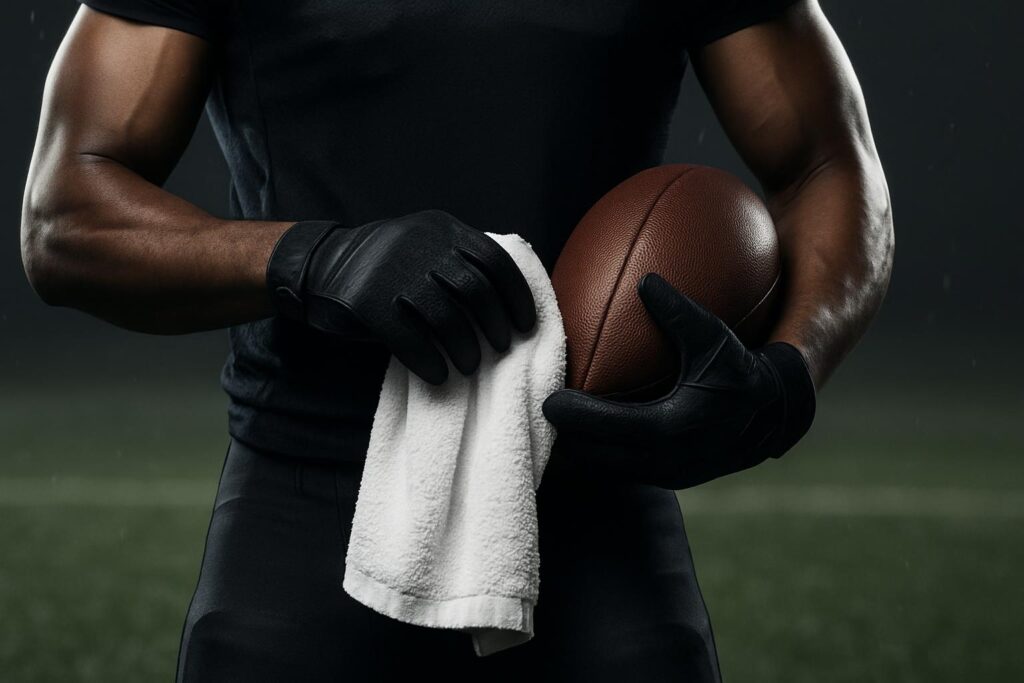
NFL players wear towels for a simple reason that drives performance: dry hands win snaps, throws, catches, and kicks. A towel is not a fashion piece. It is a tool for control, speed, and consistency. When hands, gloves, or the ball are wet from sweat, rain, or turf moisture, fumbles and drops spike. A towel gives players a fast way to reset their grip between plays, without running to the sideline. That tiny habit protects drives and games. If you want the full picture of why towels matter, how they are used by different positions, and how to pick one for your own football setup, read on.
Why NFL Players Wear Towels
In football, fractions of a second and millimeters of grip make the difference between a first down and a turnover. Towels serve four core purposes:
- Moisture control
- Grip and ball security
- Speed and convenience between plays
- Hygiene and comfort
Moisture control is performance control
Hands and gloves absorb sweat fast. Rain, snow, dew on turf, and humidity can add even more water. A towel removes that moisture before snaps and throws. This is key for quarterbacks, centers, receivers, and ball carriers. Dry hands and dry gloves reduce slippage and help maintain predictable handling in tough weather.
Grip and ball security
Better grip means fewer misfires and fumbles. Towels help keep palms, fingers, and glove surfaces clean and dry so traction patterns do their job. This is crucial for running backs cradling the ball through traffic and receivers tracking fast throws. For centers and quarterbacks, it helps snaps arrive cleanly and throws come out on time.
Speed between plays
A waist towel is fast. No sideline jog, no delay. Players wipe and reset while getting the call. This speed supports fast tempo offenses and any no-huddle sequences.
Hygiene and comfort
Constant sweat causes skin irritation and slippery residue. Towels help players remove grime and maintain comfort over long drives and long games.
Position-by-Position: How Towels Are Used
Quarterbacks
Quarterbacks rely on towels to keep their throwing hand dry. They often wipe before every snap and again after contact or a scramble. In rain, they will rotate towels and keep backups tucked into the waistband or carried by an equipment manager. A consistent release starts with a dry hand and a clean glove surface.
Centers
Centers use towels to reduce moisture that can cause a slick snap. A wet ball or wet hands can lead to high, low, or off-target snaps that derail timing. Many centers keep a small towel at the waist and wipe right before placing hands on the ball for the snap count.
Wide receivers and defensive backs
Receivers and defensive backs wipe their gloves to keep the grip elements effective. Water and turf pellets can reduce the friction of glove palms. A quick towel wipe helps restore tack and control for high-velocity catches and contested passes.
Running backs
Ball security depends on a stable grip during hits. Running backs use towels to maintain a dry carry hand. Even a slight slip can lead to a fumble in traffic, so the routine is simple: wipe, adjust the carry, and protect.
Linemen
Offensive and defensive linemen face constant contact and sweat. Linemen with towels wipe between plays to keep hand placement reliable. A dry hand on the chest plate or shoulder pad can stop a slide that would otherwise give up leverage.
Kickers and punters
Specialists are very routine-driven. They wipe their plant hand or drop hand to ensure a clean hold or a balanced drop. On rainy days, a towel is an essential item for both kickers and holders.
Return specialists
Punt and kickoff returners must field spinning balls from height. A dry grip helps prevent muffed returns and improves ball control through the first move.
Weather and Game Conditions
Rain and wet games
This is the worst-case scenario for grip. Towels become critical. Players use more frequent wipes and more towel rotations, and equipment staff support with extras. The goal is to keep hands, gloves, and the ball as dry as possible before every snap, catch, and kick.
Cold and snow
Cold reduces tactile feel. Snow adds moisture. Towels help reduce wetness so players can maintain a confident grip. Many combine towels with hand warmers to keep fingers responsive and ready.
Heat and humidity
In high humidity, sweat does not evaporate quickly. Towels absorb sweat buildup, so grip patterns and ball leather remain effective. This helps late in games when fatigue increases sweat rate.
Dew and night games
On some fields, dew forms on turf as temperatures drop. Even without rain, the ball and gloves pick up moisture after each play. Towels fight this consistent, low-level wetness.
Rules and Compliance Basics
League uniform policies set standards for towels. While specific measurements and color rules can change by season, expect the following principles:
- Towels must attach to the uniform safely, usually at the waist.
- Size and color are regulated for consistency and safety.
- Logos and markings are restricted.
- Foreign substances that could transfer to the ball are prohibited.
- Officials can ask players to remove non-compliant or distracting towels.
In short, towels are allowed, but they must meet uniform guidelines and cannot give an illegal advantage. If you play in a school or amateur league, check your league’s rules for size and color standards.
How Players Wear and Manage Towels
Waist placement
Most players attach a towel at the front or side of the waistband. Front placement is common for quarterbacks and centers who need quick access right before the snap. Side placement is common for receivers and running backs to reduce flapping in front.
Towel belts and quick-access loops
Many football towels come with a built-in belt loop or hook-and-loop slit. This keeps the towel in place during motion and makes it easy to rip off and swap if it gets soaked.
Rotation and backups
Players rotate towels as they get wet. On rainy days, they may go through several. Equipment staff often hands out fresh towels between drives.
Pairing with hand warmers
In cold games, players pair towels with hand warmers. The towel keeps moisture down. The warmer keeps dexterity up. Together, they support reliable handling.
Types of Football Towels
Cotton terry
Classic football towels use cotton terry loops for strong absorption. They are soft and reliable but can feel heavy when saturated. They are easy to wash and replace.
Microfiber
Microfiber towels absorb quickly and dry faster than standard cotton. They tend to trap less lint on gloves. Players who prefer a lighter towel often choose microfiber for speed between plays.
Waffle or textured weaves
Some towels feature a textured weave to improve water pickup without adding weight. These can grip the moisture on glove palms better than flat fabric.
Dual-layer designs
Dual-layer towels combine absorbent layers with a surface designed to wipe clean without snagging. These can balance capacity and quick-dry performance.
Quick-release and slit designs
Football-specific towels often include a slit loop or hook-and-loop opening that slides over the belt. This keeps the towel secure and easy to remove when soaked.
Care, Hygiene, and Replacement
- Wash towels after each use to remove sweat salts and bacteria.
- Avoid heavy fabric softeners that reduce absorbency.
- Air-dry or tumble-dry low to protect the fibers.
- Rotate older towels to practice once they lose absorption speed.
- Use separate towels for hand drying and equipment wiping to reduce grime transfer.
Common Questions
Do gloves make towels unnecessary?
No. Modern receiver gloves offer great grip, but water and sweat still reduce performance. A towel keeps gloves effective throughout the game. Many pros wipe both hands and gloves before high-leverage plays.
Do towels actually reduce fumbles?
Towels reduce the conditions that lead to fumbles: wet hands, wet gloves, and slick ball surfaces. Technique and ball security fundamentals still matter most, but towels help those fundamentals work under stress.
Why do some players wear the towel in front while others wear it on the side?
It is about access and comfort. Quarterbacks and centers want the towel in front for fast wiping pre-snap. Receivers and running backs may prefer the side to keep the front clear during sprints and cuts.
Do officials use towels?
Officials sometimes carry a small towel or cloth to keep hands dry in bad weather. Ball attendants also help manage dry balls on the sideline when allowed by procedure.
Are towels allowed in youth and high school football?
Most leagues allow towels with restrictions on color, size, and placement. Check your rulebook. If you coach or play, confirm compliance before buying gear.
Buying Guide: How to Choose a Football Towel
Absorbency and quick-dry
Look for a towel that soaks up moisture quickly without feeling heavy. Microfiber and quality cotton terry both work. If you play in rain frequently, favor faster-drying fabrics.
Size and profile
A football towel should be compact enough not to flap or snag, but large enough to wipe both palms and gloves. Stay within your league’s size rules.
Attachment method
Choose a towel with a secure belt slit or loop that sits flat. It should not bounce or twist during sprints. Quick-release designs help in rain when you need to swap fast.
Durability
Stitching and edge binding protect against fraying after repeated washes. Higher-thread fabrics keep performance consistent all season.
Weather fit
For hot, humid areas, pick a lighter towel that dries fast. For cold or rainy games, pick a thicker towel that holds more water without dripping.
Compliance
Make sure color and size meet your league’s guidelines. If you are unsure, go with a simple, solid design and check with your coach.
Pro-Level Habits You Can Copy
- Wipe on a schedule: Before every snap if you handle the ball. Before every route if you wear gloves. After contact in wet games.
- Use backups: Keep a second towel ready to swap when saturation creeps in.
- Pair with hand warmers: In cold conditions, wipe then warm. Dry plus dexterity improves execution.
- Keep towels clean: Wash after each session. Residue and sweat salts reduce absorption over time.
- Stay within rules: Use compliant colors and sizes for your league. If unsure, ask your coach.
Mistakes to Avoid
- Ignoring saturation: A soaked towel will smear water rather than remove it. Rotate early.
- Using heavy softeners: They can coat fibers and cut absorption. Keep wash simple.
- Blocking your stride: A poorly placed towel can flap and distract. Adjust placement for your position.
- Rushing without wiping: One quick wipe can prevent a drop or a fumble. Build the habit.
Conclusion
NFL players wear towels because dry hands and dry gloves protect performance. This small piece of gear supports grip, ball security, and quick resets between plays. Different positions use towels in different ways, but the goal is the same: control. With a good towel, a smart routine, and gear that fits your role, you turn tough weather and heavy sweat into manageable details. Start with an absorbent, secure towel, pair it with the right gloves if you wear them, and build a simple wipe-before-you-play habit. The result is cleaner snaps, sharper throws, stronger catches, and fewer mistakes when it matters.