
We are reader supported. When you purchase through links on our site, we may earn an affiliate commission. Also, as an Amazon affiliate, we earn from qualifying purchases.
The foul pole decides home runs near the corners. It settles one of the most dramatic questions in baseball and softball: fair or foul above the fence. If you have ever watched a fly ball curl toward the line and disappear by the pole, you know how fast the game can turn on that call. This guide gives you a clear rule to apply, shows how umpires use the pole, and walks through the odd bounces that confuse fans. By the end, you will know exactly what the foul pole is, what it does, and how to read every close play around it.
What the Foul Pole Is
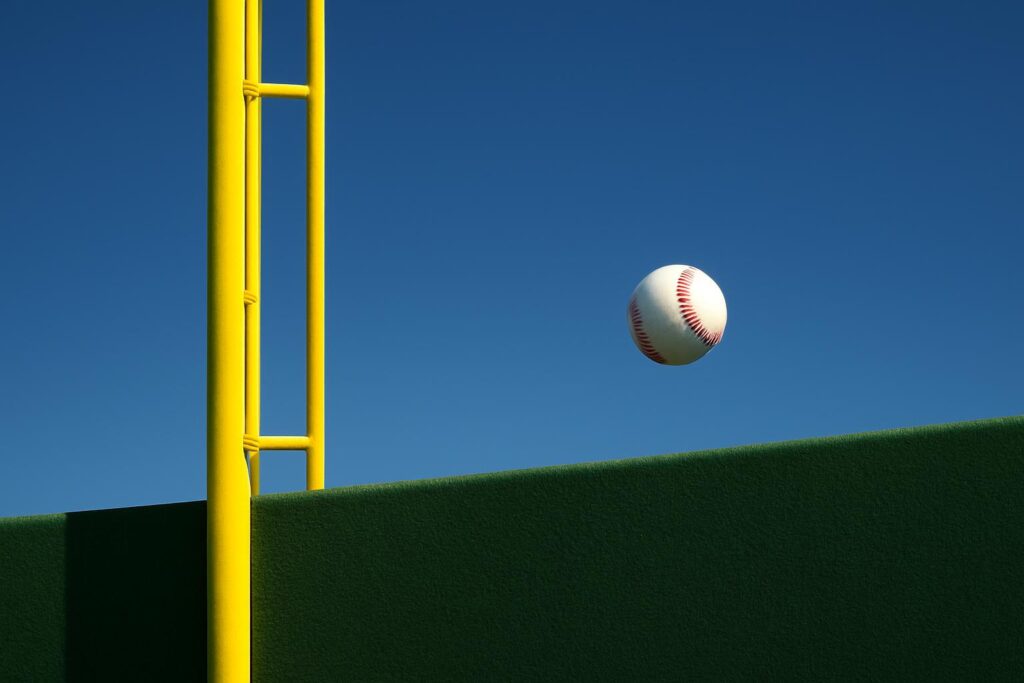
The foul pole is a tall vertical marker at the end of each foul line where it meets the outfield fence. There is one in left field and one in right field. Its job is simple. It extends the foul line straight up into the sky so everyone can judge whether a ball is fair or foul when it is above the fence.
Think of it as the line made visible at fence height and beyond. On a deep fly near the line, it creates a boundary that removes guesswork. If the ball is on the fair side of that vertical boundary when it crosses the fence, it is a home run. If it is on the foul side, it is a foul ball.
Where the Foul Pole Sits and How It Looks
Aligned With the Foul Line
The foul pole sits on the foul line at the point where the line meets the outfield fence. The line on the field is in fair territory. Because the pole is the line extended upward, the pole is part of fair territory. This is why any ball that hits the foul pole in flight is fair.
Color and Visibility
Foul poles are usually painted bright yellow to stand out against seats, sky, and outfield walls. Many parks add a mesh or wire screen that rises above the top of the wall on the fair side of the pole to catch borderline balls and show where the ball crossed.
Height and Extensions
Outfield walls vary in height, so pole height varies. Poles often extend well above the fence. In parks with low fences or windy corners, teams add narrow screens to improve visibility and to stop balls from barely missing the pole unseen. Those screens are treated like part of the foul pole for calls.
The Core Rule: Fair or Foul at the Pole
The Vertical Plane
Imagine the foul line lifted straight up from the base of the pole to form a flat vertical sheet. That plane defines fair and foul above the fence. The only thing that matters on a deep fly is where the ball crosses that plane at fence level and above.
Hits the Pole or Its Screen in Flight
If a batted ball in flight hits the foul pole or the screen attached to it above the fence, it is a fair ball. In the outfield, a fair ball over the fence is a home run. Even if the ball ricochets back onto the field, the call stays a home run because it touched the pole in flight.
Crosses to the Fair Side Above the Fence
If the ball does not touch the pole but passes over the fence on the fair side of the vertical plane, it is a fair ball and a home run. Where it lands does not matter. The crossing point at the fence line decides the call.
Crosses to the Foul Side Above the Fence
If the ball passes over the fence on the foul side of the vertical plane, it is a foul ball. Even if it lands in the seats, the call is foul because it crossed outside the plane that marks fair territory.
Ground Balls Versus Fly Balls Near the Pole
Before the Fence on the Ground
On the ground in the outfield corner, the fair or foul call is not made by the pole. It uses the standard ground ball rules.
A ground ball is fair if it settles, is first touched, or passes over a boundary in fair territory. It is foul if it settles, is first touched, or passes over a boundary in foul territory before it reaches first or third base.
After Passing First or Third Base
Once a grounder has passed first or third base, the rule changes. If it passed the base in fair territory and then veered foul, it remains a fair ball. This matters down the line. A chopper that bounces over third base fair and then rolls near the foul pole in foul ground is still fair, because it already passed the base in fair territory.
Ground Ball Bounces to the Stands Near the Pole
If a fair ball on the ground near the pole bounces into the stands below the top of the wall, it is not a home run. It is a two-base award under the ground rules. A ball must go over the fence in flight or contact the foul pole in flight to be a home run.
Caroms and Odd Contacts at the Pole
Off the Pole and Back Into Play
Fans often react to a ball that hits the pole and flies back onto the field. The sound can be loud and the bounce sharp. The rule is simple. If the ball in flight hits the pole or attached screen above the fence, the hitter is awarded a home run. The bounce after that does not change the call.
Off the Top of the Wall Then Over
If a fair fly ball hits the top of the wall and goes over in fair territory, that is a home run. Many parks mark the boundary with a painted stripe or a cap at the top of the wall. The foul pole still helps on balls above that line. If the carom occurs right by the pole, umpires judge whether the ball was on the fair or foul side of the vertical plane at the moment it crossed or left the park.
Off Railings, Guy Wires, or Padding
Modern foul poles can have supports, rails, or guy wires. If the support is part of the foul pole assembly on the fair side of the vertical plane, a ball in flight that hits it is treated like hitting the pole and is fair. If it hits a structure that is clearly outside and behind the foul pole on the foul side of the plane, the ball is foul unless it had already crossed on the fair side.
Disappearing Near the Pole
Sometimes a ball passes close to the pole and vanishes behind a screen or seating. The call does not depend on where it lands. The only question is whether it crossed on the fair side of the vertical plane or touched the pole in flight. Umpires use angles, the flight path, and, when available, replay to confirm the crossing point.
Who Makes the Call and How
Umpire Positioning
On deep flies, an umpire tracks the ball from the line and tries to see the crossing point at the fence. Mechanics place umpires so at least one has a clean view down the line. The key is the relationship of the ball to the pole at the height of the fence and above.
Replay on Boundary Calls
At the professional level, boundary calls near the outfield fence, including fair or foul on potential home runs by the pole, are reviewable. Video angles often show whether the ball grazed the screen or crossed the plane on the fair side. Replay confirms or corrects the on-field call.
Common Myths and Clear Answers
The name foul pole is confusing. It belongs to fair territory and a ball that hits it in flight is fair. The name comes from its position on the foul line, not from the result of contact.
The ball does not have to land fair to be a home run. On a fly ball, only the crossing point over the fence line matters. A ball can land deep in foul seats and still be a home run if it crossed the fence on the fair side by the pole.
Hitting the outside edge of the pole is still fair. The pole is the line extended upward. Any contact makes the ball fair by rule.
Ground balls do not use the pole to decide fair or foul. They use where they are first touched or pass over fair or foul territory, and whether they have already passed first or third base in fair territory.
Why It Is Called the Foul Pole
The name persists because the poles stand on the foul lines. The lines are the borders between fair and foul. The pole marks that border when the ball is above fence height. Its name reflects the line it marks, not the outcome it creates.
Ballpark Design and Strategy by the Pole
Corners vary by park. Some fences wrap in sharply near the poles and some run deep. Pull hitters know how their fly balls hook toward the line. Aiming just to the fair side of the pole can turn a long fly into a home run. In parks with a short porch near the pole, that swing path can be a weapon.
Fenway Park has a famous short right field corner known as Pesky Pole. Right-handed pull hitters in some parks find the left field pole to be their friendly target. The physics are simple. The later the ball hooks, the closer it flies to the vertical plane created by the pole. The job for the hitter is to start it inside the line and hold it there long enough to cross the fence fair.
Defenses position outfielders with that in mind. You will see corner outfielders take steps toward the line with certain hitters and certain counts. They want to cut off line drives before they kick toward the pole and the corner wall.
Youth Baseball and Softball
Youth fields and softball fields use the same principle. A ball that hits the foul pole in flight is fair and is a home run if it is above the top of the fence. A ball that crosses the fence on the fair side of the pole is a home run. Local ground rules may add details about screens or unusual wall features, but the vertical plane concept holds.
How to Read the Call in Real Time
Watch the ball at the fence, not where it lands. Your eyes should track the crossing point near the pole.
Look for contact with the pole or screen. A sharp carom straight back toward the infield and a metallic sound often mean the ball hit the pole. The umpire will quickly signal a fair ball and a home run.
On balls that sail past the pole without touching it, use the vertical plane test. If the ball is inside the line at the fence, it is fair. If it is outside, it is foul. Television replays often draw a line from the pole inward to show this plane.
Trust the umpire on angles you cannot see. From the stands, depth perception near the pole can be tricky. The line umpire has the best lane on the crossing point.
Quick Scenarios Near the Foul Pole
Fly Ball Hits the Pole Above the Fence
Fair ball and home run. The bounce after impact does not change the result.
Fly Ball Misses the Pole but Crosses Inside the Plane
Fair ball and home run. Landing spot does not matter.
Fly Ball Crosses Outside the Plane and Lands in the Seats
Foul ball. Crossing point decides the call, not the landing spot.
Grounder Bounces Over Third Fair, Then Rolls Foul by the Pole
Fair ball. It passed the base in fair territory.
Fair Grounder Near the Pole Caroms Into the Stands Below the Top of the Wall
Two-base award. Not a home run because it did not leave in flight or contact the pole in flight.
Fly Ball Hits Top of Wall Near the Pole and Goes Over on the Fair Side
Home run. The ball left the park in fair territory.
Fly Ball Clips a Screen Attached to the Pole on the Fair Side
Home run. Attached screens are part of the foul pole for calling purposes.
Putting It All Together
Everything near the foul pole comes down to one idea. The pole is the foul line extended upward. A ball in flight that touches the pole or crosses the fence on the fair side of that vertical plane is fair. In the outfield, fair and over the fence means home run. A ball that crosses on the foul side is foul no matter where it lands. Ground balls follow the standard rules about where they are when touched or when they pass the bases. Umpires work angles to get this right and use replay when available.
Armed with that framework, you can watch any borderline drive to the corner and know what to look for. Focus on the crossing point at the fence. Look for contact with the pole or the screen. Remember that where the ball lands is secondary. With practice you will call it cleanly from your seat.
Conclusion
The foul pole is a simple tool with a big impact. It makes fair or foul above the fence obvious. It lives in fair territory because it is the foul line lifted into the air. If a fly ball hits it, the batter circles the bases. If a fly ball crosses the fence inside its plane, the batter circles the bases. If it crosses outside, everyone returns. When you view the pole as a vertical boundary instead of a lonely post, every tough call near it becomes clear.
FAQ
Q: What happens if a fly ball hits the foul pole
A: It is a fair ball and a home run if it is above the fence, even if it bounces back onto the field.
Q: Is the foul pole in fair or foul territory
A: It is in fair territory because it is the foul line extended upward.
Q: Does a ball have to land fair to be a home run near the foul pole
A: No. Only the crossing point at the fence matters. If it crosses on the fair side, it is a home run.
Q: How do umpires decide fair versus foul on deep flies near the pole
A: They judge the ball against the vertical plane of the foul line at the fence and can use replay on boundary calls.
Q: If a grounder passes third base in fair territory and then rolls foul by the pole, what is the call
A: It is a fair ball because it already passed the base in fair territory.