
We are reader supported. When you purchase through links on our site, we may earn an affiliate commission. Also, as an Amazon affiliate, we earn from qualifying purchases.
The Silver Slugger Award honors the best hitters at each position in Major League Baseball every season. If you want a fast way to know who crushed the ball, reached base often, and drove the offense at their position, this is the award to watch. It is decided by MLB coaches and managers, and it focuses on pure hitting. No fielding grades. No pitching metrics. Just offense. This guide breaks down how it works, who votes, what positions are included, how the award has evolved, and why it matters for players and fans.
Introduction
Baseball has many awards, and it can be confusing for new fans. The Silver Slugger Award is simple at its core. It recognizes the most productive hitters at each defensive position in both leagues. It is a position-by-position view of offensive excellence. The story behind it, the voting process, and the way positions are handled are worth knowing. Once you understand the structure, you can read a season’s offensive landscape at a glance.
Quick Definition and Core Idea
The Silver Slugger Award is given each year to the top offensive players at each position in the American League and the National League. Managers and coaches vote based on regular-season hitting performance. Outfielders are grouped as one pool per league, so the three best outfield hitters are selected regardless of whether they play left, center, or right. The goal is clear. Identify the best hitters at their positions in that year.
Where the Award Came From
The award was introduced in 1980 by Hillerich and Bradsby, the company behind the Louisville Slugger bat brand. At the time, the Gold Glove already celebrated defense. The Silver Slugger stepped in to celebrate offense with the same positional structure. It has run every season since, and it has become a clean snapshot of each year’s elite bats at each spot on the diamond.
Who Gets One and at Which Positions
One winner per position in each league
Each league awards a Silver Slugger to the best hitter at catcher, first base, second base, third base, and shortstop. In the outfield, each league names three winners from a single outfield pool. There is also a designated hitter in each league today. That layout mirrors the way offense is distributed across a lineup.
Outfielders are grouped
There are no separate Silver Sluggers for left field, center field, and right field. Instead, voters pick the three most productive outfield hitters in the league. That is why you might see three corner outfielders win, or a mix of center fielders and corner bats. The goal is to capture the best three offensive seasons from outfielders, period.
Designated hitter and the NL change
The American League has included a designated hitter Silver Slugger since the start of the award. The National League added a designated hitter Silver Slugger when MLB moved to a universal designated hitter in 2022. Before that change, the National League previously recognized a pitcher for hitting. That category fell away as pitchers no longer bat.
Utility player category
Modern rosters rely on players who move across positions while still producing at the plate. To reflect that shift, the Silver Slugger lineup now includes a utility category in each league. It rewards hitters who split time at multiple positions while carrying strong offensive value.
Ties can happen
If voting results in a tie, both players can receive the award at that position. Ties have occurred in past seasons, and the format allows voters to reward two elite seasons when the gap is too small to split.
How Voting Works
Major League Baseball managers and coaches cast ballots. They cannot vote for players on their own teams. The ballots are based on regular-season performance only. Playoff results do not impact the outcome. Winners are announced shortly after the season ends, typically in November, once ballots are collected and counted.
What Voters Look At
Core offensive numbers
Voters review traditional stats like batting average, home runs, runs batted in, doubles, triples, on-base percentage, slugging percentage, and OPS. They also consider run production context such as how often a hitter produces extra-base hits, reaches base, and drives in runs from key lineup spots.
Positional context
Offense has a positional shape. First basemen and designated hitters usually produce more power. Catchers and shortstops often provide less raw power but hold more defensive value. The Silver Slugger still respects that context. Voters compare players within the same position, so a great-hitting shortstop is evaluated against other shortstops, not against first basemen. That levels the field.
Plate appearances and availability
Award-level production across a full season matters. Voters consider durability and plate appearances because sustained offense over time signals a true impact. Short bursts can be impressive, but a Silver Slugger profile generally involves steady performance from April through September.
Ballparks and lineup roles
Some ballparks help hitters. Others suppress offense. Voters understand park effects and adjust their perspective accordingly. Lineup role also matters. A leadoff hitter with high on-base percentage drives run creation differently than a cleanup hitter with 35 home runs. Both can be elite within their roles.
Defense is not part of the award
The Silver Slugger is strictly an offensive award. Fielding metrics, catcher framing, and positional defense do not factor into voting. That focus distinguishes it from the Gold Glove.
The Trophy and What It Represents
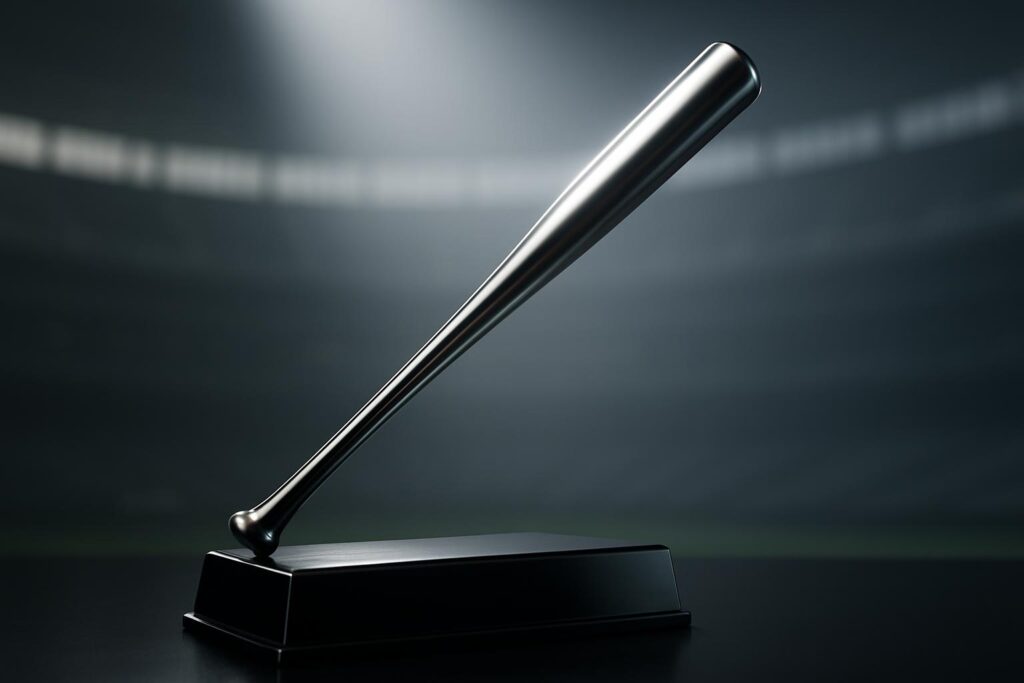
The Silver Slugger trophy is a full-sized silver-colored bat mounted on a sturdy base. It signifies the player’s standing as the top hitter at his position in that league for that year. It is both a personal milestone and a permanent addition to a player’s career resume.
Why the Silver Slugger Matters
Career value and legacy
Award lists shape how players are remembered. A Silver Slugger tells a simple story. At his position, in that season, this player hit better than his peers. Repeat winners mark eras of dominance and often align with All-Star nods, MVP votes, and long-term acclaim.
Contract and arbitration impact
Players and agents reference awards in arbitration hearings and contract talks. A Silver Slugger is strong evidence of top-tier production. While the award itself does not set salary, it supports a player’s negotiated value and public standing.
Fan clarity
Fans gain a quick, position-by-position readout of offensive excellence. The format makes it easy to compare across seasons and across leagues without digging into stacks of leaderboards.
Trends and Evolutions
The rise of on-base skills
Home runs draw attention, but on-base skills have gained weight over time. Players with high on-base percentage, strong walk rates, and consistent contact now compete closely with pure sluggers. Many recent winners blend power with discipline to produce standout OPS.
Universal designated hitter
The universal designated hitter made the awards more symmetrical between leagues. With pitchers no longer hitting, the National League DH spot now reflects a true offensive specialist role. That increases the depth of candidates and tightens voting in both leagues.
Utility value recognized
The utility category acknowledges that modern teams use flexible lineups. A strong bat that appears across multiple infield and outfield positions can now be rewarded directly, rather than forced into a single-position comparison that does not match playing time.
Outfield selection dynamics
Because outfielders are grouped, voters often face a deep list of candidates. The mix of power hitters in corners and athletic on-base threats in center creates close calls. Final ballots usually reflect a balance of power, run production, and overall offensive impact.
How the Silver Slugger Differs from Other MLB Honors
Gold Glove
Gold Glove focuses on defense at each position. Silver Slugger focuses on offense. Many elite players chase both in the same year, but the criteria are separate and independent.
Hank Aaron Award
The Hank Aaron Award names the most outstanding overall offensive performer in each league. It is not limited by position. The Silver Slugger is position-based and yields a broader view of offense across the field.
MVP awards
MVP voting covers total value to a team. Offense is a major part, but defense, baserunning, and team context play roles. The Silver Slugger strips away those factors to focus solely on hitting within a position group.
All-MLB honors
All-MLB teams select the best players across MLB regardless of league and consider overall value. The Silver Slugger keeps league separation and hones in on offense only. Both can appear together on a player’s year-end list of achievements.
How to Read a Season Through Silver Sluggers
When the winners are announced, read them as a position map of offensive excellence. Look for balance. Which positions skewed toward contact and on-base. Which ones were dominated by power. Note whether a particular team placed multiple hitters across positions. That can signal a deep, dangerous lineup. Track repeat winners to see sustained dominance. Track first-time winners to spot emerging stars.
A Beginner’s Guide to the Key Hitting Stats
Batting average
The share of at-bats that end in a hit. Good for a fast snapshot of contact skill but incomplete by itself.
On-base percentage
The rate of reaching base by hit, walk, or hit by pitch. High on-base percentage means more chances for runs and more stress on pitchers.
Slugging percentage
Total bases per at-bat. It captures how many extra bases a player generates. Doubles, triples, and homers push this number higher.
OPS
On-base plus slugging. A simple way to combine reaching base and power. It is not perfect, but it is widely used and easy to read.
Home runs and RBIs
Home runs signal power. RBIs reflect run production opportunities and lineup context. Voters consider both, but they also weigh how a player gets on base and creates extra-base impact beyond homers alone.
What Voters Balance Within Positions
Catcher
Hitters at catcher face a heavy defensive workload. A catcher who posts strong OPS, power, and durability often stands out because the bar for offense is lower at this position.
Middle infield
Second basemen and shortstops often balance contact, gap power, and on-base skills. A shortstop with elite OPS will likely separate from the field quickly.
Corners and designated hitter
First basemen, third basemen, and designated hitters often carry more power. Voters look for big slugging numbers, but high on-base percentage and consistent production across months also matter.
Outfield
Outfielders bring a mix of skills. Elite results come in several forms. A center fielder with high on-base percentage and speed can win. A corner outfielder with elite slugging can also lead the pack. Voters weigh full-season production and lineup leverage.
Notable Patterns and Records
Some careers stand out in Silver Slugger history. Barry Bonds holds the most Silver Slugger Awards. Mike Piazza owns the most among catchers. Alex Rodriguez won Silver Sluggers at two positions, shortstop and third base. Several players have switched positions and still carried top-tier offense, a sign of durable hitting skill across roles.
Season Flow From Opening Day to Announcement
The award tracks the regular season from start to finish. Spring power outbursts matter, but voters watch for staying power through summer and into September. After the final game, ballots come in from managers and coaches. Announcements follow after the postseason begins, and the list becomes the definitive ledger of that season’s best hitters at each position.
How to Spot a Silver Slugger Contender During the Season
- Top OPS among players at the same position in the league
- Consistent extra-base production and quality plate appearances
- Strong on-base percentage paired with power
- Durability and steady output across months
- Role impact in the lineup such as run creation or run driving
Track those points across the year and you will often see the finalists separate from the pack by August.
Why Fans Should Care
The Silver Slugger gives fans a clean way to compare hitters at each position, season to season. It also teaches how offense varies by position. A .900 OPS means something different at shortstop than at first base. By watching the position groups, fans learn the shape of offense across the field and spot trends in how teams build lineups.
Practical Use for New Fans
If you are new to MLB, use the Silver Slugger list from last year as your starter map. Learn those names and positions. Follow their box scores early in the season. Compare how they start against how they finished last year. When new names jump near the top of leaderboards at their position, add them to your watch list. By midseason you will have a solid feel for who is chasing a Silver Slugger and why.
Common Misunderstandings
Award equals best overall player
Not exactly. It means best hitter at a position, not best all-around player. Defense is outside the scope of the Silver Slugger. MVP and Gold Glove cover different ground.
Only sluggers can win
Power helps, but the award is for the best overall hitter. A player with elite on-base percentage, gap power, and run creation can win without leading in home runs.
Team success is required
No. This is an individual offensive award. Team wins do not decide Silver Sluggers. A player on a losing team can still be the best hitter at his position.
What Makes a Silver Slugger Season Special
True Silver Slugger seasons combine consistency, impact, and situational value. They show up in hard contact rates, extra-base hits, and months of steady production. They also hold up under comparison to position peers. The best cases are usually obvious by September. By then, the gap in OPS and run creation has formed and the voting picture is clear.
Conclusion
The Silver Slugger Award is the simplest way to identify the best hitters at each position every year. It captures the season’s offensive shape, respects positional context, and rewards full-season production. With managers and coaches voting, the results carry authority while avoiding team bias. For fans, it is a yearly map of elite bats. For players, it is a career marker with real weight. Learn the positions, track the core stats, and you will see the Silver Slugger race unfold in real time.
FAQ
Q: What is the Silver Slugger Award?
A: The Silver Slugger Award honors the best offensive players at each position in the American League and National League based on regular-season hitting.
Q: Who votes for the Silver Slugger Award?
A: MLB managers and coaches vote, and they cannot vote for players on their own teams.
Q: Which positions receive the Silver Slugger?
A: Each league awards one at catcher, first base, second base, third base, shortstop, three outfielders from a single outfield pool, a designated hitter, and a utility player.
Q: When did the Silver Slugger Award begin and who created it?
A: The award began in 1980, created by Hillerich and Bradsby, the company behind the Louisville Slugger brand.
Q: How is the Silver Slugger different from the Gold Glove?
A: The Silver Slugger recognizes offense only, while the Gold Glove recognizes defense only.