
We are reader supported. When you purchase through links on our site, we may earn an affiliate commission. Also, as an Amazon affiliate, we earn from qualifying purchases.
The knuckleball is the strangest legal pitch in baseball. It travels slowly, spins almost not at all, and refuses to follow a clean path. Most pitches use high spin to carve a predictable arc. The knuckleball does the opposite. It fights spin, drifts off course, and changes direction late. That chaos is not luck. It is physics, intention, and disciplined technique. This guide breaks down what the pitch is, how to grip and release it, why it moves, how players train for it, and why so few throw it today. If you want a clear, beginner friendly path into the world of the knuckleball, start here and keep reading.
Introduction
Fans hear myths about the knuckleball. Some say it is pushed with knuckles. Some think it is a trick pitch. Others think it is a slow curve. None of that explains what it truly is or why it still wins outs at the highest levels. The knuckleball is a skill pitch with low stress on the arm and a high demand on touch. Success depends on a stable grip, a firm wrist, and a clean release that kills spin. The rest comes from air moving around seams. That is the core idea you will see repeated across grips, mechanics, and strategy.
You will also learn why the pitch is rare. Development systems chase velocity. Catchers need special practice. Coaches need patience. Despite those barriers, the knuckleball has a place because hitters do not see it often, tracking models struggle with it, and its late movement ruins timing. Let us build from the basics and climb step by step.
What Is a Knuckleball
A knuckleball is a baseball pitch thrown with minimal spin, usually under about 150 revolutions per minute. That is near zero compared to fastballs that often exceed 2000 revolutions per minute. Low spin denies the ball a steady aerodynamic force. Without that steady force, tiny changes in seam orientation create uneven pressure on different sides of the ball. The result is unpredictable, shifting movement that can break multiple directions on a single path.
Typical game speed ranges from around 60 to 70 miles per hour. Some pitchers throw a harder version in the low to mid 70s, and a few can touch around 80 and still keep spin very low. The pitch is not defined by speed. It is defined by lack of spin and the way air interacts with seams as the ball flies.
Key Traits You Can See
When a knuckleball is right, you notice three things. First, the ball seems to float for an extra beat. Second, the late move looks like a twitch. It may jump arm side, cut glove side, or dive. Third, the catcher fights it. Even elite receivers miss clean pockets on a good knuckleball because the ball veers in the last few feet. That visual set tells you the pitch has low spin and active seam effects.
Knuckleball vs Knuckle Curve
Do not confuse the two. A knuckle curve is a breaking ball gripped with a bent finger but thrown with normal spin. It behaves like a hard curve or slider, driven by spin and the Magnus effect. A true knuckleball kills spin and does not rely on Magnus force. Its movement is not a clean arc. It is a series of small, unpredictable deflections tied to seam position in flight.
Why the Knuckleball Moves
Most moving pitches rely on the Magnus effect. That is the force created by a spinning ball that pushes it toward the direction of lower pressure set by the spin axis. The knuckleball mostly turns off that system by reducing spin to near zero. When spin is tiny, the Magnus effect becomes weak. Other forces take over.
The main driver becomes uneven airflow around the seams. As the ball tumbles forward with very slow rotation, seam ridges periodically face the airstream. Each new seam alignment trips the boundary layer in a slightly different way. That changes where the wake peels off behind the ball. Scientists describe this as a seam shifted wake. The wake slides left, then right, then down, then some mix of those, and each slide changes the sideforce on the ball.
This is why you see a knuckleball flit one way, then another. The pattern is not truly random, but it is sensitive. Small differences in initial seam orientation and air conditions cause big differences in path. The less the ball spins, the more abrupt those wake shifts can be because the same seam alignment stays in the airstream longer. That gives the asymmetric pressure more time to push the ball before a new seam rotates in.
Residual spin still matters. Even 50 to 150 revolutions per minute can tilt the ball toward a final direction. If the ball carries a small clockwise or counterclockwise turn, the last few feet may bias arm side or glove side. Skilled knuckleballers manage that tiny spin by consistent release, stable wrist angle, and repeatable finger pressure.
Speed, Spin, and Consistency
Speed sets the tempo of the wobble. Slower knuckleballs give seams more time to interact with the airstream per unit of flight, often creating extra dance. Faster knuckleballs compress flight time and can jump late with a sharper move. Both can work. The key is spin rate. Keep it low, keep it stable pitch to pitch, and aim for a consistent release window so the movement bands stay predictable to you and your catcher.
In practice, pitchers track spin with high speed cameras or pitch tracking systems. Without devices, a simple cue helps. If the spin looks like lazy, end over end rotation with the logo drifting rather than whirling, you are close. If you can read seams easily in flight, spin is likely low enough.
Core Mechanics That Kill Spin
Great knuckleballs come from simple, strict mechanics. The arm path can look like a changeup or slow fastball. The wrist must stay firm through release. The forearm stays quiet. There is no active wrist snap. The ball is pushed off the pitching hand by fingernails rather than rolling off the pads. That nail push is the heart of spin kill.
Stride and posture should mirror fastball delivery to hide intent. Keep the head level. Land balanced. Drive to a stable front side. Then let the hand deliver a flat, firm release. After release, allow a natural follow through, but avoid any late roll that adds spin. Repeat these pieces and the pitch will come out cleaner.
Fundamentals of the Grip
There is no single perfect grip. There are families of grips that achieve the same goal. You want enough nail contact to press into leather without slipping. You want the thumb and pinky to support the ball without twisting it. And you want seam access that gives you a familiar feel. Choose one, master it, then experiment within small changes.
Two Fingernail Grip
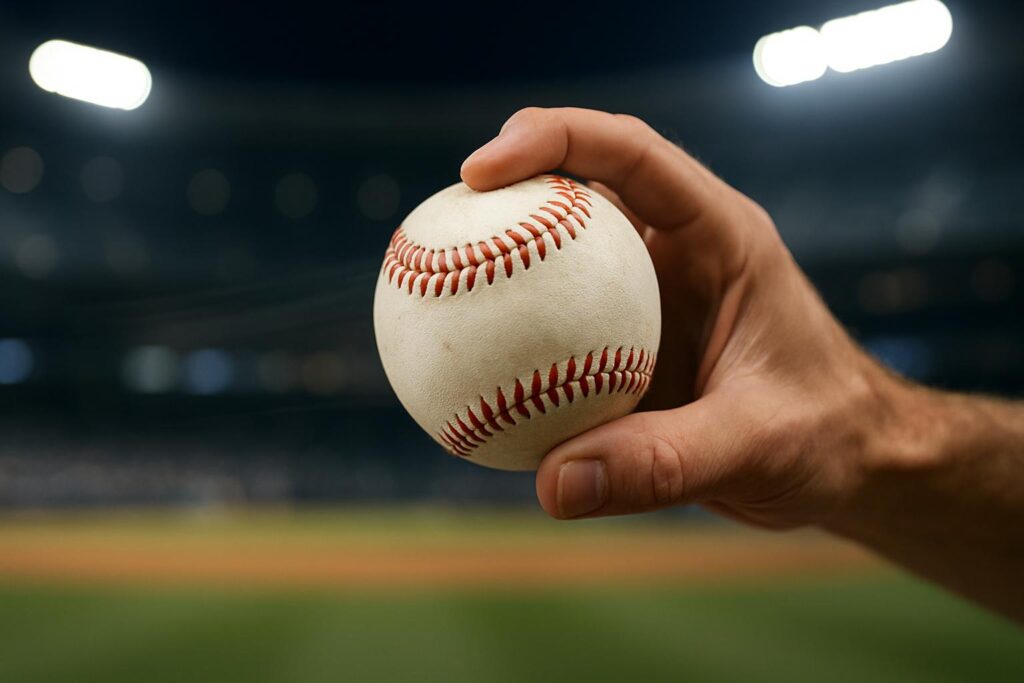
This is the most common starting point. Place the tips of the index and middle fingernails into the leather, often near or along a seam so the nails have a ridge to grab. The pads of those fingers stay off the ball. The ring finger can float or brush lightly for balance. The thumb sets underneath the ball on a seam or smooth leather. The pinky rests lightly on the side.
Key cue: push with the nail tips. Do not let the ball roll off the pads. A tiny roll will add spin and kill the effect.
Three Fingernail Grip
Many pitchers add the ring finger nail to increase stability. Place index, middle, and ring fingernails in a row on or near a seam. This increases contact surface and can make the release more forgiving. The tradeoff is a slight tendency to add forward pressure that can raise speed and spin if the wrist is not firm. Keep the wrist locked.
Offset Seam Grip
Some pitchers place the two or three nails across the horseshoe of the seam, angled slightly. This changes which seam faces the air at release. Small shifts like this can change average break direction. Once you have a baseline grip, test slight rotations of the ball so you learn what seam map suits your release.
Thumb and Pinky Support
The thumb should support the ball without squeezing. It often sits under a seam to improve feel. The pinky stabilizes the side of the ball but stays light. Over gripping with either digit twists the ball at release and adds spin. Think gentle support rather than clamp.
How to Release the Ball
The release window sits slightly in front of a normal changeup release. Keep the wrist firm, palm toward the target, and fingers behind the ball. At the last instant, extend the fingers so the nail tips push the ball free. The ball should almost pop off the hand. The arm finishes on line with the target, not across the body.
Drill the feeling at half speed first. Build to full speed only when the ball leaves the fingers with minimal roll. Hold your follow through a beat to check that the wrist stayed quiet. If you see the logo spinning fast, reset, firm the wrist, and press more with the nails.
Command and Aiming
Command is the real challenge. Aim small, but aim early. Pick a mask notch on the catcher or the top inner third of the zone. The ball will not finish where you aim every time. That is normal. You want controlled chaos in a safe window. Many knuckleballers aim belt high or above to give the pitch room to dance down. Others aim middle in and let it drift back over the plate. Track what your version tends to do and plan targets one or two baseball widths away from the danger zone.
Building the Pitch: Drills That Work
Short catch drill. Stand 20 to 30 feet apart. Throw soft knuckleballs and watch the spin. Demand near zero spin before you back up. This isolates the release without full mechanics.
Wall release drill. Stand close to a padded wall. Practice the release into the wall with half arm speed. You should hear a dull thud, not a hard smack. The dull thud often means low spin because the ball is not cutting into the air.
One knee drill. Drop to a knee to quiet the lower half. Toss knuckleballs at a net with a firm wrist. Focus on nail push and straight fingers at release.
Video check. Record from the side and behind. Slow the clip. If you see the ball rolling off your finger pads, adjust the grip deeper on the nails. If the wrist snaps, hold a wrist brace sensation by cueing a flat hand through the line of flight.
Nail Care and Equipment Basics
Healthy, smooth fingernails help. Trim to a short square edge that can press into leather. Lightly file the nail tips to remove snags. Some pitchers use a strengthening treatment or protective layers. Keep nails clean to avoid catching on seams. If a nail breaks, your grip will change, and spin will rise until it heals or you adjust.
Baseballs vary by seam height and slickness. Fresh balls may feel stiff and glossy. Rub them up legally with dirt to improve grip. In dry air, keep a rosin bag handy to manage sweat and moisture. In humid air, avoid over drying the fingers so the nails can bite.
How Catchers Handle the Knuckleball
Catching the pitch is its own skill. Many teams use a larger mitt to create a bigger pocket. The catcher sets up a bit deeper to read the final move. The focus is not to stab but to track late and let the glove give with the flight. Think soft hands, quick feet, and a chest angle that protects against short hops. Passed balls will happen even with perfect technique. The goal is to narrow the spread and keep runners from advancing for free.
Target presentation also matters. A calm, unobtrusive target helps the pitcher aim a tight window. Some catchers hold the glove steady higher in the zone because the pitch often drops late. Reps together build the pitcher catcher trust that keeps the staff in rhythm on long nights.
Game Strategy and Usage
There are two common usage patterns. Some pitchers rely on the knuckleball as a primary pitch and change speeds within it. Others use it as a change of pace mixed with a fastball and a conventional breaker. Both routes work when the pitcher can throw the knuckleball for strikes, steal first pitch counts, and expand late with two strikes.
Changing speeds inside the knuckleball is a strong tactic. A soft version around the low 60s disrupts timing. A firmer version in the low to mid 70s jumps late. Varying speed while holding low spin keeps hitters from building a stable plan. Location choices are simple. Work to the heart and upper half more often than with a curve. Let the pitch dance down rather than trying to drop it from high to low with a big arc.
With runners on, be ready for movement that escapes the glove. Catchers may call more fastballs in those spots. Experienced batteries choose the knuckleball anyway when the matchup demands it. The pitch can still get grounders and popups even if a runner advances on a passed ball.
How Hitters Experience the Pitch
Hitters track spin and movement cues from thousands of reps. The knuckleball breaks those cues. The ball appears to slow down. The seams wobble without a steady axis. The last few feet betray what the eyes predicted earlier. Hitters respond in two ways. Some freeze and let a strike pass. Others commit early and swing over the late drop or around a side jump. Even when contact happens, the barrel often glances off the ball because the face angle no longer matches the late break.
Weather and Park Effects
Wind matters. A crosswind can increase or reshape the movement by changing the pressure pattern on one side of the ball. Gusts can enhance late breaks. Air density matters too. In cooler, denser air, the ball often shows a livelier dance. Humidity changes the feel on the seams. Very dry air can make the leather feel slick and may challenge nail grip. Humid air can soften the cover and help the nails bite. None of this is a rule. Each pitcher should chart results by park and weather and plan targets accordingly.
Why the Knuckleball Is Rare
The pitch is rare for five linked reasons. First, it takes thousands of focused reps to produce a repeatable, low spin release. Development systems do not always allocate that time. Second, modern scouting values velocity, spin efficiency, and high strikeout shapes. The knuckleball does not fit those models. Third, catchers need extra work to receive it well. Teams hesitate to carry that burden. Fourth, command is fickle. Even elite knuckleballers live with streaky feel. That volatility makes roster decisions harder. Fifth, the minor leagues can be unforgiving. A few bad innings can tilt evaluations away from patience.
Despite that, the pitch offers benefits that keep it alive. It reduces arm stress, which can extend careers. It gives a unique look in a league that speaks fastball slider. It can anchor a rotation spot or a swing role when matched with the right catcher and park. History shows that when a knuckleballer finds rhythm, entire series bend around that outlier pitch.
Common Mistakes and Fixes
Too much wrist action. Fix by cueing a flat, firm wrist through release and holding the follow through for a beat. If needed, practice half speed throws until the habit sets.
Ball rolling off pads. Fix by digging nails in deeper and lifting the finger pads off the leather. Shorten the nails slightly and smooth the edges so they press cleanly.
High spin on harder versions. Fix by reducing effort slightly and tightening the finger cluster so the push stays centered. Hard does not mean violent. It means firm, clean, and on line.
Wild misses arm side or glove side. Fix by checking thumb pressure. Heavy thumb pressure tilts the ball and adds a side roll. Lighten the thumb and keep it under the ball, not to the side.
Tracking and Adjusting in Games
Use early innings to take inventory. If most pitches leak arm side, rotate the ball a few degrees in the hand to change which seam meets the air first. If the pitch floats high, aim a belt high target and trust the late drop. If the catcher struggles, simplify the plan and throw it more in hitter counts where a big movement out of the zone can still draw chases.
Between innings, check nails, grip feel, and sweat control. If the mound is slick or the air is gusty, choose safer inside targets. Adapt within the principles and the pitch will hold value even when feel is not perfect.
Learning Path for New Pitchers
Start with the two fingernail grip. Throw 50 to 100 short catch knuckleballs three to five times a week. Focus only on spin kill for the first month. Add distance slowly. Film one session weekly and compare spin and release window. When you can keep most throws under visible spin at 60 feet, add speed changes. Once you add speed, complete a daily nail care routine so grip stays consistent. Build catcher trust with two or three focused receiving sessions per week.
Health and Longevity
Because the knuckleball avoids violent wrist snap and high arm speed, it is easier on the elbow and shoulder than many breaking balls. That does not mean you can skip strength and mobility work. Keep a normal throwing program, maintain scapular stability, and manage workload. The pitch allows older pitchers to compete if they protect the base of their delivery.
Modern Analytics and the Knuckleball
Tracking tools often misread the knuckleball because the pitch lacks a stable spin axis. Movement charts may scatter. Spin rate may jump around as cameras struggle to lock onto a logo. The best use of data is simple. Confirm that spin stays low on average. Confirm that the vertical approach angle and late break force weak contact and whiffs. Pair those findings with video to see if the pitch holds its identity across outings.
Notable Knuckleball Paths
Across history, several pitchers have shown that different body types and speeds can support a strong knuckleball. Some leaned on a slower, floaty version. Others used a firmer version that lived in the low to mid 70s. Many paired the pitch with an average fastball and a simple breaking ball to keep hitters from sitting on one speed. The common thread is daily work on release and a catcher who trains with the pitcher as a unit.
Putting It All Together
The knuckleball rewards patience. Learn a grip that lets your nails press the leather cleanly. Keep the wrist firm. Push the ball off the nails. Accept that movement will vary and build a target plan that protects the zone. Train your catcher as you train yourself. Track spin, speed, and late break with simple video or a device when available. Trust that low spin plus seam shifted wake will do the work if you deliver the ball the same way every time.
Conclusion
The knuckleball is not magic. It is a low spin pitch that uses air and seams to create erratic force. Its grips are simple. Its mechanics are strict. Its physics are clear once you accept that movement can come from wake shifts instead of Magnus force. The pitch is rare because it takes time, patience, and a prepared catcher. That is also why it works. Hitters do not see it, and their learned rules fail in the last few feet. If you want a pitch that keeps working as your arm ages and gives lineups a different look, the knuckleball is worth the grind. Start with clean nails and a firm wrist. Build from there.
FAQ
Q: What is a knuckleball?
A: A knuckleball is a slow baseball pitch thrown with almost no spin, using fingernails to reduce rotation so shifting airflow around the seams, not the Magnus effect, drives its unpredictable movement.
Q: How do you grip a knuckleball?
A: Common grips use two or three fingernails pressed into the leather near a seam, with a firm wrist, light thumb and pinky support, and a release that pushes the ball off the nails rather than letting it roll off the pads.
Q: How fast is a knuckleball?
A: Typical game speeds range from around 60 to 70 miles per hour, with some pitchers throwing a harder version in the low to mid 70s and a few touching around 80 while keeping spin very low.
Q: Why is the knuckleball rare today?
A: It is rare because it requires long development time, modern systems favor velocity and spin based pitches, catchers need extra training to receive it, and command can be streaky, which makes roster decisions harder.
Q: How does weather affect a knuckleball?
A: Wind can reshape movement, gusts can enhance late breaks, cooler denser air can bring a livelier dance, and humidity changes the feel on the seams, with very dry air sometimes making the leather feel slick.