
We are reader supported. When you purchase through links on our site, we may earn an affiliate commission. Also, as an Amazon affiliate, we earn from qualifying purchases.
Baseball rewards the ball that gets to its destination first. Hitters who send a ball on a fast, low line take away time from fielders. Fielders who fire a ball on a low, straight line take away time from runners. That shared idea sits behind one of the most useful terms in the sport: the frozen rope. This guide breaks the concept down so you can see it, train it, and use it in games.
What a Frozen Rope Means
A frozen rope is a ball that is hit or thrown very hard on a low, straight, fast trajectory with minimal arc. It travels on a line, holds its speed, and reaches the target in less time than most balls at the same distance.
How It Looks When Hit
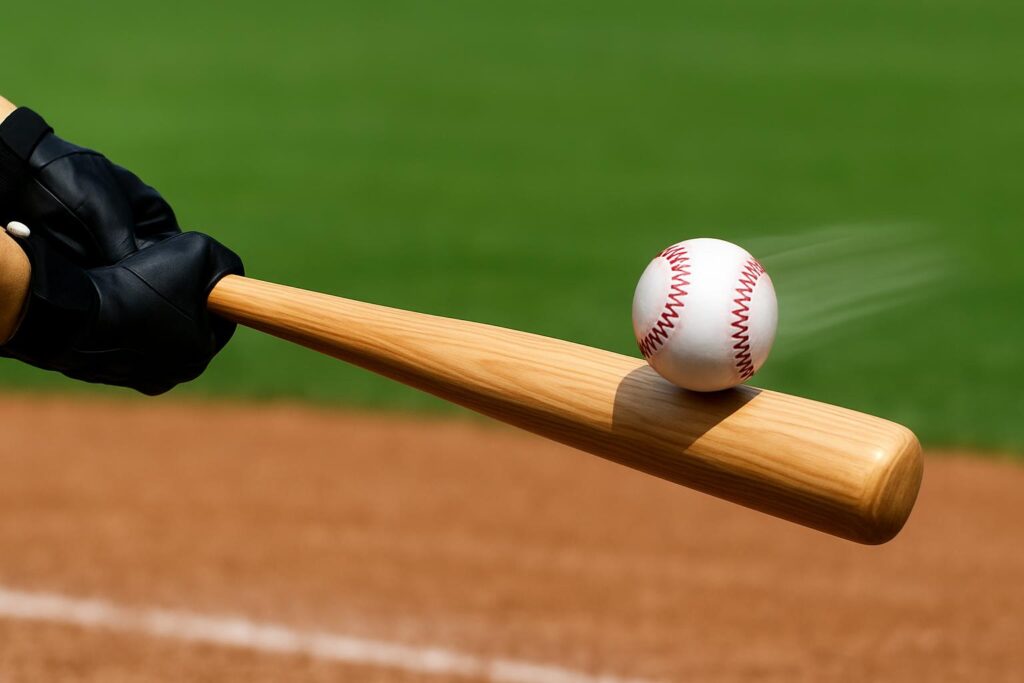
On contact, the ball leaves the bat fast and low, rising only a little before it starts to descend. It clears the infield with room to spare and reaches the outfield before defenders can adjust. It is a line drive, not a blooper and not a high fly.
Hitters produce it with a fast, direct swing and a square strike. The ball leaves the bat with a launch angle that is neither flat nor high. The flight looks firm and stable.
How It Looks When Thrown
A fielder throws it with speed and a short flight time. The ball rides on a straight path to the target. On very long throws, it may skip once on purpose as a long hop, but the same low and fast mindset applies.
Clean footwork, a strong transfer, and a full-speed arm produce the throw. The throw does not balloon. It does not tail wildly. It gets to the base or cutoff early.
What It Is Not
It is not a lazy fly ball. It is not a throw that sails high and arrives late. It is not a grounder that must travel through the infield. The frozen rope solves the time problem with speed and a low path.
Why Frozen Ropes Matter
For hitters, a low, hard line drive lands more often than a high fly ball at the same exit speed. It can split gaps, reach the wall, or force fielders to make tough plays on the run. It also pressures defenders because it limits reaction time.
For fielders, the same idea holds. A fast, low throw reaches the base before a runner can cover ground. It keeps tag times short and limits extra bases. It makes relay plays crisp, especially when the ball arrives at chest height to the cutoff.
For catchers, a quick transfer and a rope to second keeps steal attempts in check. For infielders, it turns slow rollers and backhand plays into outs. For outfielders, it cuts down attempts to take an extra base and supports the team defense structure.
The Simple Physics Behind It
Velocity and Time of Flight
Higher velocity shortens the time of flight for the same distance. That sounds obvious, but the benefit multiplies when the path is also low and direct. Less time in the air means less time for gravity, wind, and spin-induced movement to act.
A hit or throw that starts fast and stays low needs less time to complete its path. That is the core reason a frozen rope is so effective.
Launch Angle and Contact Point
On contact, the bat sets the launch angle. Too low and the ball becomes a hard grounder. Too high and it becomes a fly ball. The frozen rope lives between those extremes.
Typical line-drive launch angles sit in the low single digits to the mid-teens, roughly 5 to 15 degrees, paired with high exit velocity. When hitters contact the ball slightly ahead of the body with a level or slightly up path, that range shows up more often.
Spin and Carry
Spin affects how the ball moves through the air. On hits, modest backspin can help the ball carry without ballooning. On throws, clean backspin and a consistent axis reduce tailing and keep the ball on line.
Messy spin wastes energy. A slicing or hooking ball travels a longer path and loses speed faster. Clean spin supports the straight, fast flight that defines a frozen rope.
Release Height and Distance
Release height also matters. A higher release can allow a slightly lower launch or throw angle to clear an infielder or a cutoff. Distance sets the limit. Over very long distances, a small, efficient arc or a planned long hop often beats a true on-the-fly rope because it keeps the ball moving fast with less air time.
Hitting a Frozen Rope
Set Up Cleanly
Start in a balanced stance with the head centered between the feet. Keep the hands relaxed. Load by moving pressure into the rear leg without swaying the head. Land the stride softly and on time. Hold posture through the swing.
This setup helps the bat move fast on a stable base. It also improves pitch tracking and contact quality.
Build a Direct Bat Path
Accelerate the bat from inside the ball and stay through the ball after contact. Keep the barrel in the hitting zone for a long time. Avoid a steep uppercut and avoid chopping down. The path should be short to the ball and long through it.
Contact the ball slightly out in front on pitches in the zone. Match the swing plane to the pitch plane so that small timing misses still produce hard contact in the air, not on the ground.
Own the Launch Window
To hit more ropes, pair a fast bat with a launch angle in the line-drive window. Typical line-drive launch angles sit in the low single digits to the mid-teens, roughly 5 to 15 degrees, paired with high exit velocity. That range comes from a level or slightly up path and a square strike.
Work toward consistent contact on the barrel, not just faster bat speed. High exit velocity without the right angle wastes hits. The best results show up when both are trained together.
Make Good Swing Decisions
Start early enough to see the ball deep and swing at pitches you can drive. Favor pitches you can contact slightly out front while keeping posture. Avoid chasing pitches that force extreme barrel paths. Take strikes you cannot hit hard and on a line, and wait for a better pitch in the same at-bat or later in the game.
A simple plan works best. Look for one pitch type and one zone until you get to two strikes. Then shorten the move and protect the zone.
Common Hitting Mistakes and Fixes
Uppercut swings that chase homers. Fix it by training a level or slightly up path that stays through the ball. Use line-drive targets and feedback on launch angle.
Rolling over early. Fix it by improving posture and keeping the hands palm-up palm-down through contact. Focus on staying through the middle of the field during drills.
Off-balance swings. Fix it by narrowing the stride, controlling the load, and holding the head steady. Aim for a firm front side at contact.
Late starts. Fix it by starting the move sooner with a calm load. Practice timing with varied pitch speeds.
Throwing a Frozen Rope
Grip and Seam Orientation
Use a four-seam grip whenever possible. Spread the fingers comfortably across the wide seams and place the thumb under the ball. This grip creates stable backspin and reduces tailing, which keeps the throw straight and fast.
On rushed plays you may not find four seams. In that case, adjust the release to hold the line, but understand the ball may move more.
Footwork and Momentum
Good footwork builds the throw before the arm even moves. Infielders use a quick shuffle to line up the target and gain ground. Outfielders use a crow hop to shift weight forward and create rhythm. Catchers replace the feet quickly to point the hips at the base.
Keep the moving parts connected. Push energy from the ground through the hips and trunk into the arm. A small stride that lands on line with the target supports both accuracy and velocity.
Arm Path and Release
Keep a smooth arm path that matches your body and timing. The arm should load as the front foot lands and accelerate as the trunk rotates. Finish with a full follow-through. Let the hand pronate naturally after release to protect the elbow and guide the ball.
Release height depends on the fielder and the play. Use a slot that allows speed and accuracy. Avoid sidearm releases on long throws unless that is your most stable slot.
Long Hop or On-The-Fly
At long distances, a planned long hop can be faster than a high throw. The ball stays in a low, fast window, skips once, and arrives in the tag zone. The key is a firm skip that travels forward, not a bounce that dies.
Practice both options. On shorter throws, send it on the fly. On long throws, use a low arc or a long hop to keep the ball moving fast to the target.
Situational Choices
Choose the flight based on distance, runner speed, and field conditions. Use a rope when speed matters and the distance allows it, add arc for very long throws or to reach a target more reliably, and use a long hop when it is the quickest path. Always account for turf speed, wind, and your momentum at release.
In relay situations, hit the cutoff in the chest. Keep the throw low enough that a cutoff can catch, relay, or cut. Give the defense options.
Common Throwing Mistakes and Fixes
Floating the ball. Fix it by improving footwork and committing to a full-speed arm. Aim below the chest and through the target.
Wild tailing. Fix it with a four-seam grip and a stable release. Strengthen trunk control and finish the throw to keep the axis clean.
Arm-only throws. Fix it by driving from the legs and hips. Use momentum from the crow hop or shuffle to share the load with the body.
Overthrowing. Fix it by staying on line and freeing the arm. Smooth beats tense. Accuracy improves when the body moves in sequence.
Training for Velocity and Power
Strength Foundations
Build total-body strength in patterns that carry to baseball. Prioritize squats or split squats, hip hinges, single-leg work, rows, presses, pullups or pulldowns, and anti-rotation core work. Aim for full range of motion and clean technique.
Strength gives you the base. Without it, you will struggle to repeat speed late in games or late in the season.
Power and Plyometrics
Add explosive training two to three days per week in season-appropriate doses. Use medicine ball rotational throws, overhead slams, and scoop tosses to connect the lower body to the hands. Use low-volume jumps to train fast force without fatigue.
Keep the reps low and the intent high. Stop a set when the speed drops. Power training should sharpen your best reps, not grind you down.
Sprinting and Movement
Sprint short distances with full recovery to train high-output movement. Add lateral shuffles, crossovers, and drop steps to mirror baseball demands. Good first steps and crisp angles help both hitting and throwing because they improve positioning and balance.
Arm Care and Durability
Use a simple arm care routine before and after throwing. Include light band work for the rotator cuff, scapular control drills, forearm and grip work, and gentle soft-tissue work. Build range of motion in the shoulders and thoracic spine without forcing it.
Increase throwing volume gradually. Do not chase big gains in a single week. Respect signs of fatigue. The safest way to gain velocity is to stack many healthy weeks of practice.
Hitting Drills for Frozen Ropes
Tee line drives. Set the tee for a pitch you can drive and send firm line drives to a chest-high target net. Focus on a short move to the ball and a long move through it.
Front toss line drives. From a close distance, hit firm line drives through the middle. Track the ball and hold posture. Vary height and in-out location while keeping the same intent.
Machine work at game speed. Use fastballs in the zone and produce low, hard liners. Then add breaking balls. Mix speeds and spins, but keep the goal the same.
Constraints. Place a barrier above waist height in the cage to block high flies and a barrier near the ground to block choppers. Target the clean window between them.
Throwing Drills for Frozen Ropes
Target throwing. Stand at a fixed distance and hit a chest-high target with a four-seam grip. Track makes and misses. Keep the ball on a firm, low line.
Crow hop progression. Start at 60 feet and throw on a line, adding distance in small steps. Work up to a comfortable max where you can still hold a low, fast flight. Use a planned long hop on the longest throws.
Shuffle and fire. Infielders field a rolled ball, shuffle, and throw on a rope to first. Focus on clean transfer and foot replacement.
Pop and throw. Catchers receive, replace the feet, and throw on a line to second base or the mound. Keep the release quick and the ball low and fast.
Measuring Progress
Simple Tools
Use a radar device to measure exit velocity and throw velocity. Use a smartphone video to check launch angle, release height, and trajectory. Use a marked field or measured hallway to keep distances consistent.
What to Track
For hitting, track exit velocity and the height of the ball at a set distance or the launch angle when tools are available. Track line-drive percentage in practice. Aim for consistent hard contact in the line-drive window.
For throwing, track throw velocity, target accuracy, and the number of throws that arrive on a line without a big sail. On long throws, track how often the ball arrives on a firm long hop in the tag zone.
Safe Progressions
Add reps and intensity slowly. Layer difficulty in stages, such as shorter distance to longer distance, tee to toss to machine, dry throws to light throws to full throws. Keep quality high and stop a session when form breaks down.
Youth and Amateur Guidance
Age-Appropriate Intensity
Young players need movement skill before maximal output. Teach clean footwork, posture, and simple grips. Build a basic strength routine with bodyweight work. Add speed and intensity only when control is present.
Volume matters. Limit high-effort throws per session and per week. Use rest periods. Aim for progress across the season, not in a single month.
Simple, Repeatable Cues
Use short cues that trigger the move you want. Stay balanced. Stay through the ball. Hit the chest of the target. Keep prompts consistent so players can trust them under pressure.
Putting It All Together
Frozen ropes are not about style. They are about taking time away from the other side. Pair velocity with the right angle and a clean path, and you get there first.
As a hitter, train a fast, direct swing that sends the ball in the line-drive window. As a fielder, train a clean grip, precise footwork, and a full-speed arm that holds the line. Use the right flight for the play. On short and medium distances, throw on a rope. On long distances, add a low, efficient arc or use a firm long hop.
Keep your plan simple. Build strength, build speed, and repeat the best version of your move in practice. The result is a ball that travels on a line, gets there early, and changes games.
FAQ
What is a frozen rope in baseball?
A frozen rope is a ball that is hit or thrown very hard on a low, straight, fast trajectory with minimal arc.
What launch angle produces a hitting frozen rope?
Typical line-drive launch angles sit in the low single digits to the mid-teens, roughly 5 to 15 degrees, paired with high exit velocity.
When should a fielder choose a frozen rope, a long hop, or add arc?
Use a rope when speed matters and the distance allows it, add arc for very long throws or to reach a target more reliably, and use a long hop when it is the quickest path.
How can a player train to throw a frozen rope?
Build a clean grip across the seams, create momentum with efficient footwork, move the arm fast with a consistent release, and practice on a target with progressive distance.
How can a hitter train to hit more frozen ropes?
Train a fast, direct bat path with solid contact, aim for line-drive launch angles, and use simple drills like tee line drives, front toss line drives, and machine work at game speed.