
We are reader supported. When you purchase through links on our site, we may earn an affiliate commission. Also, as an Amazon affiliate, we earn from qualifying purchases.
The tag out is the cleanest, fastest way to erase a baserunner. It ends rallies, kills stolen bases, and flips innings. Yet many players treat it as a simple touch. It is not. The best defenders train the tag like a core skill, with detail in footwork, glove angle, and timing. This guide breaks the tag into clear rules, repeatable mechanics, and game-ready tactics you can train today.
What Is a Tag Out
A tag out happens when a fielder touches a runner with the ball or with the glove holding the ball while the runner is not safely on a base. The ball must be live. The fielder must have control. The contact must be with the runner, not just the uniform space around them.
Tag outs apply in baseball and softball at every level. The runner is out the instant the tag is made under live ball conditions, as long as the defender has secure control. If the ball pops out on contact or after the tag because control was not maintained through the action, the runner is safe.
When a Tag Is Required
A tag is required any time there is no force requirement. Examples include attempted steals, pickoffs, rundowns, and when a runner overruns a base where they can be tagged if off the base. On a steal of second, the middle infielder must tag the runner. On a throw behind a runner who rounded a base too far, the fielder must tag the runner. In a rundown, the out requires a tag.
When Touching the Base Is Enough
On a force play, the defense only needs to possess the ball and touch the forced base before the runner arrives. A ground ball with a runner forced to second is a base touch at second. If the runner is not forced, the defense needs a tag. Do not confuse these situations. Many missed outs happen because infielders tag the base during a non-force, or chase a forced runner when the sure out is at the base.
Core Tag Rule Fundamentals
Legal Tag Criteria
For a legal tag out, the defender must have the ball in the bare hand or in the glove with control. The tag must contact the runner’s body or uniform. The ball must be live. The runner must be off a base or temporarily off during a pop-up slide. Control matters through the tag. If the ball is jarred loose before the fielder completes the tag action, the runner is safe.
The tag can be a swipe or a block, high or low, but it must include actual contact. Brushing air near the runner is not a tag. Tapping the dirt next to the runner is not a tag. The glove must meet the runner, even if only for an instant, while the ball is held.
Runner Rights and the Basepath
A runner must stay within a reasonable path to the base. If a defender with the ball attempts a tag, the runner cannot veer more than a few feet to avoid the tag. The runner defines their path at the moment of the tag attempt. Defenders should force the runner into a narrow lane by holding angle discipline. The defender without the ball cannot force path changes that create obstruction.
Obstruction and Interference Basics
Obstruction happens when a fielder without the ball blocks the runner’s path or hinders progress. Blocking a base or the plate without possession risks awarding the runner a base. Interference happens when a runner impedes a fielder making a play. On tag plays, the most common issue is obstruction by blocking the base early. Solve it by showing a clear lane until the ball arrives, then drop the tag.
Mechanics of a Great Tag
Footwork Sets the Tag
Get low. Widen your base. Keep your center of gravity balanced toward the throw. Show your chest to the ball and hips to the tag. One foot anchors, the other adjusts to catch-and-tag in one motion. The closer your feet are to the tag line, the shorter your tag path becomes. Your steps must load the hips so the glove can travel fast and short.
On steals, straddle the bag with the glove side slightly forward. On pickoffs, set your feet to receive to the glove side and sweep down the line. On third base tags, take the throw in front of the bag when possible, then drop the tag back toward the runner’s lead limb.
Glove Presentation and Transfers
Present a clear target for the throw. Keep the glove fingers up for chest-high throws and fingers down for short hops. Receive softly and funnel the ball to the pocket. Avoid stabbing. The fastest tag is a one-motion receive-to-sweep with no transfer until the runner is secured out. Only transfer once the tag is complete, or if a throw is imminent.
Maintain a firm wrist. Loose wrists waste time and reduce precision. Keep the glove path compact. Think catch in front, tag down and through, finish low. If the throw takes you off balance, adjust with a shuffle rather than a reach. A reaching catch usually means a slow tag.
Choose the Right Tag Type
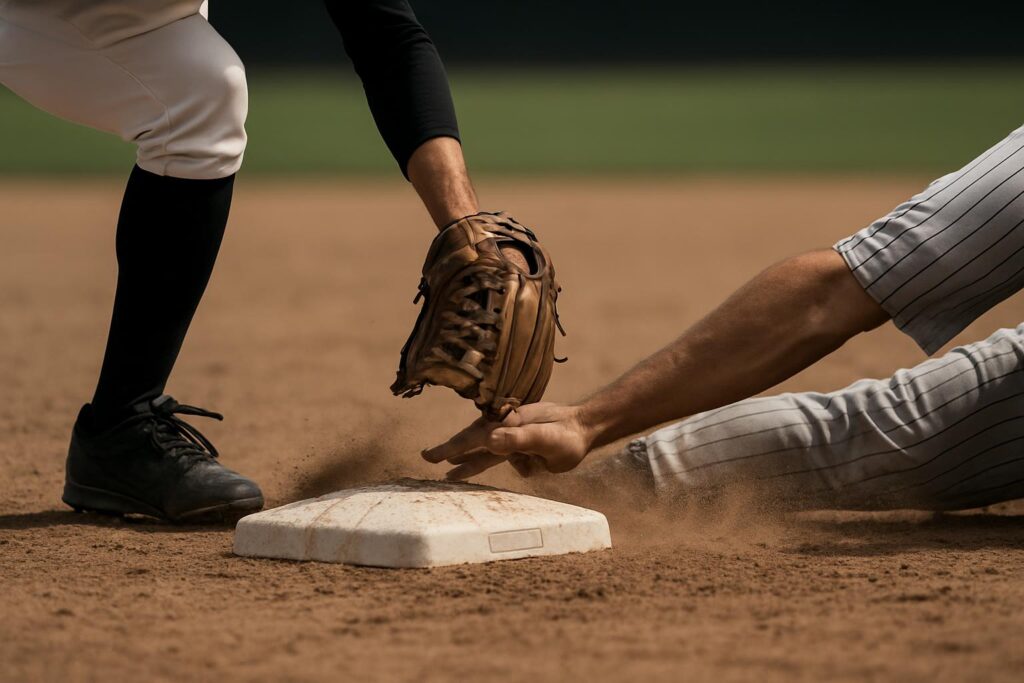
The swipe tag is the most common. Sweep the glove across the runner’s lead limb as it enters the base. Start high and finish low or start outside and finish across the bag. Keep the glove on the runner a beat longer than you think in case of brief contact loss.
The block tag sets a knee or foot in front of the base as the ball arrives, then drops the tag. Only use it with the ball in secure control. Blocking without the ball risks obstruction. The reach tag is used on pickoffs where the throw beats the runner by a lot. Catch and extend directly to the hip or hand. The drop tag is a quick catch above the bag with an immediate downward tag into the sliding limb. Catchers often use a drop tag at the plate.
Control Through the Tag and After
Complete the tag, then secure the ball. Many outs are lost because the fielder shows the ball too early or relaxes at contact. Hold contact, then clamp the ball. If the runner pops off the base for a fraction, maintain glove pressure and keep the tag on. Umpires watch for continuing control and continuing contact. Finish every tag like a ground ball: secure, check the runner, then prepare for the next play.
Position-Specific Tag Skills
First Base Pickoff Tags
The first baseman must be fast from the throw to the tag lane. Start with the right foot near the bag and the left foot extended toward the pitcher for a right-handed pitcher pickoff. Present the glove at the front corner. Catch and sweep to the back of the runner’s hand. If the throw is inside, tag the belly or forearm. If the throw is high, catch and drop to the hand. If the throw takes you off the bag, keep the ball secure and tag anywhere on the body.
When tagging on a back-pick from the catcher, set up on the outfield side of the runner to keep the lane open. Catch on the glove side and drop a quick tag to the front of the bag. Communicate loudly with the pitcher and middle infield about daylight looks and timing picks.
Middle Infield on Steals
On a steal of second, shortstop and second baseman pre-assign who covers based on batter type and pitch call. The covering infielder arrives early, straddles the bag or sets just in front, and gives a low target. Catch in front of the bag with the glove outside the path, then sweep across the runner’s lead leg. Keep the glove down in case the runner pops off the bag.
On short hops, trust the pocket. Let the ball hit the ground early and come up into the glove. Do not stab. If the throw pulls you to the first base side, tag the arm. If it pulls you to the shortstop side, tag the knee. Always tag the closest body part to you. This shortens the path.
Third Base Plays
Runners take aggressive leads toward third. Your tag must punish overreach. Play slightly in front of the bag on throws from the outfield, then step through the ball and tag back. On pickoffs from catcher or pitcher, set a small funnel in front of the bag and keep the path clear until you have the ball. If the runner dives back, tag the hand first, then ride the tag up the forearm to stay on contact.
On bunt defenses, if the throw arrives as the runner slides into third, do not block the bag without the ball. Receive first, then tag down through the lead knee or hip. Keep your head out of the collision lane by working off the side of the base.
Catcher at the Plate
The catcher must balance protection with speed. Give a clear lane until the ball arrives. Catch out in front of the plate when possible. Turn your hips to the runner and drop a quick tag to the shin or thigh. Avoid high tags at the plate. Slide the tag across the front edge of the plate to catch any foot that brushes the corner.
On throws up the line, meet the ball early, step back to the plate, and tag low. On throws to the inside, spin to face foul territory and tag the back hip. Do not block the plate without possession. Once you have the ball, set a firm base and finish the tag through the runner’s path.
The Throw That Sets Up the Tag
Optimal Throw Lanes
The best throw puts the fielder in position to catch and tag in one motion. Aim chest-high for middle infielder steals. Aim knee-high at first base on pickoffs to set a drop tag to the hand. At third and home, aim toward the front corner of the base or plate. Err to the glove side to protect the tag lane.
Outfielders should throw through a low line with carry. Keep the first long hop near the infielder, not midway. A late, short hop is easier to read and catch than a long hop that dies. The throw should never force the receiver to reach back across their body if the tag window is closing.
Cutoffs and Relays
On relays, the cutoff sets the tag chance with two jobs: hold runners and deliver a throw that creates a quick tag. Turn your body toward the base before you throw. Keep the throw on the glove side of the receiving fielder. Communicate the base loud and early so the receiver can open their hips to the tag line.
Middle infielders should expect short hops on relays and practice catching to a sweep tag. The smoother the transfer from catch path to tag path, the higher the out rate.
Short Hop Mastery
Short hops are unavoidable. Read the hop early with soft eyes. Beat the hop with glove timing, not with a late jab. Let the ball travel. Absorb it into the pocket, then sweep. When in doubt, choose the hop that lands closest to you, not halfway. That hop is easiest to control and puts your glove in motion toward the tag.
Rundowns: Turning Chaos into an Out
Keep Throws to a Minimum
Every throw in a rundown is a chance to fail. Limit throws. Force the runner into a sprint, not a dance. Run hard with the ball in your throwing hand up. Close the space until the runner commits, then make a firm, short throw to a teammate who is already moving. Do not fake more than once. Do not drift backward after throwing. Peel off and trail to back up.
Angles and Lane Discipline
Take an inside lane so you can tag if the runner slows. Present the ball as a threat to force the runner to commit. The receiving fielder must be moving forward at catch to tag in one step. Catch early, step through, and tag across the lane. Keep the tag low to the hips or thighs. A low tag is faster and more certain.
The Commit Line and Pump Fakes
Create a mental commit line about halfway between bases. Once the runner crosses it, force a decision. Use one pump fake when you are close to draw a stutter step. Tag if they bite. Throw if they sprint. Communication is constant. Yell your intent and the base. Everyone moves on the same cue.
Situational Awareness
Outs, Score, and Inning
Tag choices depend on context. With two outs and a lead, take the sure out at the base on a force rather than fishing for a tag of an aggressive runner. In a tie game, prevent the lead run from advancing even if it means eating the ball. With a big lead, avoid high-risk tags that could cause obstruction.
Risk Assessment
Ask two questions before every tag. Can I complete the tag without blocking the runner early. Can I keep control through contact. If either answer is no, adjust. Slide your feet to open the lane, catch earlier, and tag lower. If the runner is likely safe, keep the ball and prevent extra bases.
Deceptive but Legal Positioning
Show a lane, then close it late after you have the ball. Present the glove as a target early. Shift your body line only after possession. Use subtle footwork to make the tag lane narrow. Avoid unnecessary contact. Avoid fake tags that cause unsafe slides. Stay within rule and safety limits at all times.
Common Mistakes and Fixes
Tagging Too High
High tags miss fast. Most runners slide low. Aim for the front of the base and the lead limb. Practice finishing every tag at shin height. On dives back to a base, tag the hand first, then ride up to the arm if needed.
Reaching Instead of Moving
Reaching slows reaction and loses power. Use your feet. Slide to the throw. Catch in front. Step through the tag. If the throw pulls you, move the body, not just the glove. A one-step adjustment beats a three-foot reach every time.
Losing the Ball on Contact
Two causes are common. The glove is too loose or the tag action is too long. Fix it by firming the wrist and shortening the sweep. Train to receive and clamp before the tag completes, not after. Keep your eyes on the ball through contact. Do not show the ball to the umpire mid-play. Finish first, then confirm.
Blocking Without the Ball
Blocking early leads to obstruction. Hold a clear lane until the ball arrives. Catch first, then block as you drop the tag. Train the habit with partner drills. Say catch then tag out loud during reps to tie the sequence to your timing.
Drills to Master the Tag
Barehand Quick Transfer
Stand eight to ten feet from a partner. Toss firm short hops to the glove side. Catch with the glove, transfer to the bare hand at chest height, then back to the glove and down to a mock tag on a knee-high cone. Focus on clean transfers and a compact path. Ten reps per side, three sets.
Tennis Ball Reaction Tags
Use a tennis ball and stand at second base. A coach throws from shallow center. On random hops and varying speeds, catch and sweep across a small towel placed at the front of the bag. The towel represents the lead limb. Keep the glove down through the towel for a full second. Build control through contact.
Short Hop Receive and Sweep
At third base, have a partner bounce balls from different angles. Your target is the front corner. Catch with fingers down, absorb, and sweep across the imaginary slide line. Add a variation where the throw is slightly up the line. Step through the catch, reset your angle, and drop the tag to the hip spot.
Rundown Reps
Set three fielders and one runner. Start with the runner halfway. The ball begins in the hands of one fielder. On go, the ball carrier runs hard, pump fakes once, and throws only when the runner commits. The receiving fielder is already moving. Catch in motion and tag within one step. Rotate roles. Keep throws to two per rep or less.
Catcher Knee-Down Tag Drill
The catcher starts in a secondary stance. A coach tosses balls from the first base line or third base line. Catch with one knee down to protect the lane, then drop a quick tag to the shin. Then recover to throwing position. This builds stability, quick hands, and safe lane control without early blocking.
Umpire Perspective and Replay Savvy
What Umpires Watch
Umpires watch ball control, actual contact, and voluntary release. Did the fielder have the ball when the tag happened. Did the glove touch the runner. Did the fielder maintain control through the tag. They also watch for obstruction. If you block early or lose the ball at contact, expect a safe call.
Common Replay Points
Replay often changes calls on two details. First is the pop-off. Runners sometimes overslide and lose contact briefly. If your glove stays on the runner, that brief moment produces an out. Second is loss of control during the tag. If the ball moves out of the glove at contact and only settles after, the runner is safe. Finish tags with pressure and clear control to win these margins.
Youth and Amateur Considerations
Safety and Slide Rules
At many youth levels, fake tags and blocking without the ball are illegal or discouraged because they cause unsafe slides. Teach players to show the lane, catch, then tag. Teach runners to slide on time and to the front edge of the base. Safety builds confidence and keeps players aggressive within the rules.
Coaching Cues
Use short cues players can remember. Low base. Glove out front. Tag the lead limb. Hold the tag. Do not block early. Catchers can add lane, ball, tag as a quick sequence cue. Repeat these cues during drills until the sequence becomes automatic under game speed.
Equipment Setup for Better Tags
Glove Choice and Break-In
A well-broken-in glove with a firm pocket helps hold control through contact. Middle infielders prefer lighter gloves for speed. Corner infielders may use a slightly deeper pocket to secure hard throws. Break in the glove to close thumb to middle finger, not floppy. Stiff enough to hold the ball on contact, soft enough to funnel quick.
Protective Gear for Catchers
Catchers should ensure chest protector fit that allows full shoulder rotation. Knee savers can help with late-inning stability, but the priority is movement. A mask with clear sight lines and snug straps reduces shake on contact. Stable gear helps you catch out front and keeps the tag quick and controlled.
Mental Game and Communication
Pre-Pitch Plans and Signals
Plan tags before the pitch. Cover on steal or hold. Pickoff looks and inside move timing. Who covers second on a left-handed hitter. The best tags happen because everyone knew the plan and moved early. Review signs between pitcher, catcher, and infield every inning, not just once at the start.
Talk, Point, and Back Up
Direct the throw with your voice and hands. Point to the bag. Call ball and tag. After each throw, one player peels to back up. On rundowns, the last fielder in the chain always trails. If you are not in the tag, you are in the backup. Great tag teams sound loud and look organized.
Putting It All Together
Mastering the tag is a blend of rules, mechanics, and instincts that grow with focused practice. Know when a tag is required and how to avoid obstruction. Build your stance to receive and sweep in one motion. Choose the tag that fits the throw and the base. Keep control through contact. Reduce throws in rundowns. Communicate early and often. Train with targeted drills until your hands and feet move without thought.
Each clean tag reflects a chain of decisions and precise moves. A throw aimed to the right lane. Feet set to keep balance. Glove presented, catch absorbed, sweep low through the lead limb, control held a beat longer. Repeat these steps until they become habit. Then apply them under pressure. The more you respect the tag, the more outs you will create in moments that decide games.
Conclusion
The tag out is simple in definition and demanding in execution. It rewards preparation and punishes shortcuts. Learn the rules that make a tag legal. Build compact, fast mechanics. Coach your team to create the right throw lanes. Turn rundowns into quick outs with discipline. Stay safe and within the rules by avoiding early blocks. If you commit to these standards and train with intent, your defense will steal outs, halt momentum, and control innings. Master the tag, and you master a critical part of run prevention.
FAQ
Q: What makes a tag legal
A: A legal tag requires a live ball, secure control in the hand or glove, and actual contact with the runner while the runner is not safely on a base. The defender must maintain control through the tag action.
Q: When do you need to tag the runner versus the base
A: You tag the runner on non-force plays such as steals, pickoffs, and rundowns. You only need to touch the base with the ball on force plays, such as a ground ball to second when a runner is forced from first.
Q: How do you execute an effective swipe tag
A: Get low with a wide base, present the glove as a target, catch in front, and sweep the glove across the runner’s lead limb while keeping the path compact. Finish the tag low and hold contact a beat to secure control.
Q: What is obstruction on a tag play
A: Obstruction occurs when a fielder without the ball blocks the runner’s path or hinders progress. Show a clear lane until the ball arrives, then drop the tag. Blocking early risks awarding the runner a base.
Q: What are the keys to winning a rundown
A: Limit throws, run hard with the ball, force the runner to commit, make firm short throws to a moving teammate, and tag within one step. Use lane discipline and communicate constantly.