
We are reader supported. When you purchase through links on our site, we may earn an affiliate commission. Also, as an Amazon affiliate, we earn from qualifying purchases.
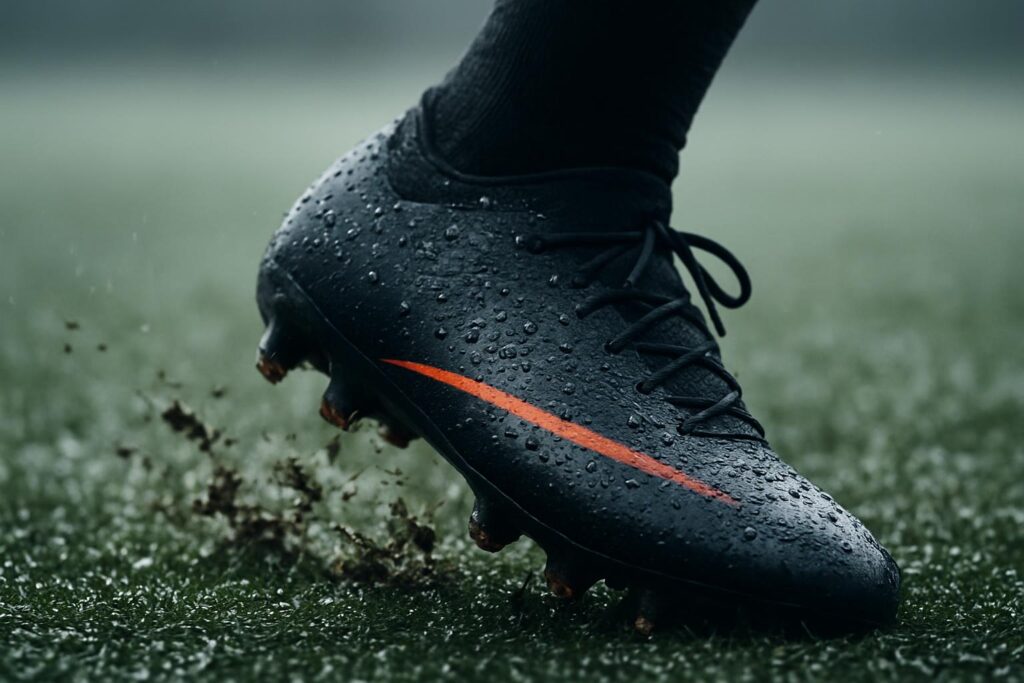
Rain changes everything on a football field. Turf turns slick, cut lines disappear, and every plant step has to be certain. You need cleats that shed water, keep your feet as dry as possible, and bite into soaked ground without clogging up. This 2026 guide highlights five standout football cleats that perform when weather gets ugly, with clear reasons why they handle extreme rain better than most and how to pick the right pair for your position and field conditions.
What Makes a Football Cleat Rain‑Ready
Not all football cleats are designed equally for wet conditions. A few design choices make a huge difference when the skies open up.
Water‑resistant upper that does not soak through
Cleats with coated synthetic uppers or one‑piece skins absorb less water than knit or open‑mesh designs. Less absorbency means lighter weight late in games and fewer blisters. Look for minimal vents or overlays that block obvious water entry points.
Gusseted or one‑piece tongue
A gusseted tongue attaches to the sides of the upper to limit water sneaking in through the lace channel. Some cleats use an internal bootie that also helps seal this area.
Raised collar and secure lacing
Mid and high collars can keep splashes and mud from flooding in at the ankle. Straps and structured lacing reduce movement inside the shoe, which cuts friction once socks get damp.
Wide‑spaced studs and flexible but stable plate
Outsoles with spacing between studs shed mud better. A TPU or Pebax plate that balances torsional stiffness with toe flex lets you plant and pivot without slipping.
Quick‑dry lining and easy‑clean surfaces
Smoother interior textiles dry overnight more reliably. Fewer stitches and stitched overlays trap less mud and are faster to rinse clean.
Realistic expectation about waterproofing
Fully waterproof football cleats are rare because sealed constructions trap heat and add weight. In practice, the best rain cleats use water‑resistant uppers, smart tongues, and mud‑shedding traction. The goal is staying lighter, more stable, and drier for longer, not turning a cleat into a rubber boot.
Top 5 Waterproof Football Cleats for Extreme Rain Games
Each pick below emphasizes materials and traction patterns that perform in downpours. Notes include fit tips, who benefits most, and care pointers to extend lifespan.
Nike Vapor Edge Pro 360 2
The Vapor Edge Pro 360 2 is a speed cleat that holds up in wet conditions thanks to its sleek synthetic upper and aggressive, widely spaced studs. It avoids heavy knit panels, which keeps water absorption in check. The plate is built for acceleration and lateral cuts, which is crucial when the field is slick.
Key rain features: Coated synthetic upper resists soaking; a low‑absorbency outer skin helps manage game‑long weight. The lace cover and streamlined forefoot reduce water pooling across the tongue area.
Traction and plate: The Edge system spreads studs for mud shedding and edge‑to‑edge bite. The plate flexes at the toe for fast takeoffs while staying torsionally stable through cuts.
Fit and comfort: Snug, performance fit in the midfoot and heel. The forefoot runs moderate in width. Lockdown is precise, which is vital when socks get damp and slippery inside.
Why it helps: Less water uptake and a traction layout that stays clear make it ideal for skill players who need confident footwork in rain.
Best for: WR, DB, RB, mobile QB on natural grass or wet turf.
Potential downsides: Minimal padding; not ideal for very wide feet. It is a low cut, so splash protection at the ankle is limited compared to mid/high collars.
Sizing tips: True to size for most. If you are wide, consider a half size up or compare with a wider last in other models.
Care in rain: Rinse mud off the plate immediately after games and stuff with paper towels to pull moisture overnight. Avoid heat sources that can warp the plate.
Under Armour Highlight Hammer MC
The Highlight Hammer MC is a go‑to for wet conditions if you prefer a higher collar and more structure. The durable synthetic shell resists water better than open knit, and the extended ankle height helps limit splash entry. The combination of support and secure lacing keeps feet planted when the field is unpredictable.
Key rain features: Synthetic upper with reduced venting helps keep the shoe from taking on water. The high collar and wraparound lacing help seal the ankle line better than low‑cut speed cleats.
Traction and plate: A molded TPU plate with studs that are substantial without being too dense. This spacing is helpful when mud starts to pack in.
Fit and comfort: Supportive midfoot and heel with a slightly roomier toe box than some speed cleats. Internal padding is medium, which keeps comfort steady even as socks dampen.
Why it helps: Collared stability reduces ankle roll risk on slick cuts. The upper sheds water and mud, staying easier to clean and lighter through the fourth quarter.
Best for: Hybrid players, TEs, LBs, power RBs, and anyone who wants more ankle security in rain.
Potential downsides: Heavier than low‑cuts. Not the most flexible at the forefoot for pure sprinters.
Sizing tips: Usually true to size; if between sizes, consider the larger size due to the structured collar.
Care in rain: Unlace fully and open the collar wide to air dry. Wipe the exterior with a damp cloth before mud dries to preserve the synthetic shell.
Adidas Adizero 12.0 Football Cleats

The Adizero 12.0 leans on a lightweight Sprintskin‑style synthetic upper that does not absorb as much water as mesh‑heavy designs. It is a speed‑focused cleat that remains nimble and responsive even after the first quarter rain intensifies. With a minimalist build, it avoids the sogginess that weighs down many knit‑dominant shoes.
Key rain features: Coated, single‑layer synthetic upper with limited stitching. This keeps water entry points low and makes post‑game cleanup fast.
Traction and plate: Firm plate with directional studs optimized for straight‑line burst and angled cuts. Stud spacing helps clear slop better than multi‑cluster layouts.
Fit and comfort: Snug race‑style fit. Lockdown at the midfoot is strong; the heel feels secure. Cushioning is lean and responsive, which keeps feedback high in slippery conditions.
Why it helps: Minimal water absorption and sharp traction cues make it a strong pick for skill positions that prioritize acceleration and route precision in rain.
Best for: WR, CB, slot receivers, returners, and speed RBs.
Potential downsides: Not ideal for wide feet without size adjustments. Less protective than bulkier, collared options.
Sizing tips: True to size for narrow to standard feet. If you have wider feet, try a half size up or explore a wider silhouette.
Care in rain: Rinse and wipe the coated upper as soon as possible; it will come clean quickly. Remove the insole to accelerate drying.
Nike Force Savage Pro 2
For linemen and power players in extreme rain, the Force Savage Pro 2 stands out. The supportive, synthetic shell resists soaking, and the mid‑high design with straps locks in the ankle and midfoot. It is built to control leverage when footing is unreliable, so you can keep hands inside, drive the sled, and move piles without slipping.
Key rain features: Water‑resistant synthetic upper with overlays that keep structure even when damp. The collar and strap system reduce openings where water can cascade in from the top.
Traction and plate: A sturdy plate with broader, deeper studs that bite into soft ground. Stud layout avoids overly dense clusters that would clog quickly.
Fit and comfort: Supportive and roomy enough for thicker socks or orthotics. Heel and midfoot lockdown feels very secure, even as moisture builds up inside the shoe through the game.
Why it helps: Stability in the trenches matters more than pure speed in the rain. The Force Savage Pro 2 keeps your base planted and lets you transfer power through the ground.
Best for: OL, DL, TEs who block frequently, and linebackers who take on blocks.
Potential downsides: Heavier than speed models; not ideal for players who prioritize top‑end sprinting.
Sizing tips: True to size for most, with enough volume for wider midfoot shapes. If you want a race‑tight feel, do not over‑size; rely on the straps to dial in.
Care in rain: Unstrap and open fully to dry. Use a soft brush under running water to clear mud from the studs before it hardens.
Under Armour Spotlight Lux MC 2.0

The Spotlight Lux MC 2.0 blends a streamlined, synthetic upper with a secure internal fit system. It keeps water out better than mesh‑heavy shoes, and the traction pattern stays lively as the field gets saturated. If you like a fast feel with more structure than minimalist speed spikes, this is a strong wet‑weather pick.
Key rain features: Sleek synthetic upper with limited seams for reduced water entry. The inner bootie helps seal the tongue area and maintains foot contact when socks get wet.
Traction and plate: Multi‑directional studs with useful spacing for shedding wet turf. The plate feels springy without feeling twitchy when the ground turns slippery.
Fit and comfort: Contoured midfoot and locked heel with a medium toe box. The internal bootie limits slippage and hot spots in damp conditions.
Why it helps: Supports quick cuts and pace changes while staying lighter in rain thanks to the water‑resistant shell and mud‑friendly stud layout.
Best for: WR, DB, RB, hybrid offensive players.
Potential downsides: The inner bootie can feel snug for very high arches. Cushioning is performance‑firm rather than plush.
Sizing tips: True to size. If you have a very high instep, try on with your game socks to confirm volume.
Care in rain: Pull the insoles to dry separately. Wipe the exterior soon after play to prevent grime from setting into the seam lines.
How to Choose the Right Rain Cleat for Your Position
You want traction and stability that match your role, without carrying unnecessary weight.
Skill positions
Prioritize a water‑resistant synthetic upper and a plate that accelerates cleanly. Look for angled studs at the perimeter for bite on cuts and spacing that sheds mud. Low cuts are fine if you prefer maximum agility, but in heavy rain a mid can add useful splash control.
Linemen and power players
Favor structure and stability. A mid or high collar with straps reduces slippage inside the shoe. Firmer plates with deeper studs anchor better in soft turf. Slightly wider toe boxes help foot splay for balance on wet drive blocks.
Defensive backs and hybrid defenders
You need speed with reliable edge control. A snug midfoot, secure heel, and directional studs are key. A mid cut adds confidence when backpedaling and flipping hips on a slick field.
Natural grass vs turf
On saturated natural grass, go with deeper, more aggressive studs and wider spacing. On wet turf, dense clusters can hydroplane, so give priority to perimeter traction and a plate that flexes at the toe to keep studs engaged.
Rain Game Setup and Care
Cleats are only part of the solution. Pre‑game setup and post‑game care maximize performance and lifespan.
Before kickoff
Socks: Use thin, moisture‑wicking socks under a slightly thicker game sock. The thin layer moves sweat and helps avoid friction once the outer sock gets wet.
Laces and tongue: Tighten laces through the midfoot to prevent foot swim inside the shoe. If your cleat has a lace cover or strap, use it to seal the top line.
Traction check: Jog and cut on the wettest patch you can find during warmups. If you clog studs, knock out mud and adjust footwork angles before the first drive.
During the game
Keep studs clear: Use your sideline time to tap and scrape off mud. A clean outsole can make more difference than any mid‑game adjustment.
Swap socks at half: If allowed, a fresh pair of socks reduces friction hot spots and restores some feel inside the cleat.
After the game
Rinse and brush: Use cool water and a soft brush on the studs and plate before mud hardens.
Air dry: Remove insoles, stuff with paper towels, and replace them once saturated. Dry at room temperature; high heat can warp plates and weaken glues.
Recondition: Wipe synthetic uppers with a mild soap solution. If you use a water‑repellent spray, apply light coats only to clean, dry material.
Fit and Sizing Tips for Wet Conditions
Fit changes slightly once water is in the mix. Plan for it.
Volume and lockdown
A snug midfoot and heel prevent sliding that can cause blisters when socks are damp. Avoid oversizing; use lacing and straps to customize lockdown.
Toe box room
You want just enough space to splay and grip without hitting the end on downhill stops. A thumb’s width of space at the big toe usually works under game socks.
Wide feet and high arches
Speed silhouettes can run narrow. If you have wide feet, consider models with roomier forefeet or size up a half size. For high arches, inner booties can feel tight; try on with your game socks to confirm comfort.
Why These Five Cleats Stand Out in 2026
All five prioritize water‑resistant uppers, fewer water entry points, and traction that stays functional as fields saturate. They are not sealed like rubber boots, but they limit water intake, resist mud buildup, and maintain stability. In extreme rain games, that combination is what matters.
Quick comparison by role
Fastest feel in rain: Nike Vapor Edge Pro 360 2, Adidas Adizero 12.0
Best ankle security in slop: Under Armour Highlight Hammer MC, Nike Force Savage Pro 2
Balanced speed and structure: Under Armour Spotlight Lux MC 2.0
Common Mistakes in Rainy Games
Overly dense stud patterns: They clog up quickly on saturated grass. Choose wider spacing where possible.
Knit‑heavy uppers: They feel great dry but can turn heavy after 20 minutes in rain.
Skipping midfoot lockdown: Loose lacing equals sliding feet inside the shoe, which kills traction and causes hotspots.
Drying with high heat: This can warp plates and delaminate uppers. Air dry only.
FAQ: Rain Cleats and Real‑World Performance
Are any football cleats truly waterproof
Fully waterproof builds are rare because sealing a cleat adds weight, heat, and stiffness. The best rain performers use water‑resistant synthetics, minimal venting, and features that keep water out as long as possible while staying light and responsive.
What about using longer studs
American football cleats have fixed studs. You cannot swap them like some soccer models. Choose outsoles with deeper, more aggressive studs and wider spacing for mud shedding if you play mostly on grass.
Should I size up for rain
Stay true to size for lockdown. If you need more volume for thick socks or wide feet, a half size up can work, but do not add so much space that your heel lifts. Secure lockdown beats extra space in wet conditions.
Do mid or high collars matter in rain
They help. A raised collar and solid lacing reduce splash entry and stabilize ankles on slick cuts. Low cuts remain viable for speed players who value maximum range of motion.
Conclusion
Extreme rain games demand cleats that resist soaking, grip saturated fields, and stay secure as socks get damp. Nike Vapor Edge Pro 360 2 and Adidas Adizero 12.0 deliver speed with water‑resistant shells. Under Armour Highlight Hammer MC and Nike Force Savage Pro 2 bring structure and ankle security for power roles. Under Armour Spotlight Lux MC 2.0 balances quickness and support for hybrid athletes.
Match the upper, collar height, and stud layout to your position and field type. Lock down the midfoot, keep studs clean, and care for your cleats right after the game. Do that, and you will stay lighter on your feet, keep your footing through every drive, and own wet‑weather snaps in the 2026 season.