
We are reader supported. When you purchase through links on our site, we may earn an affiliate commission. Also, as an Amazon affiliate, we earn from qualifying purchases.
The shortstop is the heartbeat of the infield. Every pitch asks for a decision, a step, a cue, a throw. If you want to master shortstop, you need skill, range, and a sharp defensive IQ that never sleeps. This guide breaks the position into clear parts you can learn, train, and apply. Read it once to see the whole picture, then come back to focus on a single skill block. That is how you build reliable defense that wins innings.
Introduction
Shortstop blends athletic movement with instant decision making. It is not only about physical tools. It is about how fast you process the game and how clean your mechanics stay under pressure. This guide shows you what the shortstop does on every type of ball, how to expand your range, how to communicate, where to stand, and what to train every week. Each section gives you steps you can act on right away.
The Role: What a Shortstop Actually Does
Central hub of the infield
The shortstop anchors the left side, ties together middle infield play, and directs traffic on cutoffs and relays. You read the hitter, the pitch, the count, and the runners, then match your position and first move to the highest odds play. You cover ground balls to both sides, pop-ups in shallow left and behind second, and you are a primary voice for bunt defense, steals, and first-and-third plays.
Coverage on balls in play
On grounders to the left side, you field or back up third. On balls up the middle, you own the area from the edge of second base to the hole. On pop-ups, you take anything you can reach from the lip of the infield to shallow left. On bunts, you cover third on a bunt to third, or charge when the third baseman vacates. On steals of second, you cover based on the play call or hitter tendencies.
Leadership and communication
You set infield depth, call cuts and relays, claim pop-ups early and loud, and alert the team to squeeze, slash, and pickoff looks. You mirror the catcher and pitcher, then fine tune the defense for the exact situation.
Core Skills: Foundation You Can Train
Footwork and first step
Range starts with the ready position and the first move. Set your feet shoulder width or slightly wider, hips loaded, chest over toes, hands out front. Use a light pre-pitch hop timed to ball release, land softly as the ball enters the hitting zone, and react. First move is a directional jab or crossover, not a hop in place. Keep your head still and your feet quiet until the read forms.
Soft hands and glove presentation
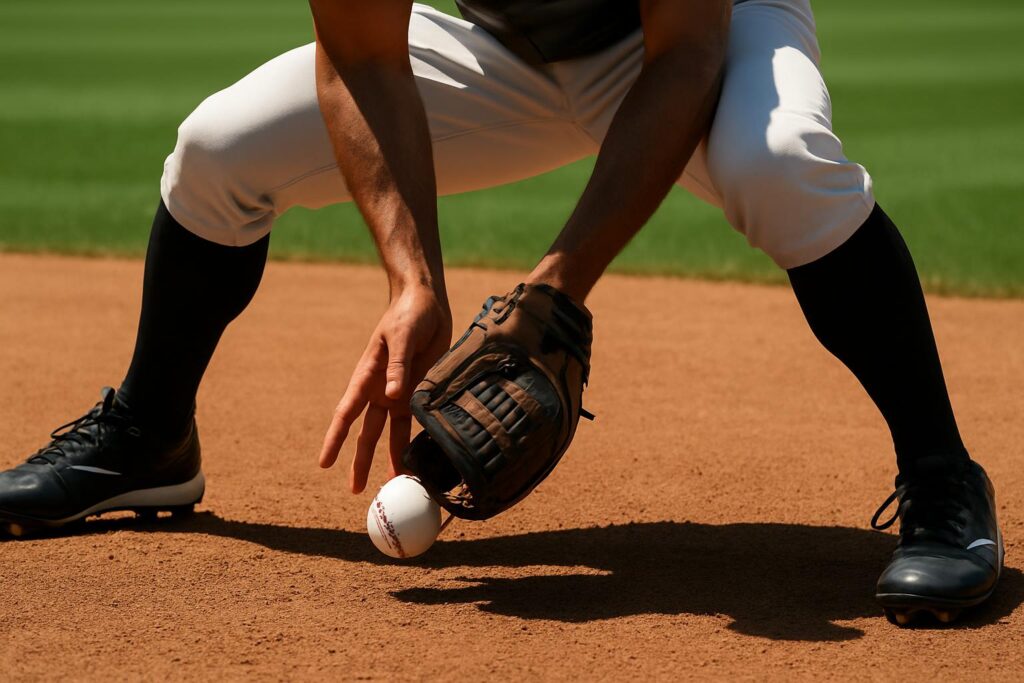
Show the glove early and low with fingers forward, palm relaxed. Let the ball enter a soft pocket. Give with the ball at impact to reduce bounce. Meet the hop out front of your body, not under it. Match your fielding stance to the hop: wide base on firm hops, narrower on slow rollers where you need to move through the ball.
Fast exchange and quick release
Shortstop throws are about speed and accuracy, not max effort. Bring the ball from glove to hand in a short, clean line near the center of your body. Maintain a compact arm circle. Keep your front side closed until release. Use a quick, repeatable throwing slot that works from multiple body positions.
Arm strength and accuracy from angles
You must throw on a line from traditional set feet, from on-the-run footwork, and from multiple slots on backhands and jump throws. Train to keep the ball flat and true. Accuracy under speed matters more than radar numbers.
Body control and throws on the move
Field through the ball when possible. On backhands in the hole, plant the right foot, replace it with the left, and either set and throw or use a controlled jump throw when time is tight. On slow rollers, use right-left field, gather, then left-right step and throw. Keep shoulders level so the arm can work clean.
Tags and base coverage
Expect contact on the bag. Present the glove to the ball, apply a firm tag low and in front of the base, and secure the ball through the tag. Straddle adjustments depend on the throw and runner path. Do not drift off the bag before the ball arrives.
Range: How You Get to More Baseballs
What range means
Range is the ground you can cover while still making a strong, accurate throw. It is not only speed. It is reads, routes, footwork, and the quality of your first two steps. Range grows as your pre-pitch plan improves.
Pre-pitch routine that builds range
Own the pre-pitch hop timed to ball release. Track the pitch type and location, then link it to likely contact. A fastball in can pull a right-handed hitter. A changeup away can push him. Reset your focus each pitch with a quick checklist: count, outs, runners, speed of hitter, wind, infield surface, and defensive call. This mental prep opens your first step.
Positioning with game context
Move two to four steps based on hitter spray, pitch plan, and count leverage. With two strikes, shade half a step toward the hole for two-strike protect swings. With a heavy pull hitter and a fastball plan, cheat toward the third-base side. With a contact left-handed hitter and offspeed plan, shade up the middle. On slow surfaces, play a step in to cut the hop. On fast turf, play a step deeper for reaction time.
Lateral movement patterns that win
Use a crossover step for balls beyond arm length and a shuffle for balls within range. Drop step for high hoppers you need to ride to a big hop. Stay low through the turn. Keep your eyes level so the hop stays readable.
Dive decisions and recoveries
Only leave your feet when the ball is beyond a realistic slide-step range. If you dive, catch, tuck, roll to your throwing side, and pop up with your feet under you. Know when to eat the ball if no out is available. Keeping the runner at first is better than forcing a wild throw.
Defensive IQ: Decisions That Save Runs
Your decision tree on contact
As the ball is hit, run a fast checklist: speed of runner, force situation, depth of ball, hop quality, your momentum, and the arm and position of your teammates. Choose the highest odds out, not the flashiest throw. If the ball pulls you away from the target and the runner is fast, take the sure out at first. If momentum carries you toward second and the runner is slow, start the double play.
Outs, inning, score, and runner map
With none out and a runner on first, look to turn two on any ball with pace. With one out and a runner on third in a tight game, cut a run at the plate only with a firm hop and your feet set. With two outs, do not force the lead out. Secure the sure out. In late innings with a lead, play no doubles depth and guard the line in certain counts.
Bunt and steal coverage
On bunt to third with a runner on first, shortstop covers third. On bunt to the first base side with third baseman charging, rotate to third if the runner breaks. On straight steal of second, cover based on pitch-out call, hitter tendences, and hand signal with the second baseman. On a hit and run, lean to cover the open hole but still read swing path.
Communication and priority rules
Shortstop has priority over outfielders on pop-ups inside the infield arc and over the third baseman on high pop-ups behind him when the ball is moving away from third. Call the ball early and loud. On relays, assign who has cut responsibility and who trails for the second throw. Confirm depth and target with the outfielder before the pitch when possible.
Managing shifts and analytics
Use spray charts and pitch plans to set starting spots, then trust your reads. Adjust mid at-bat if the pitcher cannot execute the plan. If the hitter chokes up or shortens the swing with two strikes, tighten up the middle half-step. If he lengthens and sells out for power, protect the pull hole.
Mechanics on Common Plays
Routine ground ball
Start early with small feet, field the ball out front with your chest over, right-left fielding rhythm, ball to center, two-seam grip, and a firm throw through the chest of the first baseman. Do not stop your feet; move through the catch into the throw.
Backhand in the hole and the jump throw
Plant right foot near the catch spot, sink the hips, glove out front, and secure the ball on a true backhand. If time allows, replace feet and set the throw. If not, use a controlled jump throw. Load off the right foot, rotate the hips, keep the arm compact, and throw on a flat line to first. Aim at the high outside edge of the first baseman to account for carry.
Slow roller and barehand
Read the speed of the ball early. If the hop is dying, field with right-left, scoop with the barehand in front of your left foot, and throw in one motion. Keep the elbow up and the wrist firm. If the ball has enough pace, glove it and make a short, quick release throw.
Chopper and big hop control
For choppers, retreat a half step to create a big hop you can field out front. Stay patient with steady feet. Do not stab. Control the hop, then throw with body momentum moving toward the target.
Line drives and knucklers
Beat line drives to a spot with first step quickness and soft hands. For knuckling flares, keep the glove steady and let the ball come to you. Avoid last second stabs that increase deflection.
Pop-ups behind short
Open with a crossover behind you, track with shoulders square to the ball, and catch with two hands when you can. Call early, adjust for wind, and avoid drifting under the ball late.
Double Plays: Precision and Footwork
Starting the 6-4-3
On a ball with pace where momentum carries you toward second, take it to the bag. If momentum carries you away, set your feet and make a firm, accurate feed to the second baseman chest high with slight tail to his glove side. On backhands near the hole, choose between a jump throw to second or the sure out at first based on runner speed and distance.
Turning the 4-6-3
On a feed from the second baseman, arrive early, clear the bag to the back side, receive with two hands, step and throw with a short arm path. Keep your feet light. If the feed pulls you toward the outfield side, use a drop step and throw from a lower slot while clearing the runner.
Pivot footwork at second
Target the back corner of the bag with your left foot, right foot down to receive, replace the left foot toward first, and fire. If the feed is high, jump and turn mid-air while clearing the bag, then throw. If the feed is low and late, secure the out at second and do not force the turn.
Feeds from third and first
From third, expect a strong chest high feed or a short hop. From first on a 3-6-3, position early and treat it like a quick tag play before the throw. Footwork must protect you from contact while completing the exchange.
Cutoffs, Relays, and Tags
Shortstop on relays from left and center
On balls to left or left center with a runner going first to third or home, the shortstop is the primary cutoff. Line up the outfielder to the base, read the throw height and carry, and decide to cut or let it go based on the runner and the throw. If you cut, secure, pivot, and throw to the next base quickly.
Alignments and reads
Set your angle early by pointing your chest to the target. Communicate cut or no cut. Trail runners matter. Be ready for a second throw to third if the lead runner stops.
Throws home and the trail runner
If the throw home is offline or dying, cut and throw to third for the trail runner. If the throw home is strong, let it go. Keep your feet live so you can adjust on a bad hop.
Swipe and block tags
For swipe tags, present the glove as the ball arrives and sweep through the base path while securing the ball. For block tags on short hops, get the knee down late, catch first, then tag. Do not over-commit to the block before securing the ball.
Positioning and Game Planning
Adjust to pitch types and hitter profiles
For sinkers and sliders to right-handed batters, guard the hole. For changeups and fastballs away, shade up the middle. Against left-handed pull hitters, shift a step toward third if no formal shift is on. Trust the pitch plan, then let your read override if the swing does not match the plan.
Count-based tendencies
Early in the count, be ready for hard pull contact. With two strikes, get ready for defensive swings and balls pushed the other way. On full count with runners moving, protect the middle and speed up your exchange.
Depth calls
Infield in with a runner on third and one out in a must-cut run situation. Double play depth with a realistic ground ball chance and a runner at first. No doubles depth late with a lead to cut off the gaps. Communicate these shifts with clear hand signals and eye contact.
Training and Drills That Build Real Skill
Daily warm-up that transfers
Start with a dynamic warm-up, then a short pre-pitch rhythm series: small hops, land soft, first step to each side, and a few dry field-through reps. Finish with 10 dry double play footwork reps.
Footwork and agility drills
Triangle drill: three cones set in a triangle. Shuffle, crossover, and open step around the triangle while simulating fielding and throwing transitions. Four-cone box: forward, lateral, and diagonal sprints with quick stops and starts. Ladder patterns that keep your hips down and eyes level. Add a first step reaction drill with a partner pointing direction at the last second.
Glove work drills
Short-hop series with a coach or partner: 30 to 50 reps forehand, backhand, and straight on. One-knee glove work to focus on soft hands and give. Barehand slow-roller scoops for 20 to 30 reps. Backhand and forehand ladders moving one step between reps to groove footwork to the ball.
Transfer and release
Quick exchange drill: catch from five to eight feet and fire to a net with a short arm path. Focus on clean grips and fast release. Add a clock goal to train speed without forcing mechanics.
Throwing program
Long toss on a line after warm-up, focusing on carry and accuracy. Mix in throws from different slots and on the run. Finish with 10 to 15 game speed throws to first at infield distance.
Fungo routine and volume
Daily fungo plan with 50 to 80 game-like ground balls: 10 routine, 10 backhand, 10 forehand, 10 slow rollers, 10 double play starts, and 10 double play turns. Keep quality high and feet active. End with five to ten relay cuts and tag plays.
Mental reps and video
Watch clips of your games. Pause before contact and predict your move. Check if your first step matches the swing. Make a short pre-pitch checklist you can stick to under pressure.
Common Mistakes and How to Fix Them
Late or false first step
Fix by timing your pre-pitch hop with ball release and landing as the ball reaches the plate. Avoid rocking or heel plants. Use a partner to clap on contact so you can sync your move.
Crossing over too early
If you cross before reading the hop, you get stuck. Train a small jab and shuffle first. Cross only when the ball is beyond arm length.
Hard hands and stabs
If the ball pops out, you are stiff or late. Add more short-hop glove work. Keep the glove quiet and receive, do not stab.
Rushing throws
Misses arm side and low mean you are flying open. Narrow the arm path, lock in the front side, and keep your head on the target through release. Choose the sure out when the clock is against you.
Poor communication
Late calls cause collisions and missed cuts. Make early, loud calls on pop-ups. Establish cut rules before innings. Point and confirm with outfielders.
Equipment and Setup
Glove size and break-in
Most shortstops use an infield glove in the 11.5 to 12 inch range. Aim for a shallow pocket that speeds transfers. Break it in with focused catch and short-hop work, not heavy bending that ruins the pocket.
Cleats, insoles, and wristband card
Wear cleats that allow quick starts without slipping. Comfortable insoles help late game footwork. A wristband with signs and positioning reminders can save a run.
Pregame field test
In warm-ups, test the surface. Note hard spots, soft spots, and lip speed. Adjust depth and hop strategy before the first pitch.
Measuring Progress
Practice metrics
Track fungo error rate, short-hop clean rate, exchange time, and throw accuracy to a target. Set weekly targets and log results.
Game metrics
Note routine play conversion, double play conversion, and throwing errors. Traditional stats like fielding percentage and assists help, but also judge how many borderline balls you reach. The goal is to increase the number of playable balls you convert without spiking errors.
Feedback loop
After each series, review one strength and one fix. Add a small drill block to address the fix that week. Keep the loop tight so improvements stick.
Path from Youth to Advanced Levels
Scaling the field
As throw distance grows, your pre-pitch and footwork matter more. Young players can get away with raw speed. Older levels punish slow reads and wild throws. Build efficient mechanics early so you are ready when the bases move back.
Building leadership
Start calling depth, cutoffs, and bag coverage at any age. The habit of leading transfers to higher levels. Teammates trust a shortstop who is always prepared and clear.
Putting It All Together
Shortstop excellence is repeatable. Your plan is simple: prepare with a clean pre-pitch routine, take the right first step, field with soft hands, exchange fast, throw on a line, and choose the highest odds out. Layer in range by reading swings and moving your feet early. Add defensive IQ by making the right decision for the situation, not the highlight. Train the drills that build these habits and measure your progress. Do this every week and your defense will stabilize, then rise.
Conclusion
The shortstop position rewards the player who thinks fast and moves clean. Build your foundation with footwork, hands, and accurate throws from any angle. Expand your range with better reads and smarter starting spots. Grow your defensive IQ by owning the situation before the ball is hit. Train with purpose, lead the infield, and make the routine play automatic. When the big moment comes, your preparation will carry you.
FAQ
What core skills define an elite shortstop?
Footwork and a fast first step, soft hands and early glove presentation, quick exchange and release, arm strength with accuracy from multiple slots, body control on the move, and clean tags and base coverage. Add clear communication and smart decisions to turn tools into outs.
How does a shortstop improve range?
Time the pre-pitch hop to ball release, sharpen first step reads from pitch and swing, adjust starting spots with count and hitter profile, and train crossover, shuffle, and drop steps. Use drills like the triangle drill, four-cone box, short-hop series, barehand slow-roller work, and backhand and forehand ladders.
What is the shortstop role on double plays and relays?
On double plays, start the 6-4-3 with firm feeds or turns momentum to the bag, and turn the 4-6-3 with clean pivot footwork at second. On relays from left and center, act as the primary cutoff, line up the outfielder, decide to cut or let it go, and be ready to throw to the next base or tag the trail runner.
What key in-game decisions does a shortstop make?
Choose the highest odds out based on runner speed, force situation, ball depth, hop quality, and your momentum. Set depth calls like infield in, double play depth, or no doubles. Manage bunt and steal coverage, and adjust positioning with pitch type, hitter profile, and count.
Which drills best build shortstop skills?
Triangle drill, four-cone box, short-hop series, one-knee glove work, barehand slow-roller reps, backhand and forehand ladders, transfer and quick release drills, long toss on a line, and a daily fungo routine with 50 to 80 game-like reps.