
We are reader supported. When you purchase through links on our site, we may earn an affiliate commission. Also, as an Amazon affiliate, we earn from qualifying purchases.
Right field is a demanding defensive position with a clear identity. It sits on the strong side of the outfield, guards the longest throws to third base and home, and often decides whether a single turns into an extra base. The right fielder must combine arm strength, accuracy, clean footwork, and smart decisions under pressure. This guide breaks down the role in plain language, step by step, so new players and coaches can understand what matters and how to train it.
Introduction
Many fans think of the right fielder as the power arm in the outfield. That is true, but it is only part of the story. A good right fielder converts contact into outs and limits bases with consistent execution. This article explains the position’s responsibilities, the technical demands of throwing, how to position based on hitters and game state, and how to build and measure arm strength. You will also learn common mistakes and practical drills. By the end, you will know what to prioritize and how to practice it.
What Is a Right Fielder
Field Location and Defensive Priorities
The right fielder covers the right side of the outfield, from the right field line to the gap in right center. Priorities are simple. Catch what you can reach. Keep runners from taking the extra base. Make strong, accurate throws to the correct target. Back up your teammates. Read the ball, arrive on time, and set your feet for a quick, controlled release.
Right Field vs Left and Center
Right field deals with more aggressive first to third advances on singles to the outfield. The throw to third base from right is long and often game changing. Center field covers the most ground and acts as the outfield captain. Left field often handles more short hops and plays in front of them. Right field must pair solid range with the best arm on many teams. The role rewards quick reads and a calm mind under pressure, especially when a runner from first challenges third.
Core Skills of a Right Fielder
Arm Strength: Why It Matters
Arm strength in right field turns base hits into station to station baseball. With a strong arm, runners stop at second instead of taking third, and tag plays at home are in reach. A firm throw with carry changes how teams run on you. Even one early assist can shut down aggressive base running for the rest of a game. Arm strength also builds margin for error. A fast throw that holds its line gives you more options under stress.
Throwing Mechanics That Work
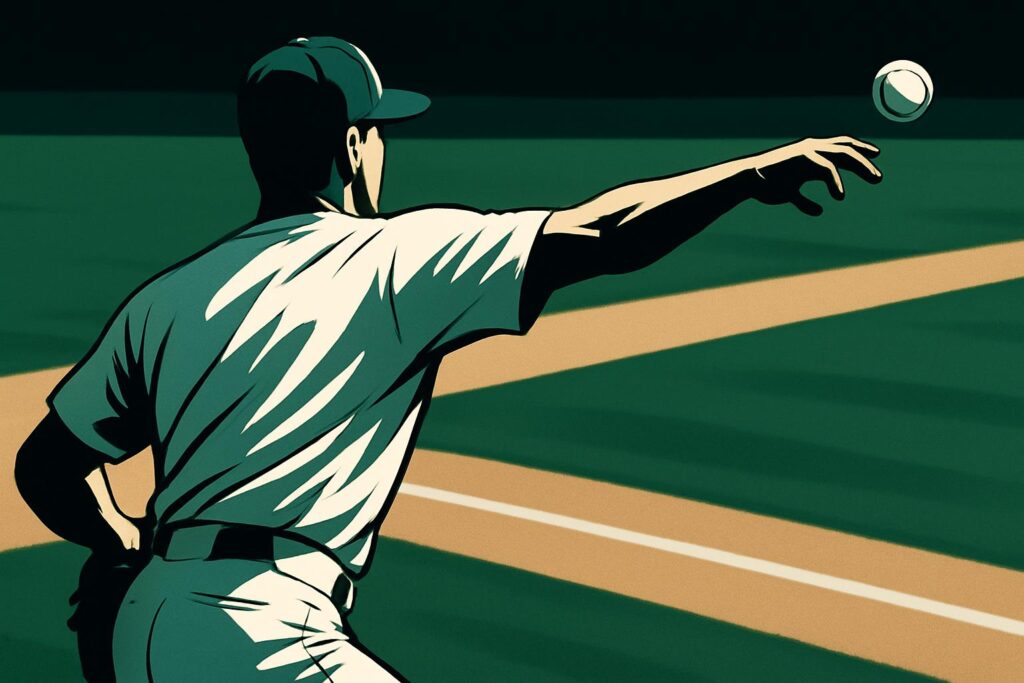
Good throws start before the catch. Get around the ball with two hands ready, bring your momentum toward the target, and move your feet with purpose. Use a clean crow hop to load the back leg and drive forward into the throw. Keep the exchange tight from glove to hand. Stay tall through release with the chest moving toward the target. Aim for a long hop or a low, chest-high throw that a cutoff can handle. Avoid rainbow lobs. Flight should be firm with backspin and a consistent line.
Grip matters. Use a four-seam grip so the ball flies straight and true. If you cannot find it instantly, do not search and delay. Get it out fast with the best grip you can secure. A quick, accurate throw beats a late perfect one. Finish through the line with your lead shoulder pointing to the target and your back hip coming through, which supports both velocity and accuracy.
Accuracy and Decision Making
A powerful throw to the wrong base hurts your team. Before each pitch, run the decision tree in your head. If a single to right with a runner on first, what is your throw. If a sharp grounder with two outs, where do you go. If a deep fly with a tag at third, how do you set up your body. The right call comes from planning before contact. Accuracy begins with the correct target. Most of the time, that target is the cutoff at the right height. When the play is at third or home and you have a real shot, throw through the cutoff. If you do not, hit the cutoff in the chest.
Speed, Reads, and Routes
The first step defines the play. Right fielders must read spin, trajectory, and contact quality. Right-handed hitters tend to slice the ball to right. Left-handed hitters often top-spin line drives that dive. Work angles early, keep your head steady, and use quick crossover steps to gain ground. Avoid false steps. Bad routes stress arm and glove skills. Good routes make every part of your game easier.
Glove Work and Wall Play
Right fielders need a consistent glove at shoulder height and below the knee. Secure clean transfers on the move. Practice one-handed picks on short hops and two-hand catches on balls you can square up. At the wall, approach under control, find the fence with your off hand, and time your jump. After a carom, turn with your chest facing the infield and get rid of the ball quickly. Your goal near the wall is to prevent extra bases as much as to make the catch.
Communication and Cutoffs
Right field must communicate with the second baseman, first baseman, and cutoff relay on every deep ball or base hit to right. Call the ball early when you have it and give a strong voice to avoid collisions. On relays, listen for the cutoff to adjust the target. If your infielder yells four, you throw to home. If they yell three, you throw to third. If they yell cut, you aim at the chest of the cutoff. Clear communication prevents wasted throws and keeps runners in front of you.
Game Situations and Positioning
Positioning Versus Hitters
Against a right-handed pull hitter with power, shade a step toward the line and a step deeper to protect the big fly and the hard one-hopper. Against a left-handed opposite-field hitter, play more straight up or shade into the gap, ready for a slice away from you. Pitch type matters. With a fastball plan away, expect opposite-field contact and shade toward the line. With breaking balls that induce pull, take one step toward the gap. Keep your feet alive and stay ready to adjust pitch by pitch.
Runners on Base and Throw Priorities
Runner on first, base hit to right. Your first thought is to hold the runner at second and keep the batter at first. Align your body to third on a hard single, but do not force a low-percentage throw. If the runner is not going, hit the cutoff to keep the double play in order. Runner on first and second, clean single to right. The lead runner is often aggressive to score. Set your feet early and work through the ball toward home. Throw through the cutoff if you have a play at the plate. If not, hit the cutoff and keep the trail runner off second.
Runner on third, medium fly to right with less than two outs. Your job is to charge under control, catch moving toward home, and release quickly with a low, firm throw. Depth matters. Too deep and the tag scores easily. Too shallow and a ball over your head becomes a disaster. Judge the arm’s capacity honestly and set your starting depth to match.
Relay and Cutoff Responsibilities
On balls to the right center gap or down the line that reach the fence, your throw goes to the relay lined up to third or home based on the lead runner. The second baseman usually serves as the primary cutoff on right field hits, with the first baseman trailing as a secondary. If the ball is in the corner and the batter thinks triple, aim through the relay to third unless the runner from first is scoring. When the play is at the plate, throw through the relay to home and let the cutoff read the path and adjust.
Holding Runners and Controlling the Game
The right fielder stops first to third pressure. The play starts with a quick field and a fast, accurate release. Even a throw to second that arrives on a line alters the runner’s plan. Do not air mail the cutoff. Keep the ball low enough for a cut and strong enough to deter the advance. The goal is not just assists. The goal is also holds, where the runner decides not to try for the next base because of you.
Arm Strength Development
Strength and Mobility That Support the Arm
Arm strength grows from the ground up. Focus on legs, hips, core, and upper back. Train single-leg strength with split squats and lunges. Build posterior chain with deadlifts and hip hinges. Develop rotational power with medicine ball throws in patterns that match your throwing motion. Strengthen the shoulder with scapular work, rows, and rotator cuff exercises. Maintain thoracic mobility and hip mobility to transfer force without stress. Avoid painful ranges. Quality movement and consistency beat random max throws.
Long Toss and Throwing Progressions
Use long toss to build arm health and carry. Start at a short distance, throw on a line with easy effort, and move back gradually. Keep smooth arcs on the way out and pull down firm on the way in. Count your throws and stop before fatigue changes your mechanics. Two or three long toss sessions per week can help, with volume adjusted to your game schedule. Add step-behind throws and crow hops to simulate game footwork. Track how the ball carries, not just how far you throw.
Pregame Routine and Recovery
Before games, warm up with dynamic work for hips, shoulders, and trunk. Start catch play at short range and build out. Finish with a few position-specific throws on a line to second, third, and home. After games, cool down with light band work, soft tissue care, and gentle mobility. Hydrate and sleep well. Recovery protects your arm strength and reduces the risk of soreness that alters mechanics.
Measuring Arm Strength and Accuracy
Track outfield throw velocity in miles per hour with a radar gun when possible. Note carry and alignment. Record assist attempts, actual assists, and hold rate on runners from first to third. Count accurate throws to the cutoff and target height. Over time, this data shows if your arm is getting stronger and if your decision making matches your range.
Offensive Role of a Right Fielder
What Teams Expect at the Plate
Traditionally, many teams place a power bat in right field, but modern roster building values defense and arms as well. At youth levels, you may see a mix of profiles. Regardless of offense, your defensive role should not slip. Good right field defense prevents runs in ways that do not always show up in highlights. On the bases, right fielders must run smart, take extra bases when the read is clear, and tag properly on deep flies to center and left. Baseball rewards players who add value on both sides of the ball.
Strategy and Cutoffs in Depth
When to Throw Through vs Hit the Cutoff
Throw through the cutoff when you have a real chance to get the lead runner at third or home. A real chance means a clean field, good grip, your body moving toward the target, and a runner who is still short of the bag. If any of those elements are missing, aim for the cutoff’s chest with a firm, low throw. The cutoff can redirect to stop the trail runner or cut and fire to a different base. Do not ignore the cutoff to chase an unlikely out. Force runners to earn every base.
Backup Responsibilities
On bunts and slow rollers to the left side, the right fielder must back up first base in case of an overthrow. On throws from the catcher to first, trail into foul ground to secure misfires. On deep balls to left field, shift to cover second or first as the play demands and mirror the flow of the infield. Good backups save runs and keep innings under control.
Drills for Right Fielders
Crow Hop and Long Hop Drill
Set up cones at fielding distance and at the target base. Field a rolled ball, use a controlled crow hop, and throw on a line with a long hop that arrives at the cutoffs chest. Emphasize a quick exchange, forward momentum, and a low trajectory. Repeat from different angles along the right field line and in the gap.
Do or Die Grounder Drill
Have a coach hit or roll hard grounders with a runner simulating a dash to home or third. Charge hard, pick clean with one hand, and throw in one motion. Keep your head steady and eyes on the release point. This teaches urgency and body control on the most important right field ground ball.
Fence and Carom Reads
Use the warning track to practice wall approaches. Jog to the wall at game speed, touch the fence with the off hand, locate the ball, and make a quick transfer. Add live reads where balls hit the corner and rebound. Work on getting your chest to the infield before you throw. Accuracy after a carom often decides if a double becomes a triple.
Relay Alignment Reps
Set relays with the second baseman and shortstop. Hit balls to the gap, call targets, and throw through the relay. Practice listening for adjustments and aim to hit the cutoff in the chest on every rep. Rotate between home and third targets so your sight lines become automatic.
Route and First Step Drill
From a ready position, take a coach’s fungo with random placement. Work on first step reads, clean angles, and crossover speed. Track the ball with your head quiet and shoulders level. Limit false steps. The goal is to arrive early with balance and set up a strong throw.
Common Mistakes and Fixes
Air Mailing the Cutoff
Mistake: high, arcing throws that sail over the cutoff and advance runners. Fix: lower your release, aim at the cutoff’s chest, and prefer a firm long hop to a rainbow. Drill chest-high targets with feedback on height and carry.
Throwing to the Wrong Base
Mistake: chasing the lead runner when you have no chance. Fix: run the play before each pitch. Default to the cutoff unless the lead runner is clearly in play. Know the outs and the speed of each runner. Decide ahead of time, then execute fast.
Slow Setup and Release
Mistake: catching flat-footed and adjusting after the catch. Fix: arrive early, get around the ball, and let momentum move to the target. Tighten the glove to hand exchange. Practice quick crow hops into throws at game speed.
Bad Routes and Wall Hesitation
Mistake: drifting to the ball and slowing down near the wall. Fix: commit to clean lines with early crossover steps. At the wall, touch with the off hand to locate and go up under control. Repetition removes fear and builds trust.
Poor Communication
Mistake: silent outfield leads to collisions and missed relays. Fix: call the ball early and loud. On relays, listen for commands and adjust your target. Agree on simple words before the game and stick to them in every drill.
Evaluating a Right Fielder
Box Score and Advanced Views
Useful stats include assists from the outfield, errors, and holds where runners stop short. Track first to third rate allowed on singles to right. Better right fielders allow fewer advances. Advanced metrics like outs above average and ultimate zone rating can add context over many games. Raw arm strength in miles per hour and average throw distance with carry help explain why a player deters runners even when assists are rare.
Video and Practice Metrics
Film your footwork on ground balls and wall plays. Time catch to release and compare across games. Track the percentage of throws that hit the cutoff in the chest. Keep notes on your positioning choices based on hitters and count. The goal is steady improvement, not just highlight throws.
Youth Coaching Points
Simple Rules That Hold Up
Teach young right fielders three habits. Hit the cutoff high and firm unless you have a real shot at the lead runner. Move your feet early so your body is aimed before the catch. Back up first base on any play that could pull a throw across the diamond. These rules scale from youth to high school and beyond.
Footwork and Confidence
Run footwork-only sessions with no throws to build rhythm. Add throws after the feet are right. Limit throw counts early and keep the arm fresh. Praise correct decisions, not just big arms. Confidence grows when players see that smart choices remove pressure from every throw.
Right Field in Context
How the Position Affects Team Defense
The right fielder converts defensive plans into real outs. Pitchers throw with more freedom when the corner outfielders protect the lines and deny extra bases. Infielders position more aggressively when they trust the throw from right. A strong right fielder changes how opponents run the bases, which lowers run expectancy without a pitch being thrown.
Adjusting to Ballpark and Conditions
Wind patterns and wall shapes matter in right field. In parks with a tall right field wall, practice caroms and set conservative depths on windy days. On wet turf or hard infields, expect quicker skids and plan for shorter hops. Keep spikes clean and adjust your crow hop to maintain traction. Small adjustments prevent big mistakes.
Putting It All Together
Checklist for Every Pitch
Before the ball is in play, know the count, outs, runner speed, and likely contact type. Choose your starting spot based on hitter and pitch plan. Decide your throw priorities if the ball comes your way. As the pitch is delivered, get into a balanced ready position. On contact, take a decisive first step, run a clean route, and set your body toward the target. Field the ball, transfer quickly, and throw with a firm line through or to the cutoff. Then back up the next logical base.
Mindset of a Reliable Right Fielder
Stay calm. Trust your preparation. Make the high percentage play unless the game demands a risk. Execute the basics every time. Arm strength is a tool. Decision making turns that tool into outs and run prevention. Consistency across routine plays defines great right field defense.
Conclusion
Right field is about strength with control, range with discipline, and constant awareness. The role demands a live arm, but it rewards smart choices even more. When you prepare your footwork, refine your throwing mechanics, and plan your targets before contact, you turn pressure moments into routine outs. Build strength the right way, practice game situations, and hold yourself to clear standards on accuracy and decision making. Do that, and you will own the right field line, protect third base, and anchor the strong side of your outfield.
FAQ
Q: Why is arm strength so important for a right fielder
A: Arm strength stops first to third advances, keeps runners from scoring on singles, and creates real chances for outs at third and home.
Q: When should a right fielder throw through the cutoff
A: Throw through the cutoff when you have a real chance at the lead runner with a clean field, good grip, your body moving to the target, and the runner still short of the bag.
Q: What is the default throw on a single to right with a runner on first
A: Hold the runner at second, align to third if the runner goes, and if not, hit the cutoff in the chest to keep the double play in order.
Q: What are the most useful drills for right fielders
A: Crow hop and long hop drill, do or die grounder drill, fence and carom reads, relay alignment reps, and route and first step drill.
Q: How can a right fielder reduce errors on throws
A: Arrive early, set the body toward the target, use a four seam grip, prefer a firm long hop over a high arc, and aim for the cutoff’s chest.