
We are reader supported. When you purchase through links on our site, we may earn an affiliate commission. Also, as an Amazon affiliate, we earn from qualifying purchases.
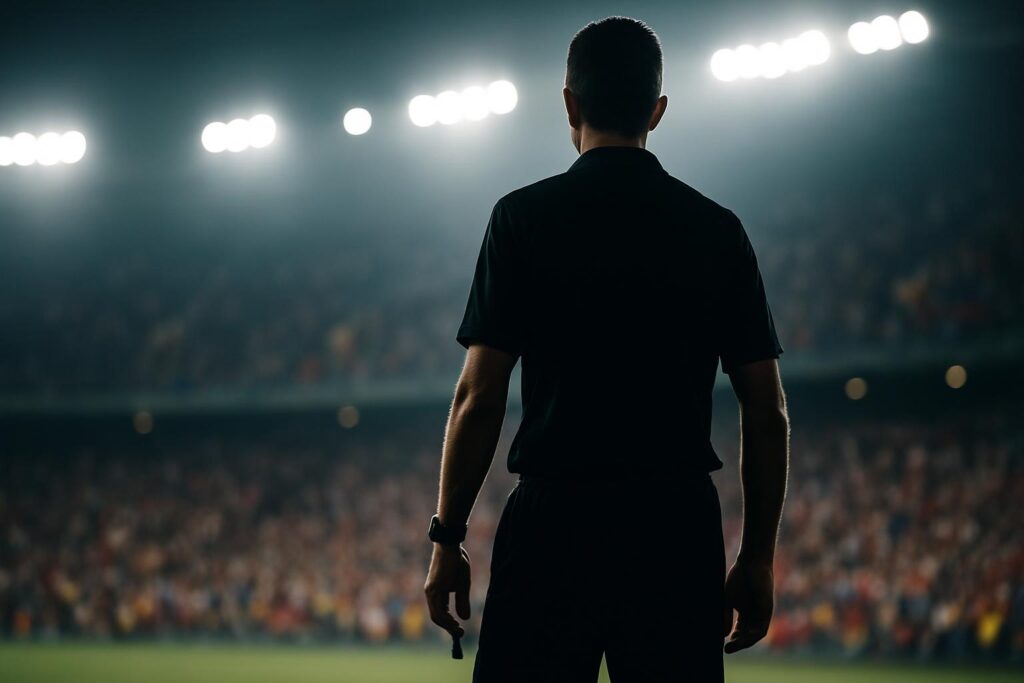
Crowd noise is not just atmosphere. It is information, pressure, and feedback delivered in real time to the officials tasked with enforcing the rules. Fans want to influence calls. Referees want to apply the laws fairly. Between those forces sits a complex psychology that affects split-second decisions. This guide explains why home crowds can shape officiating, what the data says across different sports, how leagues are responding, and what coaches, players, and referees can do to reduce bias and sharpen decision quality in loud, high-stakes environments.
Why Home Crowds Can Influence Referees
Attentional load and uncertainty
Referees must track multiple players, ball movement, positioning, and rule constraints while anticipating contact and deception. Under uncertainty, attention narrows toward salient stimuli. A sudden roar or collective gasp can become a salient cue. Even when officials try to ignore it, the noise can shift focus and timing, nudging marginal judgments toward the side that just elicited the loudest response.
Social pressure and conformity
Large groups can produce social pressure that affects decision weighting. The presence of thousands of invested observers increases the perceived cost of a counter-normative call. If the home crowd expects a foul, booking, or strike, pushing against that expectation requires extra conviction. The more ambiguous the event, the stronger the pull toward the socially dominant signal.
Arousal and risk calibration
Loud noise elevates arousal. Elevated arousal can speed reaction time but can also increase reliance on heuristics. One common heuristic under social pressure is status quo preservation: keep play moving and avoid high-impact interventions unless the evidence feels overwhelming. Another is loss aversion: avoid decisions that could trigger extreme backlash. This can affect penalty awards, ejections, and late-game time management.
Feedback loops in real time
The crowd reacts instantly. Officials get immediate feedback after a whistle or non-call. Positive feedback reinforces confidence. Negative feedback can erode it and shift the threshold for the next call. Over the course of a match, this feedback loop can subtly change advantage calls, disciplinary thresholds, and added time decisions.
What the Evidence Shows Across Sports
Soccer: Foul counts, cards, penalties, and added time
Decades of match data show consistent patterns in many leagues. Away teams tend to receive more fouls and cards. Penalties favor the home side on marginal plays. When the home team trails, added time often stretches longer. These effects shrink when objective technology supports decisions, when stadiums are emptier, and when officials are highly experienced and better shielded from crowd proximity.
Natural experiments during seasons with restricted or no attendance have been especially clear. With empty stands, home advantage dropped and foul asymmetries narrowed. Penalty awards shifted toward a more balanced baseline, and added time more closely reflected injuries and stoppages rather than game state and crowd energy. The effect did not disappear completely, because player behavior, travel, and familiarity still matter, but the crowd component diminished.
Basketball: Foul margins and free throws
In professional and elite college basketball, home teams historically receive slightly fewer fouls and enjoy more frequent trips to the line in close games. This edge is most pronounced on block-charge, hand-check, and verticality calls that require speed and judgment. During seasons with limited fan presence, several leagues recorded smaller foul disparities and more neutral officiating metrics, especially late in games. The timeline aligns with the idea that social pressure can tilt ambiguous whistles.
Baseball: Strike zones under noise
Baseball umpires call thousands of borderline pitches. Crowd reactions to called strikes or balls can be intense in key moments. Analyses of pitch-level data have shown modest home-friendly tendencies on the edges of the zone, though the direction and size vary by park, inning, and umpire. These tendencies appear smaller when electronic strike zone feedback is emphasized and when umpires receive robust postgame evaluations tied to video review.
American football: Defensive pass interference and holding
American football features calls with major outcome swings. Defensive pass interference and offensive holding are both high-impact and often ambiguous. In loud stadiums, noise can compress communication among officiating crews, making consistent positioning and cross-checking harder. Historical splits show situational leaning in close games, particularly on bang-bang plays and near the end zone. When replay or clear positioning reduces ambiguity, the bias narrows.
Hockey: Penalties and makeup calls
NHL data often shows near parity in total penalties by game’s end. This parity sometimes arrives through subtle makeup patterns. When the home team receives an early penalty and the crowd reacts strongly, the next marginal call may tilt toward the away side to maintain perceived balance. The mechanism is not conscious favoritism but rather a human pull toward equilibrium under visible scrutiny.
When and Where Fan Pressure Hits Hardest
Stadium design and proximity
Referees stationed near stands with steep angles and tight touchlines face sustained noise at close range. Football stadiums with enclosed designs trap decibels and increase perceived intensity. Smaller arenas can create a pressure cooker effect with fewer people if acoustics are tight and the fan base is coordinated.
Decision type and visibility
Subjective calls with complex context are the most vulnerable. Fouls, block-charge, handballs with deflections, obstruction, and off-ball infractions demand holistic reading. Objective events like goal-line decisions or offsides with reliable replay are less susceptible. The more an official can anchor to clear evidence, the less the crowd can sway the outcome.
Game state and stakes
Late-game situations amplify crowd influence. A home team chasing a goal or basket produces higher-volume reactions to every contact, sprint, and stoppage. Rivalries and playoffs magnify scrutiny. Officials often show more conservative thresholds for decisive interventions late unless the evidence is overwhelming.
Experience and crew dynamics
Veteran officials show smaller crowd effects. Experience raises confidence at marginal thresholds and improves positioning. Crew communication matters as well. Clear pregame allocations, consistent eye lines, and quick cross-checks between officials leave less room for noise to fill gaps. Inexperienced crews face more cognitive load and are more susceptible to salient external cues.
How Leagues Are Reducing Crowd-Driven Bias
Technology and objective anchors
Goal-line systems, video assistant protocols, and replay support reduce ambiguity. When referees can offload the most decisive and hard-to-see moments to objective checks, they conserve mental bandwidth for game flow. This lowers the leverage of crowd noise on the highest-impact calls.
Structured communication
Crew headsets and standardized hand signals streamline exchanges. When every official knows who owns each phase of play and has a direct line for quick confirmation, the crew does not need to rely on crowd-suggested cues to resolve uncertainty. The clarity reduces the power of the loudest voices in the building.
Postgame evaluation and coaching
Performance reviews built on video and data provide feedback without crowd distortions. Officials receive consistent coaching on positioning, anticipation, and thresholds. Over time, this nudges decision-making toward stable standards that are less sensitive to context and noise.
Training under simulated pressure
Noise exposure training and scenario simulations prepare officials for the physiological effects of loud environments. Practicing with elevated heart rate, limited communication, and timed decisions increases resilience. Repetition turns pressure into routine.
Practical Playbook for Coaches, Players, and Referees
For coaches
Anticipate noise and plan for it. Use hand signals, visual cues, and structured substitution routines so play-calls do not collapse when communication fails. Build set-piece and sideline mechanics that assume limited verbal reach. Educate players on whistle timing and body control, especially in the penalty area or paint. Remind leaders that dissent rarely flips a call and often hardens thresholds against your side.
In tight environments, design tactics to reduce ambiguity. Clean footwork on challenges, clearer body position in the box, and disciplined off-ball movement reduce the chance of marginal whistles going the wrong way. Do not chase calls. Chase clarity.
For players
Refocus on controllables. Stay on your feet when contact is light. Sell legitimate fouls without embellishment that invites scrutiny. Reset quickly after calls. Use breath control between whistles to lower arousal. Maintain spacing on dead balls so officials have sight lines. Communicate with your captain rather than crowding the referee.
Understand tendencies. Late in games, officials favor flow unless the offense creates obvious advantage. Earn advantage with decisive movement and clear separation rather than expecting a late bailout whistle amid chaos.
For referees
Use pre-commitment cues. Set a clear threshold in the pregame for what constitutes a bookable foul or a penalty-level infraction. Stick to it despite noise. Build a routine between whistles: breath, scan, reset posture, recheck responsibilities. Speak briefly and clearly. Do not explain to the crowd. Communicate only with players and your crew.
Own your angles. Beat the play to the spot. When you arrive early and set your eyes, the noise cannot give you the picture. You already have it. On marginal calls, ask for the crew check you specified pregame. Use the technology available. Keep player management calm and concise. Consistency is your shield.
Building a Decision-Proof Process
Pre-commit to standards
Before kickoff, write down thresholds for key calls. Decide what equals reckless versus careless, what constitutes advantage versus stoppage, and how you will handle dissent. Share roles and escalation paths with your crew. This pre-commitment serves as a shield against momentary social pressure.
Control your physiology
Noise raises heart rate. Elevated heart rate can narrow attention. Use brief recovery breaths after each whistle. Reset posture, widen your field of view, and run the next play in your head. Physiology management is decision management.
Protect sight lines
Do not let noise reposition you. Your job is to beat the play to the best angle. When a crew owns angles, ambiguity drops and with it the power of external cues. If you get screened, communicate the handover quickly so someone else owns the decision with a clear view.
Simplify the field
Players and coaches can reduce marginal events. Cleaner technique, disciplined spacing, and clear contact thresholds create less noise in the data. Fewer ambiguous incidents mean fewer opportunities for crowd influence to matter.
Key Myths vs. Reality
Myth: Home bias proves unfair officials
Reality: Most officials aim for neutrality. Bias emerges from human limitations under load and noise. Better support and training reduce it. Technological anchors shrink it further. The goal is not to chase perfect neutrality on every whistle but to build systems that push decisions toward fairness as the stakes rise.
Myth: Coaching aggression gets more calls
Reality: Short, respectful advocacy is effective. Prolonged dissent backfires by raising defensive thresholds. The best coaches invest in clarity and set their team up to remove ambiguity rather than to provoke whistle swings.
Myth: Silence removes home advantage
Reality: Familiarity, travel, and tactical matchups still matter. Crowd pressure is one component. Taking it away reduces some edges but not all of them.
Putting It All Together
A model for decision resilience
Combine objective anchors, crew discipline, and physiological control. Technology handles what it can. Pre-commitment and communication cover the gray areas. Breath and posture keep attention wide. The crowd will try to bend perception. Your process returns it to center.
Checklist for the next big game
Before the game: define thresholds, assign roles, test headsets, do two noise-exposure drills, and verify timing devices. During the game: own angles, communicate quickly, stick to thresholds, and reset after each whistle. After the game: review video, audit decisions, and improve positioning or thresholds where noise seemed to intrude.
Conclusion
Home crowds can and do influence referees, especially on subjective, high-impact decisions under uncertainty. The mechanism is not corruption but human cognition under pressure: attention narrows, arousal rises, and salient social signals tug at borderline judgments. The evidence across sports shows that when noise falls or objective support rises, home-side officiating advantages shrink.
The path forward is clear. Leagues should keep building objective anchors and support systems. Officials should train their physiology, protect angles, and pre-commit to consistent thresholds. Coaches and players should minimize ambiguity and manage communication for loud venues. With preparation, the game becomes cleaner, decisions steadier, and the noise what it should be: passion in the stands, not pressure on the whistle.