
We are reader supported. When you purchase through links on our site, we may earn an affiliate commission. Also, as an Amazon affiliate, we earn from qualifying purchases.
Playing first base looks simple from a distance. Catch the ball and step on the bag. The reality is different. The first baseman touches the ball on many plays, anchors the infield, and prevents free bases. Strong footwork, quiet hands, and constant communication turn this position into a run-saving engine. Secure outs at first while preventing extra bases and runs. Manage throws, hold runners, field grounders, execute bunt defense, guide communication on the right side.
Core role and mindset
What the team needs from first base
The position lives on reliability. You finish plays others start. You also start plays that stop rallies. Your job is to convert outs at a high rate and erase mistakes with picks and tags. You do it with solid positioning, clean footwork, precise timing, and a calm glove.
Every decision centers on two goals. Maximize outs. Minimize advancement. When in doubt, secure the sure out at first. When time allows, look up and cut off greedy baserunners.
Physical profile and handedness
Length helps, but technique matters more. Strong legs keep you balanced while stretching or changing direction. Soft hands turn tough hops into routine outs. Quick exchange speed adds double plays. Left-handed throwers hold an edge on many bag plays, but right-handed first basemen excel with refined footwork and anticipation. Master the basics before chasing style.
Pre-pitch setup and positioning
The ready stance
Adopt an athletic base. Feet just wider than shoulders. Hips low, chest tall, glove relaxed in front. Weight on the balls of your feet. Eyes on the hitter, then the pitcher, then the situation. Breathe. See the field before the pitch, not after contact.
Depth and lateral positioning
With no runners and a normal hitter, play a step behind the bag and two to three steps off the line. Move deeper for a heavy pull hitter or a hard thrower who induces grounders. Pinch the line late in counts where the hitter protects and may punch the ball inside-out. If your pitcher is a sinker or heavy ground-ball arm, stay ready to attack choppers in front. If your pitcher misses up or is a fly-ball arm, you can guard the line a touch more.
Runner and outs count
With a runner on first, adjust toward the bag. Hold the runner when needed, then release to fielding depth as the pitcher commits to the plate. With two outs, prioritize the sure out. With one out and a slow runner, play a step deeper to start a double play on a sharp grounder. With speed at the plate, guard the line and cut extra bases.
Field conditions and wind
Fast infields shrink your reaction window. Soften your stance and get lower. Slow infields allow another shuffle toward the ball. Wind and sun matter on pop-ups along the line. Expect late movement. Think fence first, ball second, and own the space.
Bag footwork and receiving throws
Target, timing, and body line
Show a quiet, early target as your fielder sets his feet. Keep the glove in the line of the throw, not stabbing at the last moment. Track the ball with your eyes, not your head. Stay square to the throw until you move into the stretch.
Foot placement on routine throws
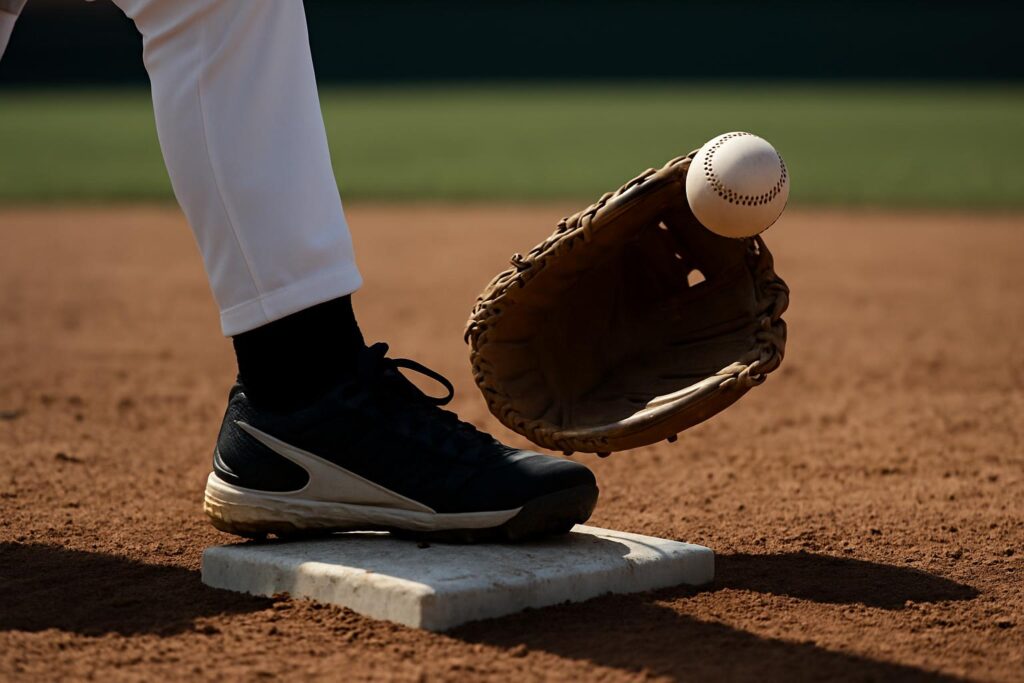
Anchor the ball-side foot on the front inside corner of the bag, then step to the ball with the free foot and stretch late with chest over the front knee. Present a firm target early, and never stretch until the ball is on the way. This keeps you balanced and ready for an off-line throw or a late hop.
The late stretch
Do not chase distance too early. Wait for release, read flight, then extend. Keep the back heel light. Lead with the glove. Lock the elbow softly at the end, not at the start. Overstretching early causes misses, pulled feet, and collisions.
Picks and short hops
Expect imperfect throws. Train to pick with quiet hands and a stable base. Attack short hops forward with the glove moving to the ball. Sit for long hops and funnel to the center. Keep the glove thumb up on picks and angle the pocket toward the hop line. Your off hand secures the ball after it hits leather, not before. Go get short hops with the glove moving forward, keep the palm to the ball, and funnel long hops to the center of the body. Commit early to either attack or retreat to avoid getting stuck in between.
Swipe tags and body protection
On throws pulling you into the runner, receive and turn the tag path away from the lane. Use a low, quick swipe across the front of the base as the runner arrives. Keep your knees bent and feet active to avoid getting tangled. When the throw carries you off, show the umpire the ball as you recover to the bag.
Holding runners and pickoff work
Setup at the bag
Stand with the inside foot near the front inside corner, heel light, toe open to the pitcher. Keep your shoulders square to the rubber and your eyes on the runner. Present a steady target for the pitcher without telegraphing the pick. Your first move after the pitch commitment is a firm shuffle off the bag to fielding depth.
Tag technique on picks
Expect low throws near the base. Drop the tag straight down across the front edge of the bag. If the runner is diving back hands first, tag the wrist or forearm, not the back. If he slides feet first on a back-pick, tag the thigh then the hip. Always secure the ball before the swipe. Do not block the base path with your leg.
Timing cues
Read the runner’s lead and his first step. Big secondary leads invite back-picks from the catcher. Your eyes must snap to the plate on pitch release and back to first on potential throws. Talk with the pitcher about quick looks, varied holds, and planned pick sequences. Stay quiet with your feet to avoid balks.
Ground balls and double plays
Routine grounders to first
Own balls hit within a step or two. Attack with two hands when the hop is true. Secure the ball first. Step on the bag for the out. Check the lead runner after the out, but do not force a throw across the diamond unless you have a clear lane and strong body control.
Starting a double play
On a sharp ball with a runner on first, go to the bag or feed second. If the ball pulls you toward second, fire a chest-high throw to the shortstop or second baseman with your momentum carrying you forward. Follow your throw a few steps to back up a return. Use a quick arm path and a short stride. Hit the lead shoulder of the receiver to keep the pivot smooth.
3-6-3 and 3-6-1 turns
On 3-6-3, secure the ball with your left foot on the bag if possible, throw a firm feed to short, then reestablish the bag with your right foot for the return. On 3-6-1, make a strong feed and clear the base path. The pitcher covers first for the second out. Yell cover to cue the pitcher early. Keep your eyes on the return path in case of an offline throw.
Plays at the plate from first
With a runner on third and a hard chopper, step on first for the sure out unless the lead runner is dead to rights. On a bunt with the infield in, consider the lead runner first if the play is in front of you and you can throw without crossing the lane. If you throw home, throw through the runner lane and stay tall through the release.
Bunt and slow roller defense
Who charges and who covers
Pre-pitch, confirm bunt coverage with your infield and pitcher. If the bunt is to the first base side or dead in front, the first baseman charges and second base covers first. If the bunt is to the third base side, the first baseman holds the bag and prepares to receive the throw. With a runner on first, communicate early to avoid two fielders chasing the same ball.
Fielding and throwing on the run
Attack slowly rolling bunts with a low posture. Scoop with the glove or bare-hand only if the ball is rolling clean and you need the extra half step. Grip across the seams quickly. Throw through your target with your momentum moving to the base. Aim low and firm. Let the fielder at the bag stretch to you.
Suicide and safety squeeze reads
On a clear squeeze, charge hard the moment you read early movement from the batter or the runner at third. Yell home if you are fielding and the play is at the plate. If you hold, be ready for the back-pick to first after the pitch if the hitter misses.
Pop-ups, foul territory, and fence plays
Priority and communication
Call the ball loud and early on anything in your lane. The catcher has priority on balls straight up or behind the plate. You have priority on pop-ups near the first base line unless the right fielder calls with depth and momentum forward. Echo the call until the catch is secured.
Fence awareness
Find the fence with your throwing hand first, then turn your eyes back to the ball. Keep your feet active so you can stop before the barrier. Drift under the ball, not into the rail. If the wind pushes, give yourself another step of room and take the ball slightly higher.
Cutoffs, relays, and base coverage
Right field reads and cuts
On singles and most balls to right field, the first baseman is the primary cutoff to home or third based on the play call. Set your angle early, get lined up by the catcher, and show a big target. Secure the relay, then throw through the cutoff if the play advances behind you. Do not chase too deep or you will vacate first with the batter rounding.
Center and left field responsibilities
On balls to center or left, the first baseman usually trails the batter-runner, backs up first, and lets the middle infield handle the cut. Stay deep enough to stop an overthrow but close enough to reach the base if the runner slams the brakes. Communicate with the pitcher about who will back up if the throw goes to third or home.
Plays at home from the outfield
When set as the primary cut to the plate, square your chest to the throw, step through as you receive, and fire through the catcher. Keep the throw low and true. If the runner stops, be ready to redirect to third without a windup.
Rundowns and chaos control
Assignments and angles
In rundowns between first and second, you often start the chase from first base. Force the runner to commit with a hard sprint. Keep the ball high in the throwing hand and throw early to the next fielder to keep the runner moving. Follow your throw and peel into the open base to close the next angle. Keep the gap short. Two or three controlled throws should finish the play.
Tags and safety
Tag with two hands when possible. Sweep across the lane, not into the runner. After the tag, show the ball to the umpire and check for trailing runners. Reset quickly to avoid leaving a base uncovered.
Communication and leadership
The first baseman sees the right side of the field and many cue points. Talk constantly. Remind the pitcher about hold times and pickoffs. Confirm bunt coverage. Signal depth to the second baseman on potential double play balls. Echo outfielders on number of outs. Call bag, cut, and home. Clear voice, short words, early timing.
Mental cues and game planning
Build a habit loop. Before every pitch, check the outs, base runners, and score. Anticipate the most likely ball and the worst-case ball. Decide your first move, your second option, and where the next throw goes. After the pitch, reset. Short memory, steady pulse, next play mindset.
Equipment and glove technique
Use a sturdy first base mitt with a deep pocket. Break it in to close thumb to pinky and secure the ball on the run. Keep laces tidy and the web firm. Wrist tape can add support on heavy pick days. Cleats should be stable with good studs on the inside edge for bag grip. Maintain your tools and they will pay you back with clean plays.
Drills that build a complete first baseman
Daily receiving and pick series
Take a set of short hops from 20 to 40 feet with varied speeds. Work forehand, backhand, and straight on. Add long hop funnels to center. Mix in in-between hops to force early decisions. Finish with rapid-fire picks while moving in and out from the bag.
Bag footwork ladder
Place a ladder or cones near the bag. Practice stepping to the ball from different angles with right foot and left foot anchors. Add late stretch cues on a coaches clap. Train to wait, move, then stretch. Repeat until foot placement is automatic.
Target and timing
Pair with infielders for throw timing. Have them set, then throw on command while you present a firm target. Vary the throw height and line. Emphasize never stretching early. Track eyes to glove through the catch.
Bunt fielding circuit
Run a three-station circuit. Charge and bare-hand to first. Hold and receive a throw from third. Field and throw to second on a wheel play. Call your assignment out loud before each rep. End with squeeze reads and fast releases to the plate.
Rundown and tag reps
Work short two-throw rundowns with throws at chest level. Finish with two-hand tags and quick ball presentation. Rotate roles and stress spacing. Limit pump fakes and keep the runner sprinting.
Common mistakes and quick fixes
Stretching too soon
Problem: Reaching early and getting stuck. Fix: Wait for release, step to the ball, then extend late. Trust your feet.
Poor bag angle
Problem: Heel on top of the bag and no room to adjust. Fix: Anchor the front inside corner with the ball-side foot and keep the heel light. This gives space to move to off-line throws.
Glove stabbing
Problem: Hard hands and late reaction on hops. Fix: Soften the glove path, see the last hop early, and go forward to short hops. Funnel long hops and keep the head still.
Traffic in the lane
Problem: Collisions on throws up the line. Fix: Clear the lane early. Step to the ball, then off to foul territory after the catch. Yell clear if the runner is tight.
Slow bunt reads
Problem: Two fielders charging or no one covering. Fix: Confirm coverage every pitch. If it is yours, go hard. If it is not, hold and be loud.
Differences by level and handedness
Youth focus
Teach stance, safe footwork, and late stretch first. Keep bunt rules simple. Stress holding the bag on balls to the left side and charging only when the ball is clearly yours. Build confidence with lots of short hop work at slow speeds.
High school and college
Add advanced pick timing and inside move reads. Expand bunt coverages with wheel plays and back-picks. Sharpen 3-6-3 feeds and return positioning. Train cutoffs by field and hitter tendencies. Practice fence awareness with live pop-ups.
Pro or elite amateur
Refine pre-pitch scouting. Adjust depth by attacker pitch types and hitter profiles. Master dirt ball picks on back-picks. Lead the right side with constant communication. Own both the routine and the chaos plays.
Lefty versus righty at first
Left-handed first basemen gain natural angles on throws from across the diamond and on tags back to the bag. Right-handed first basemen can offset this with sharper footwork and earlier shoulder alignment to the throw. Practice both foot anchors. Get comfortable turning the body line without crossing into the runner’s lane.
In-game checklist and cues
Between pitches
Count, runners, and score. Bunt threat or not. Double play depth or not. Who covers on a bunt. Where you are on a hit to right and to left. Signal and confirm with your middle infield and catcher.
As the ball is hit
Ball at you: secure, step, scan. Ball to your right: attack and cut angle. Ball to your left: communicate hold and get to the bag. Slow roller: charge under control, know your throw before you pick up.
On throws to first
Present early. Anchor the front inside corner. Step to the ball and stretch late. Keep eyes to leather. Secure, then get off the lane.
On outfield hits
Right field: be the cut unless called off. Center and left: trail the batter and back up first. Always know where the next throw goes.
Advanced details that save runs
Reading the last hop
Track the ground in front of the ball. Read spin and speed, not just the ball itself. If you see topspin and a short hop forming, attack. If you see true backspin and a long hop, sink and funnel. Make the decision early and commit.
Late lane management
On throws up the line, catch with both feet outside the baseline when possible. Tag the runner or swipe past him, then step back to the bag. On pulled throws inside, stretch across the base with your back foot ready to release if contact looms.
Creating outs with deception
Hold your look on back-picks. Sell that you are not paying attention, then snap to the bag late. On pick plays, hide your glove target until the pitcher begins his move. Keep everything legal and quiet.
Simple practice plan for steady growth
Warm-up block
Five minutes of footwork ladders. Five minutes of soft toss into glove for feel. Five minutes of short hop picks with a coach tossing from 30 feet.
Skill block
Ten minutes of bag footwork with throws from all infield spots. Ten minutes of bunt circuit with clear calls. Ten minutes of cutoffs from right with catcher alignment. Finish with two minutes of fast picks to simulate late-inning stress.
Game-speed block
Six to eight live grounders with varied speeds. Four throws in the dirt on purpose. Two bunt reads with squeeze calls. Two rundown reps. End with two pop-ups by the fence.
Putting it all together
The best first basemen are calm, prepared, and ruthless about routine plays. They know where to be before contact. They move their feet into good positions. They finish plays with soft, strong hands. They talk early and often. They cut off extra bases and keep innings small.
Build your approach around a steady pre-pitch plan and repeatable footwork. Layer in picks, bunt reads, and cutoff angles. Keep drills simple and frequent. Hold yourself to a high standard on routine outs. Win the hidden moments and the big spots follow.
FAQ
Q: What is the primary job of a first baseman?
A: Secure outs at first while preventing extra bases and runs. Manage throws, hold runners, field grounders, execute bunt defense, guide communication on the right side.
Q: How should a first baseman place the feet and body when receiving a throw?
A: Anchor the ball-side foot on the front inside corner of the bag, then step to the ball with the free foot and stretch late with chest over the front knee. Present a firm target early, and never stretch until the ball is on the way.
Q: What is the rule for cutting off throws from the outfield?
A: On singles and most balls to right field, the first baseman is the primary cutoff to home or third based on the play call. On balls to center or left, the first baseman usually trails the batter-runner, backs up first, and lets the middle infield handle the cut.
Q: What is the key approach to short hops at first base?
A: Go get short hops with the glove moving forward, keep the palm to the ball, and funnel long hops to the center of the body. Commit early to either attack or retreat to avoid getting stuck in between.
Q: When does the first baseman charge a bunt and when does he hold the bag?
A: If the bunt is to the first base side or dead in front, the first baseman charges and second base covers first. If the bunt is to the third base side, the first baseman holds the bag and prepares to receive the throw.