
We are reader supported. When you purchase through links on our site, we may earn an affiliate commission. Also, as an Amazon affiliate, we earn from qualifying purchases.
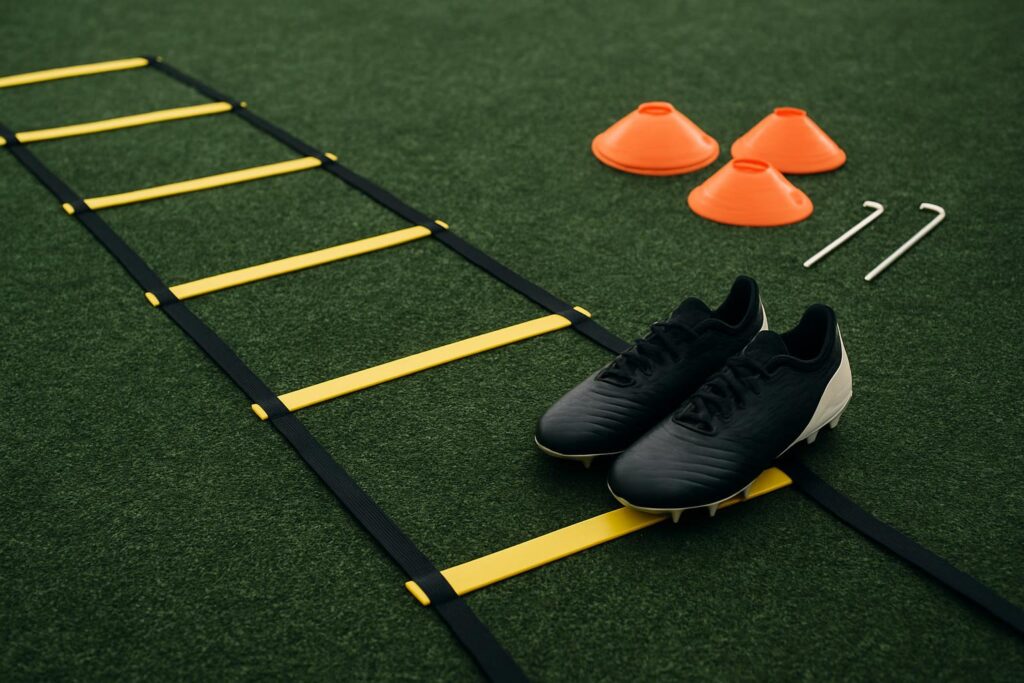
Agility ladders are a simple tool that deliver real speed, coordination, and footwork gains for football. If you want quicker first steps, tighter cuts, and better body control at game speed, a good ladder session two to three times per week can help. The challenge is choosing the right ladder. Some tangle easily. Some do not sit flat on turf. Others break after a few hard practices. This guide cuts through the noise and shows you the six best football training ladders for 2026, what to look for, and how to use them for results that transfer to the field.
How to choose a football agility ladder
Length and rung count
For football, a longer ladder gives you room for acceleration, deceleration, and multi-directional sequences. Aim for:
- 12 rungs and 15 to 20 feet for most players
- 2 ladders in series for team stations and conditioning
Adjustable rungs let you space out steps for different drills. Wider spacing is useful for power steps and crossover transitions. Tighter spacing emphasizes quick contacts and rhythm.
Rung material and adjustability
Rigid plastic rungs are standard. Look for durable ABS or similar plastics that resist cracking in cold weather. Rounded edges and a slightly textured surface reduce slips when cleats hit the edges. Adjustable rungs that do not drift during sessions are ideal. Some premium ladders use rigid side rails that fold out flat and never tangle, which is the fastest to deploy during practice.
Side straps, stakes, and bag
Thick nylon side straps stay flatter, stretch less, and hold rung spacing better. Ground stakes help outdoors, especially on grass in windy conditions. A carry bag makes setup and storage faster. If you coach a full squad, consider ladders with cones and printed drill cards to standardize stations.
Visibility and indoor or outdoor use
High-contrast colors like yellow on black are easier to see in low light. For indoor turf or gym floors, make sure rungs sit flat and do not curl. For outdoor grass, the ability to stake the ladder matters. If you often train on uneven ground, choose heavier rungs that do not shift on contact.
Add-ons and value
Cones, stakes, resistance bands, and drill guides can help beginners. But the ladder itself should be the priority. Tangle-free designs and strong stitching on the straps are worth paying for because they save time every session and last longer under team use.
The 6 Best Football Training Ladders for Agility and Footwork
1) SKLZ Quick Ladder Pro
For serious teams and athletes who want fast setup and zero tangles, this is a standout. The Pro version uses rigid end rails to keep the ladder flat and stable. You pull it open, lay it down, and start. No re-spacing rungs. No knots in the bag. That matters when practice time is tight and multiple position groups are rotating through stations.
Key specs
- Rigid rail design that unfolds flat
- 10 flat rungs with fixed spacing
- High-visibility rungs with durable side rails
- Carry strap and compact storage
Why it helps
- Zero-tangle setup means more reps per minute
- Flat, stable profile supports clean foot contacts in cleats
- Consistent spacing helps build rhythm and precise foot placement
Best for
- Coaches running fast-paced practices
- DBs, WRs, RBs focusing on quick feet, hip flips, and acceleration
- Indoor turf sessions where curling ladders are a problem
What stands out
- Premium construction that stays flat and resists bunching
- Fastest deployment in this list
Potential downsides
- Fixed spacing limits custom drills with extra-wide steps
- Higher price than standard strap ladders
Coaching tip
Use it in the warm-up block. Rotate 3 to 4 quick drills for 6 to 8 minutes. Keep the line moving with a 2-step entry to train dynamic acceleration into the ladder rather than starting from a standstill.
2) Profect Sports Pro Agility Ladder and Cones
This is a high-value set for players and teams who want a complete station in one bag. You get a long ladder, a stack of cones, stakes, and a sturdy carry bag. The ladder uses adjustable rungs with strong nylon straps that hold spacing well during multi-directional work.
Key specs
- Approximately 19 to 20 feet with 12 adjustable rungs
- 10 to 12 disc cones included
- Metal stakes and carry bag
- High-contrast color for visibility
Why it helps
- Cones let you layer football-specific patterns around the ladder
- Adjustable spacing suits both quick feet and power step drills
- Stakes keep the ladder tight on grass during team sessions
Best for
- High school and club teams that need multiple stations
- Players who train on grass and windy fields
- Conditioning blocks mixing footwork with directional cuts
What stands out
- Excellent accessory bundle for the price
- Reliable rung adjusters that hold spacing
Potential downsides
- Strap-based ladders can tangle in the bag if not rolled carefully
- Rungs can shift if athletes drag feet rather than pick them up
Coaching tip
Place cones five yards beyond the ladder and cue a full-speed burst and deceleration to a balanced stance. This ties quick foot contacts to football acceleration and stopping strength.
3) GHB Pro Agility Ladder

A proven budget pick that performs well for solo athletes and small groups. It offers adjustable rungs with simple, durable straps and a basic carry bag. If you are new to ladder training and want a reliable starter, this is a solid choice.
Key specs
- 12 adjustable rungs with around 19 to 20 feet of length
- Classic yellow rungs for visibility
- Lightweight and easy to pack
Why it helps
- Quick setup for daily footwork practice
- Adjustable spacing supports progress from basic to advanced drills
- Light enough for athletes to carry in a backpack
Best for
- Beginners building coordination and rhythm
- Skill players who need frequent short sessions at home
- Coaches buying several ladders on a tight budget
What stands out
- Consistent performance at a low price
- Simple construction that works indoors or outdoors
Potential downsides
- Rungs can twist if thrown into the bag without rolling first
- Lightweight straps may drift on rough grass without stakes
Coaching tip
Use it for micro-sessions. Five minutes of ladder work after each lift or run session adds up. Focus on quality foot contacts and posture rather than speed at the start.
4) Mantra Sports Agility Ladder Speed Training Set
This set pairs a full-size ladder with cones and stakes, making it a complete option for athletes who want simple progression from footwork to change of direction work. The components are organized in a durable bag that holds up to frequent travel.
Key specs
- 12 adjustable rungs over about 19 to 20 feet
- Cones, stakes, and carry bag included
- Bright, high-contrast colors for visibility at dusk or under lights
Why it helps
- All-in-one kit for solo training or team stations
- Adjustable rung spacing for progression
- Suitable for grass, turf, or court surfaces
Best for
- Players who train in different locations and need a portable set
- Beginners who want clear structure for drills
- Teams that layer cone-based cuts beyond the ladder
What stands out
- Good balance between price and included accessories
- Reliable stitching and rung connectors
Potential downsides
- As with most strap ladders, tangles can happen if not packed neatly
- Rungs may scuff on rough concrete over time
Coaching tip
Set cones to create a triangle or L-shape after the ladder. Run a footwork pattern through the ladder, then plant, flip hips, and accelerate to the next cone. This builds ladder skill that transfers to defensive back play.
5) Yes4All Agility Ladder
Known for value and consistent quality, this ladder comes in several lengths and color options. The rungs are sturdy, the straps are dependable, and the kit packs down small. It is a workhorse for home garages and team bags alike.
Key specs
- Options typically include 8, 12, and 20-rung models
- Adjustable rung spacing with tough nylon straps
- Carry bag included
Why it helps
- Flexible sizing for different practice spaces
- Durable rungs that resist cracking
- Simple to deploy and repack
Best for
- Players who want longer ladders for conditioning sequences
- Coaches mixing two ladders for stations
- Teams needing reliable gear that handles daily use
What stands out
- Length choices that match your space and goals
- Reliable build for the price
Potential downsides
- Like any basic strap ladder, it requires careful rolling to avoid tangles
- On slick indoor floors, rungs can slide without added friction
Coaching tip
Use a 20-rung version for tempo runs. 2 steps per square down the ladder, jog back, repeat for rounds. Keep posture tall and eyes forward to build field-friendly mechanics.
6) Ohuhu Agility Ladder
This ladder is a popular mid-budget choice with sturdy rungs and clean adjusters. It is light, visible, and easy to lay flat on turf. The package is straightforward for athletes who want a primary ladder without extra accessories.
Key specs
- 12 adjustable rungs with about 19 to 20 feet of run
- Carry bag included
- Durable rungs with rounded edges
Why it helps
- Quick to deploy for short, focused sessions
- Stable on turf with clean rung geometry for confident foot placements
- Good durability for the price bracket
Best for
- Solo athletes training at fields or gyms
- Players focused on coordination and cutting mechanics
- Beginners who want a simple, dependable ladder
What stands out
- Good feel underfoot with minimal rung wobble
- Bag fits easily in a gym backpack
Potential downsides
- Does not always include cones or stakes
- Like similar models, tangles if stuffed rather than rolled
Coaching tip
Pair it with a resistance band around the waist for resisted entries into the ladder. Release the band right after the last square to teach a strong, clean first-step burst.
Quick comparison
- Fastest setup: SKLZ Quick Ladder Pro. Rigid rails mean no tangles and reliable spacing.
- Best all-in-one value: Profect Sports Pro Agility Ladder and Cones. Stakes and cones cover most practice needs.
- Best budget: GHB Pro Agility Ladder. Affordable and dependable for everyday drills.
- Most portable station kit: Mantra Sports Agility Ladder Speed Training Set. A balanced package for players who travel.
- Best length options: Yes4All Agility Ladder. Multiple rung counts fit any space.
- Best mid-budget build quality: Ohuhu Agility Ladder. Stable feel with solid rungs and straps.
How to use an agility ladder for football
Setup and safety
- Choose a flat surface. Grass, turf, or gym floors work.
- Stake the ladder on grass when windy.
- Keep spacing consistent for progression. Note your spacing so the feel stays the same week to week.
- Check for frayed straps and cracked rungs. Replace damaged parts to avoid trips.
Warm-up and progression
- Start with 5 to 8 minutes of dynamic warm-up: ankle hops, skips, leg swings, hip circles.
- Begin with slow reps to set rhythm. Speed up once patterns are clean for two to three passes.
- Layer complexity: bilateral to unilateral, linear to lateral, simple to multi-directional.
Sample weekly plan
- Day 1: Linear quickness. 4 drills, 2 to 3 sets each. Finish with 3 to 4 acceleration bursts.
- Day 2: Lateral and crossover. 5 drills, 2 sets each. Add hip flip and backpedal transitions.
- Day 3: Multi-direction and reaction. 4 reactive drills with a partner call or ball cue. Short sets, high quality.
Keep total ladder time to 10 to 15 minutes per session to maintain sharpness and avoid sloppy technique.
Common mistakes
- Looking down too much: Glance down as needed, but train eyes up to simulate the field.
- Heavy foot contacts: Stay light, minimize ground time, and drive out of the last square with intent.
- Lazy arm action: Sync fast hands with fast feet. Arms drive rhythm and speed.
- No acceleration after the ladder: Always finish with a burst or controlled stop to build transfer.
Essential ladder drills that transfer to football
Icky shuffle
Step pattern: in-in-out, moving forward. Builds rhythm, coordination, and quick lateral loading. Focus on staying low, chest proud, and pushing the ground away. Add a 5 to 10 yard burst at the end.
In-in-out-out lateral
Face sideways, move laterally with two feet in, two out. Great for linebackers and defensive backs to improve shuffle discipline and foot speed while keeping shoulders square.
Single-leg hop progression
One foot in each square. Progress to alternating single-leg hops. Trains ankle stiffness, balance, and body control. Keep contacts quiet and controlled.
Carioca through the ladder
Cross the trailing leg behind and in front while moving laterally. Enhances hip rotation and foot crossover skills for receivers and DBs during transitions.
Box drill with a cut
Two squares forward, two lateral, two back, two lateral. Finish with a plant and 45-degree burst. This teaches deceleration, direction change, and re-acceleration with balance.
Hip flip and backpedal exit
Move forward through 4 to 6 squares, flip hips to open to the sideline, backpedal three yards, then break forward. Ideal for corners and safeties to train fluid transitions.
Mirror drill with a partner
Set two ladders side by side. One athlete leads a pattern, the other mirrors. Keeps eyes up, increases unpredictability, and forces quick, clean foot placements under pressure.
Care and maintenance
- Roll, do not stuff. Lay straps flat as you roll to prevent tangles.
- Wipe dirt and moisture after outdoor sessions. Store dry.
- Avoid dragging rungs on concrete to reduce scuffing and cracks.
- Check knots and stitch points monthly if used by a team.
FAQ
How long should an agility ladder be for football?
15 to 20 feet covers most drills. Longer ladders are useful for conditioning or when combining patterns. Two shorter ladders side by side allow mirrored or partner drills.
How many sessions per week?
Two to three focused sessions of 10 to 15 minutes each work well. On heavy practice weeks, reduce volume and prioritize quality.
Does ladder training make you faster?
It improves foot speed, coordination, and body control. Combine with sprint mechanics, strength, and plyometrics for true speed gains that show up on the field.
Cleats or trainers?
Use what you wear on the field. If indoors, use turf shoes or trainers that grip without marking the floor. Make sure the ladder stays flat to prevent sliding.
What rung spacing is best?
Common spacing is 15 to 18 inches. Adjust based on your drill. Tighter spacing for quick contacts. Wider spacing for power steps and crossover transitions.
Conclusion
The right ladder saves time, trains real movement quality, and lasts through seasons of hard use. For fast deployment and consistent spacing, SKLZ Quick Ladder Pro leads. For team stations and value, Profect Sports, Mantra Sports, and Yes4All deliver reliable sets with useful accessories or size options. GHB Pro and Ohuhu remain strong picks for athletes who want dependable performance on a budget.
Choose the length, spacing, and setup style that fit your space and training flow. Keep sessions short and sharp. Layer in bursts and decelerations after the ladder to tie quick feet to football speed. With the six ladders above and the drill plan in this guide, you have everything you need to build quickness that shows up on game day.