
We are reader supported. When you purchase through links on our site, we may earn an affiliate commission. Also, as an Amazon affiliate, we earn from qualifying purchases.
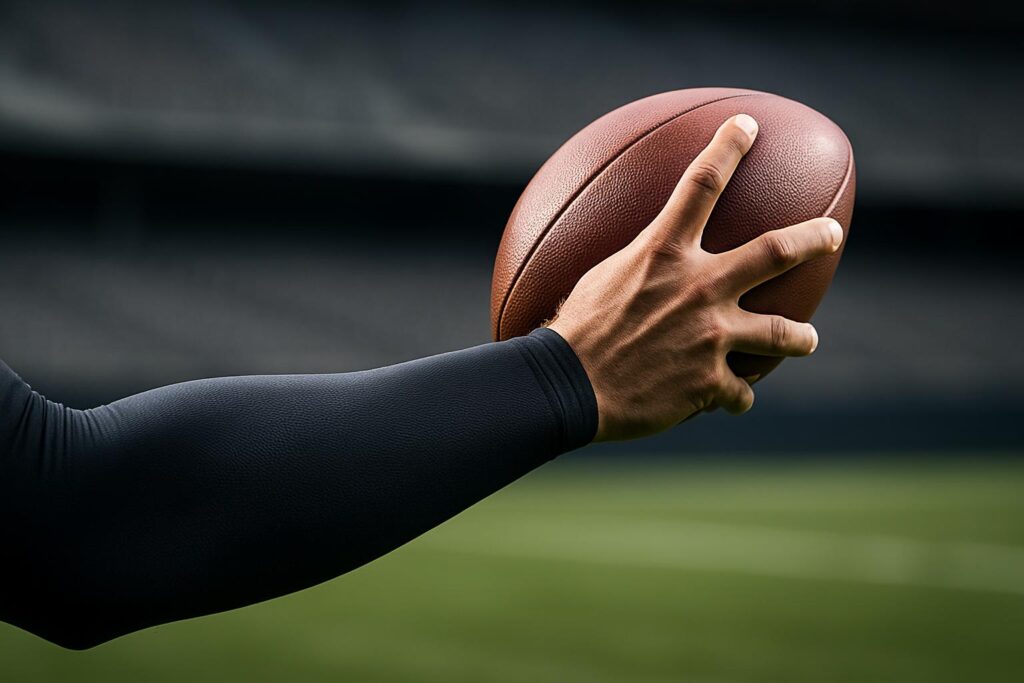
Quarterbacks fight two things on every snap: a slippery ball and sweat. The right arm sleeve helps with both. It keeps the forearm dry so the ball sits stable on the grip, and it delivers light compression so your throwing arm feels supported late in games. The best options manage moisture fast, stay put without slipping, and add subtle surface texture without breaking rules. This guide breaks down seven quarterback-friendly sleeves, why they work, and what to watch before you pick one.
What Makes a Great QB Arm Sleeve
Moisture control that actually dries
Quarterbacks touch the ball on every play, so sweat control is non-negotiable. Prioritize sleeves with high-wicking blends and vented knit zones. Quick-dry fabric helps the forearm surface stay consistent from first quarter to overtime.
Stable grip surface, rule-compliant
Texture helps, tackiness is another story. Subtle knit textures improve feel, but sticky coatings can be restricted by league rules. If you play in a league with strict equipment guidelines, confirm whether grip-enhancing prints are allowed.
Compression that supports without restricting
Light-to-moderate compression helps with muscle stability and proprioception. The sleeve should hug the arm without cutting off circulation or limiting elbow extension.
Stay-put security
Look for inner silicone grippers, extended length, and flat seams. A sleeve that creeps down mid-drive is a distraction and can lead to fumbles.
Quarterback-friendly details
UV protection for daytime practices, odor control, and low-profile elbow padding for turf encounters are nice extras. Keep the outside smooth to avoid drag on the ball.
How We Chose
We focused on sleeves that prioritize sweat management, consistent arm feel, and secure fit. We spotlighted options with compliant textures, reliable compression, and durable stitching. Each pick includes who it suits best and any trade-offs to consider.
7 Best Football Arm Sleeves for Quarterbacks
1) Nike Pro Dri-FIT Arm Sleeves (2-Pack)
The Nike Pro Dri-FIT sleeves are a go-to for quarterbacks who want moisture control without bulk. The knit moves sweat fast, dries quickly, and keeps a consistent surface on the forearm. The inside cuff typically features a mild gripper that limits slippage during a full throwing motion.
Why it helps: Reliable Dri-FIT fabric pulls sweat off the skin and spreads it so it evaporates fast. This helps keep the forearm dry for a stable throw and hand placement under center or in the gun.
Best for: QBs in humid or hot conditions who want a light, breathable sleeve and a smooth outside that will not drag on the ball.
Fit and sizing notes: Runs close to true size with light-to-moderate compression. If you are between sizes or prefer a snug feel for late-game support, size down. For a looser feel, size up.
Potential downsides: No padding at the elbow; not ideal if you take frequent turf contact. Texture is smooth, so there is no added grip beyond dry fabric.
QB tip: Keep an extra dry sleeve for rainy or humid games. Swap at halftime to maintain consistent feel.
2) Under Armour HeatGear Compression Arm Sleeve
Under Armour’s HeatGear sleeve offers a clean blend of cooling, compression, and durability. The fabric sits cool against the skin, wicks efficiently, and has a slightly textured knit for stable ball contact without any sticky coatings.
Why it helps: HeatGear is built for hot practices. By moving moisture and staying cool, it helps reduce sweat pooling on the forearm and biceps, improving ball control.
Best for: Up-tempo offenses and summer camps where sustained heat management matters. Also great for QBs who want just-enough compression for consistent mechanics.
Fit and sizing notes: Compressive and form-fitting with good stretch. If you have larger forearms, consider sizing up for comfort.
Potential downsides: No elbow padding. Silicone grip at the cuff can be mild for some users with very lean arms.
QB tip: Wear it in a short warm-up to see if the cuff stays put through your full throwing motion and follow-through.
3) adidas Padded Receiver Football Arm Sleeve
This sleeve adds a small elbow pad and a performance knit designed for football-specific movement. The fabric is quick-dry and breathable, and the padding is low profile so your throwing mechanics remain free.
Why it helps: Moisture-wicking fabric stabilizes the surface of your forearm. The light elbow protection is helpful during rollouts, slides, and contact plays without feeling bulky.
Best for: QBs who scramble often, drill on turf, or want a sleeve that adds a bit of confidence when landing on the elbow.
Fit and sizing notes: Snug through the forearm with a slightly structured elbow zone because of the pad. If you have thick elbows or prefer a seamless bend, size up.
Potential downsides: Padding adds minor warmth; not ideal for extreme heat. Slightly heavier than minimalist options.
QB tip: If you tape your elbow, test this sleeve over the tape in practice to confirm it does not creep during rollout drills.
4) McDavid 6500 Hex Shooter Arm Sleeve

Trusted across sports, the McDavid 6500 adds Hex cushioning at the elbow with strong moisture management. It is popular with athletes who want real impact protection without heavy bulk.
Why it helps: hDc moisture management helps skin stay drier through series and scrambles. The Hex pad absorbs contact on dives and rollouts, keeping you confident to step into throws.
Best for: Dual-threat QBs and anyone who takes contact at or near the elbow. Also smart for quarterbacks practicing on turf or hard surfaces.
Fit and sizing notes: Compression is firm. If you are on the edge of a size range or prefer less squeeze, size up.
Potential downsides: Slightly warmer than pad-free options. The exterior is smooth; it does not add grip beyond staying dry.
QB tip: Rotate two sleeves during long tournament days. A fresh dry sleeve late helps keep your release consistent.
5) Battle Ultra-Stick Full Arm Sleeve

Battle built this sleeve with a high-friction print to enhance ball control in wet conditions. The lightweight fabric still wicks moisture, but the main value is a more secure hold on the ball during traffic and in storms.
Why it helps: The tacky zones reduce slip when your forearm meets the ball in a tuck or exchange. In rain-heavy games, this can help stability compared to a bare, wet arm.
Best for: Rainy climates, late-season weather, and QBs who prioritize ball security in the pocket and on scrambles.
Fit and sizing notes: True-to-size compression. The printed areas have a slightly stiffer feel; break them in during practice.
Potential downsides: Some leagues restrict tacky or grip-enhancing surfaces. Always check your rulebook and ask a coach or referee before using it in games.
QB tip: Pair with a towel for the non-throwing hand to manage glove and ball moisture between snaps.
6) EvoShield Performance Compression Arm Sleeve
EvoShield’s performance sleeve focuses on sleek compression and smooth, low-friction fabric. It delivers a dry, consistent surface and a uniform squeeze across the forearm and biceps, supporting repeatable mechanics.
Why it helps: Clean feel with strong moisture wicking. The exterior is smooth, so there is no snag or drag on the ball as you set the laces or tuck.
Best for: Pocket passers who want a minimal design that stays cool and stable through high-volume throws.
Fit and sizing notes: Light-to-moderate compression with good stretch. If you train outdoors often, look for UPF coverage in the product details.
Potential downsides: No padding or textured zones. Purely a compression and moisture solution.
QB tip: If you wear wristbands or a play-caller sleeve, test stacking to ensure the EvoShield cuff does not roll under the band.
7) Copper Compression Recovery Arm Sleeve
While not football-specific, Copper Compression’s sleeve earns a spot for recovery days and two-a-days. It offers steady compression, odor control, and dependable moisture management, making it a solid training and practice sleeve for QBs.
Why it helps: Keeps the forearm and biceps dry, supports circulation on volume days, and resists odor over long practice blocks.
Best for: Practice, conditioning, and recovery sessions where comfort and dryness matter more than padding.
Fit and sizing notes: Feels snug; if you prefer a lighter squeeze during throwing sessions, consider a football-specific sleeve for game day and keep this for training.
Potential downsides: No football-specific features like elbow padding or textured panels. Smooth exterior only.
QB tip: Rotate this sleeve into your weekly routine to keep skin fresh and prevent overusing a single game sleeve.
Quarterback Buying Guide
Compression level
Quarterbacks usually do best with light-to-moderate compression. It supports the arm without affecting release speed or elbow extension. If the sleeve leaves marks or tingles, it is too tight.
Moisture management and breathability
Look for fabrics marketed as moisture-wicking with mesh zones or engineered knits. If the sleeve feels clammy after a few throws, it will likely feel worse in a game.
Exterior surface
A dry, consistent surface beats a wet forearm. Smooth knits work for most QBs. Textured prints help with ball stability, but confirm rule compliance for your level of play.
Length and cuff grip
Longer sleeves resist slipping. Interior silicone bands help too, but they should not pinch. Bend your elbow fully in testing to ensure the cuff stays put.
Padding or no padding
Elbow pads make sense if you slide or take turf shots. If you are primarily a pocket passer, a lighter, pad-free design may stay cooler and freer.
Durability and stitching
Flat seams reduce rubbing on the biceps and forearm. Double-stitched hems last longer through weekly washes and two-a-days.
Fit and Sizing Tips
Measure both biceps and forearm
Use size charts based on circumference at the largest point of the biceps and mid-forearm. If you are between sizes, decide based on preferred compression level.
Test the throwing motion
Put the sleeve on and run through your full throwing routine: three-step, five-step, rollout. Watch for cuff creep, bunching at the elbow, and any restriction on follow-through.
Mind your accessories
If you wear wristbands, a towel, or a play-caller wrist coach, confirm the sleeve does not roll or trap sweat beneath these pieces.
Care and Maintenance
Wash cold, air dry
Cold wash keeps elasticity intact. Air dry to protect the silicone grippers and prevent shrink.
Rotate sleeves
Have at least two sleeves. Use one for practice and keep one fresh for game day. Swap at halftime in wet conditions.
Check for wear
Replace sleeves that lose compression, have stretched cuffs, or show fabric pilling that could affect ball feel.
Quick Answers for QBs
Will a sleeve increase my throwing power?
No. A sleeve supports consistency and comfort. It helps you maintain feel through fatigue and sweat management, but it does not add velocity.
Can I wear grip-printed sleeves in games?
Depends on your league. Some levels restrict tacky or grip-enhancing materials. Get a ruling before game day.
Do I need elbow padding?
If you run or slide often, a small pad helps. If you stay in the pocket, a lighter sleeve is usually better for heat and range of motion.
Bottom Line
The right arm sleeve keeps your forearm dry, your mechanics consistent, and your focus on reads instead of sweat. For most quarterbacks, a breathable compression sleeve with a stable cuff is the best baseline. Add elbow padding if you take contact; consider textured prints only if rules allow. Start with a reliable moisture manager like Nike Pro Dri-FIT or Under Armour HeatGear, add a padded option like the adidas Padded Receiver or McDavid 6500 for scrambles, and keep a backup sleeve ready for weather. Small details here reduce fumbles, protect the elbow, and keep you sharp from the first snap to the two-minute drill.