
We are reader supported. When you purchase through links on our site, we may earn an affiliate commission. Also, as an Amazon affiliate, we earn from qualifying purchases.
Umpires absorb foul tips, ricochets, and wild pitches so the rest of the game can run smoothly. That only works when your chest protector is dialed in for impact protection, breathability, and a secure fit that disappears once the first pitch is thrown. Whether you work youth ball on weekends or call college and adult leagues under the lights, the right chest protector is a quiet edge in safety and comfort. This guide spotlights seven standout protectors for 2026, explains how to fit them, and helps you choose confidently without getting lost in specs.
What Matters Most in an Umpire Chest Protector
Impact protection you can trust
Umpire chest protectors typically combine hard outer plates with multilayer foam to disperse energy away from the sternum, ribs, and collarbone. The best designs spread impact across a larger surface instead of letting a blow focus on one spot. Look for molded plates or reinforced sternum zones. More layers are not always better; what matters is how quickly and evenly the hit is redirected.
Fit and adjustability
Loose protectors shift, create hot spots, and expose gaps. A good harness pulls the protector tight around your torso without digging into the shoulders. Removable shoulder caps help fine-tune mobility and coverage. A quick-adjust or Y-style harness can make a noticeable difference in how stable the unit feels when you hustle out from behind the plate.
Breathability and weight
Working the dish in summer heat is relentless. Vent channels, mesh liners, and moisture-wicking materials keep airflow moving. Lighter models reduce fatigue during long innings, but weight alone should not decide your purchase; some heavier protectors distribute load so well that they feel lighter in-game.
Coverage and mobility
You need sternum, heart, and rib coverage without blocking your stance or arm swing. Proper length reaches from the notch at your throat down to about the belly button. Too long, and the bottom edge will dig into your belt when you squat. Too short, and you risk exposing sensitive areas to foul tips.
Durability and maintenance
Seams, plate rivets, and harness hardware take abuse. A replaceable harness extends the life of your gear. Removable liners are easier to wash and dry. After rainouts, foam that dries quickly avoids odor and breakdown.
How We Selected These Protectors
We focused on models with proven protection and everyday comfort. We prioritized designs used across high school, travel ball, college, and adult leagues; examined construction details like plate layout, padding density, and harness style; and weighed hundreds of real-world impressions from umpires who work multiple games per week. The goal: dependable protection that you can wear all season without thinking about it.
The 7 Best Baseball Umpire Chest Protectors for Safety and Comfort in 2026
1) Wilson West Vest Gold Umpire Chest Protector
The West Vest Gold remains a benchmark for plate umpires who want hard-plate security and day-in, day-out reliability. Its shell disperses energy across interlocking plates while the interior padding softens the feel of direct shots to the sternum and heart area. This is a workhorse built for heavy schedules.
Why it helps: Hard plates shield high-impact zones while layered foam absorbs the remainder. The contoured design sits close to the body for less bounce and fewer gaps when you move from set to set.
Best for: Varsity through adult leagues, multi-game weekends, umpires who prioritize maximum protection and a planted, stable feel.
Comfort notes: The harness pulls evenly without digging. Vent channels and moisture-wicking liners reduce heat buildup. Removable shoulder caps let you tune your range of motion for your stance and mechanics.
Potential downsides: Slightly heavier than lighter, foam-centric designs. Needs proper harness adjustment to avoid riding up when you drop into your stance.
Fit tip: Choose a length that covers the sternum down to around the navel without contacting the belt when you squat. Once fitted, set-and-forget adjustments keep the fit consistent.
2) Force3 Pro Gear Umpire Chest Protector V3

Force3’s V3 emphasizes energy dispersion with a multi-layer core that targets severe impacts while staying surprisingly streamlined. It is designed for umpires who want strong protection with a lighter, mobile feel during rotations and quick resets.
Why it helps: The layered impact system spreads and slows energy from foul tips without adding bulk. Coverage is smartly shaped to protect the heart and ribs while reducing unnecessary overlap at the edges.
Best for: High school through college and adult leagues, umpires who value mobility and all-day comfort without giving up serious protection.
Comfort notes: Breathable liners, airflow-friendly channels, and a snug harness deliver a locked-in fit that resists bounce. The shoulder profile allows a full arm swing for clear signals.
Potential downsides: Premium pricing. Some umpires may prefer a more rigid, hard-plate feel, particularly if they work a lot of high-velocity pitching.
Fit tip: Get the length right first, then fine-tune shoulder cap position to remove gaps near the collarbone. Re-adjust after your first game to lock in the feel.
3) All-Star System 7 Umpire Chest Protector
All-Star applies its well-known protective design to the umpire side with a chest protector that balances hard-shell zones and a comfortable interior. The System 7 approach yields solid plate coverage where you need it with padding that fits the torso closely.
Why it helps: Reinforced sternum and chest panels take the sting out of direct hits. The internal padding forms to your body over time, improving stability and comfort.
Best for: Umpires who want traditional hard-plate reassurance with a modern harness and improved airflow compared to older designs.
Comfort notes: The liner moves sweat away from the body, and the protector sits flat enough to hide under standard umpire shirts without print-through. Shoulder caps adjust to open your throwing lane.
Potential downsides: Break-in may take a few games as the padding settles. Slightly bulkier than the lightest foam-heavy models.
Fit tip: Start with a snug chest cinch to prevent ride-up, then confirm that the bottom edge clears your belt during a full squat. Clip and mark your final harness settings to keep them consistent.
4) CHAMPRO Pro-Plus Umpire Chest Protector
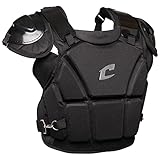
CHAMPRO’s Pro-Plus is a budget-friendly option that delivers solid protection for most levels of amateur baseball. With molded plates and a moisture-wicking liner, it brings essential features to umpires who want good value without skipping the core safety elements.
Why it helps: Rigid plates paired with layered foam shield vital areas effectively at typical amateur game speeds. The design sits close to the body to minimize shifting as you move.
Best for: New umpires moving into plate work, high school and rec leagues, officials who want reliable coverage on a tighter budget.
Comfort notes: The lining reduces sweat buildup, and the harness is straightforward to secure. Shoulder caps can be adjusted or removed to improve throwing mechanics.
Potential downsides: Not as form-fitting or advanced as premium models. Heavier than some foam-centric competitors, and airflow is good but not elite.
Fit tip: Take time to fit the harness before your first assignment. If you feel the bottom plate touch the belt in a squat, step down a size or shorten the harness to keep the protector higher on the torso.
5) Diamond iX3 Umpire Chest Protector

Diamond’s iX3 brings triple-layer cushioning with a profile that stays compact under a jersey. It is a steady mid-tier option for umpires who want dependable protection with an emphasis on comfort and workable weight.
Why it helps: Multi-layer padding disperses energy while the plate layout focuses on sternum and rib coverage. The overall shape limits edge bulk for a smoother stance and less interference when you square up.
Best for: High school through adult rec umpires seeking a clean blend of comfort, reasonable weight, and all-game protection.
Comfort notes: Good airflow for its class, with a liner that dries faster than older foam styles. The harness holds position well after the initial fit is dialed in.
Potential downsides: Protection is strong but not as tank-like as the heaviest hard-shell designs. Some umpires may want a stiffer sternum plate for top-tier velocity.
Fit tip: Test your throwing motion with and without shoulder caps installed. Many plate umpires prefer a slightly asymmetric setup to clear the throwing arm.
6) Champion Sports Adult Umpire Inside Chest Protector
For new umpires and those working youth levels, the Champion Sports inside chest protector offers a cost-conscious entry point. It focuses on core coverage with a straightforward design that is easy to wear and maintain.
Why it helps: Thick foam pads the heart, sternum, and ribs for the pitch speeds typical of youth divisions. The simple profile tucks cleanly under a standard umpire shirt.
Best for: Youth and lower-level amateur baseball, first-season umpires, and backups who want a secondary protector for rainy days or travel.
Comfort notes: Light and easy to fit, with fewer straps to fuss over. Breathability is fair for the class, and weight is low enough for doubleheaders.
Potential downsides: Less rigid protection than hard-plate models. As pitch speed and exit velocity climb, most umpires will want to upgrade to a plate-reinforced design.
Fit tip: Aim for a snug, high ride on the chest with minimal gap around the collarbone. If you work teens or above, consider adding a throat guard and ensure your mask and shirt integrate tightly to limit exposed areas.
7) Wilson West Vest Pro Umpire Chest Protector
The West Vest Pro delivers much of the Gold’s plate protection in a slightly trimmer package. If you want a West Vest feel with a touch more mobility and less bulk, the Pro is a strong fit.
Why it helps: Contoured plates secure the high-risk zones while trimming extra material at the edges. Padding balances firmness and comfort so the unit stays planted on the chest through full innings.
Best for: Experienced amateur and college umpires who want a blend of serious protection with a lighter, more agile profile.
Comfort notes: Venting is well executed, and the harness does an excellent job of distributing load across the shoulders and back. Removable caps help fine-tune mobility for your mechanics.
Potential downsides: Not as tank-like as the Gold in feel. If you take frequent high-velocity foul tips, the Gold may feel more confidence-inspiring.
Fit tip: Start with shoulder caps for full coverage, then test signal mechanics. Remove or shift caps only if they interfere with your motion, and recheck for gaps after any change.
Size and Fit: Quick Guide for New Umpires
Find your length
Measure from the notch at the top of your sternum down to your belly button. Match that measurement to the protector’s listed length. The goal is full chest coverage without contacting your belt in a squat.
Dial in the harness
Put the protector on over a base layer. Tighten the harness evenly until the unit sits flush without bouncing when you hop lightly. A slight upward tension keeps the bottom edge from rolling when you drop into your stance.
Set shoulder caps correctly
Adjust caps to close gaps near the collarbone and top ribs. Take a few practice throws from your usual stance. If a cap clips your arm, either shift it outward or remove it and reassess your coverage with your shirt and mask on.
Check your stance and movement
Squat to full depth, signal balls and strikes, and work through rotations. Make sure the bottom edge clears your belt, the throat area is protected by your mask and guard, and nothing shifts under sudden movement.
Breathability, Heat, and All-Day Comfort
Summer conditions punish heavy, non-vented protectors. When comparing models, look for vent channels in the plates and breathable mesh liners. Moisture-wicking fabrics pull sweat off the skin, reducing friction and hot spots. Lightweight protectors often feel cooler, but a well-vented hard-shell can rival them if air can flow between plates and padding. Don’t underestimate the role of your base layer; technical shirts with good wicking and minimal seams can improve comfort dramatically.
Durability and Maintenance Tips
Postgame care
Wipe down plates and padding with a damp cloth. For removable liners, hand wash with mild soap and air dry. Avoid high heat; it can warp plates and break down foam.
Harness upkeep
Inspect straps, buckles, and stitching monthly during the season. Replace a stretched or frayed harness to restore stability. A stable harness is crucial to prevent gaps and ride-up.
Storage
Dry thoroughly before storing. Keep the protector flat or hanging to avoid compression creases in the foam. A breathable gear bag helps control odor between games.
Who Should Choose What
Maximum protection above all
If you see higher velocities or frequent foul tips: Wilson West Vest Gold, Force3 V3, or All-Star System 7 are your top tier. These blend hard-shell reinforcement and dense padding to disperse energy reliably.
Balanced comfort and coverage
For mixed levels and long days behind the dish: Diamond iX3 or Wilson West Vest Pro offer strong protection with better mobility and airflow than older bulkier units.
Budget-conscious or first season
CHAMPRO Pro-Plus and Champion Sports inside protectors deliver essential coverage for youth and lower levels. As you move up, revisit a hard-plate model for peace of mind.
Frequently Asked Questions
Inside vs. outside protectors
Inside protectors are standard at nearly all modern levels for their balance of protection, mobility, and a professional look under the shirt. Outside protectors are bulkier and mostly used in traditional or lower-level settings. Most umpires prefer inside models once they learn proper fit.
Do I need a throat guard with a top-tier chest protector?
Yes. Your throat is protected by your mask and an attached throat guard, not the chest protector. Pairing quality mask protection with your chest gear is non-negotiable.
What length is right for me?
Use the sternum-to-navel measure. A 12–13 inch length suits shorter torsos or umpires who squat deeply; 14–15 inches works for taller torsos or more upright stances. Always confirm belt clearance in a full squat.
How tight should the harness be?
Snug enough that the protector does not shift when you jog or drop into your stance, but not so tight that it restricts breathing or shoulder movement. If you see the bottom edge riding up, shorten the harness slightly.
Final Picks and Why They Stand Out
For uncompromising protection that shrugs off the worst impacts, the Wilson West Vest Gold and Force3 V3 lead the pack. The All-Star System 7 adds a proven plate-and-padding chassis with strong value for heavy schedules. For well-balanced mobility and coverage, the Diamond iX3 and Wilson West Vest Pro deliver stability without excess bulk. If you are starting out or covering youth divisions, CHAMPRO Pro-Plus and Champion Sports offer approachable price points with reliable core coverage.
The best chest protector is the one you forget about by the second inning. Dial in your length, get the harness set correctly, and confirm shoulder cap placement. With the right build, fit, and care, any of these seven can carry you confidently through long seasons and tougher assignments. Stay protected, stay comfortable, and keep the game moving.