
We are reader supported. When you purchase through links on our site, we may earn an affiliate commission. Also, as an Amazon affiliate, we earn from qualifying purchases.
A safe call is one of the clearest moments in baseball and softball. You see the arms spread wide, you hear the word safe, and you feel the outcome of a race between runner and fielder settle in an instant. Yet behind that simple signal sits a set of rules, timing principles, and judgment calls that players, coaches, and fans should understand. This guide breaks down what a safe call means, when it happens, how umpires judge it, and how both offense and defense can influence it. The goal is simple. After reading, you will know exactly why a runner is called safe and what to look for on every close play.
Introduction
Every base gained without being put out changes the inning. A safe call keeps an at-bat alive, extends a rally, and can decide a game. For new fans and youth players, the mechanics and rules can seem complicated. The good news is that the core idea is clear. Beat the ball, touch the base, avoid a tag. The rest flows from that idea. Start there, then layer in force plays, tag plays, no-catch signals, replay, and common edge cases. With that structure, you can read any close play with confidence.
What a Safe Call Means
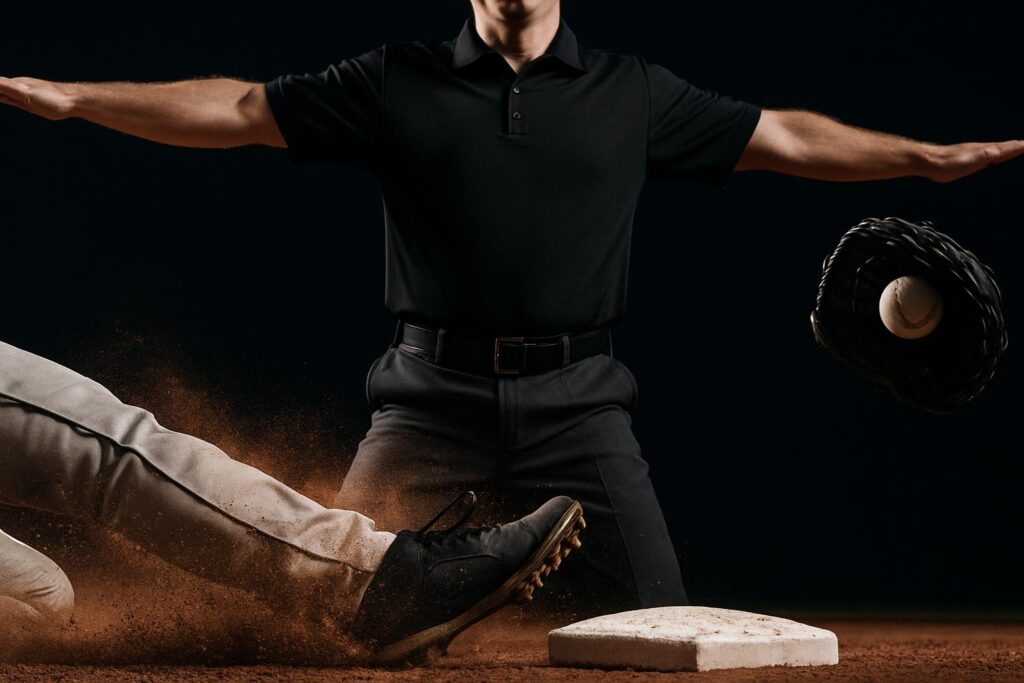
At its core, a safe call declares that a runner has legally reached a base before being put out. The umpire spreads both arms wide at shoulder height and declares the runner safe. The runner remains alive on the basepath, the offense keeps the baserunner, and play continues unless the ball is dead for some other reason.
The safe mechanic can also communicate related outcomes. Umpires may use the same arms-wide signal to indicate no catch in the outfield on a trapped ball. That does not place a runner on a base by itself. It only means the ball is live on the ground, so runners may advance at their own risk. In both uses, the mechanic says not out.
When Do Umpires Signal Safe
Force plays
On a ground ball, if a runner is forced to advance, the defense can record an out by touching the base before the runner arrives with secure possession of the ball. If the runner reaches and touches that forced base first, the umpire signals safe.
Tag plays
On a non-force play, the defense must tag the runner with the ball or with the glove that holds the ball before the runner touches the base. If the runner touches the base first, evades the tag, or the fielder misses or drops the tag, the umpire signals safe.
Steals and pickoffs
When a runner tries to steal or gets picked off, the tag must beat the runner to the base. If the runner gets back or in ahead of the tag, the umpire calls safe.
Plays at the plate
The plate is a base like any other. On a force, touch the plate before the runner arrives and it is an out. On a tag play, the catcher must tag the runner with secure control. If the runner touches the plate first or no legal tag occurs, the safe call keeps the run alive, subject to time-play rules.
No catch in the outfield
If a fielder traps the ball or fails to secure a catch, the umpire often uses the safe signal to show no catch. That mechanic tells everyone the batter-runner and any baserunners may advance because the ball is in play on the ground.
The Core Rule: Beat the Ball, Touch the Base, Avoid a Tag
Three elements decide most safe calls:
- Did the runner touch the base
- Did the fielder have secure possession and make the required touch or tag
- Which event happened first
Keep your eyes on those checkpoints. You will read most plays the same way umpires do.
Safe on Force Plays
On a force, the defense must hold the base and the ball long enough to complete the play. A few details matter:
- Footwork at first base: The fielder must keep a foot on the base or touch the base with control of the ball. A pulled foot or a foot off the bag before the catch removes the force touch. If the runner reaches first before a legal touch, the call is safe.
- Dropped ball: If the ball is not secured on contact with the base or is dropped during the process of the play, the force is not recorded. The runner is safe.
- Force removed: If a preceding runner is put out and the force is removed, any later play becomes a tag play. Without a legal tag, the runner is safe.
- First base touch: The batter-runner must touch first base. If the fielder beats the runner to the bag with the ball in control, the out is recorded. If the runner’s touch is first, the safe call stands.
Safe on Tag Plays
Tag plays are direct. A runner is out only if the fielder tags the runner with the ball or with the glove while the ball is secure in that glove. If the fielder swipes and misses, if the glove is empty, or if the ball is in the other hand without contact, the runner is safe.
Runners can use slides and body control to avoid tags. If a runner gets a body part on the base before a legal tag touches the runner, the call is safe. If a runner briefly loses contact with the base after a slide and is tagged while off the base, the runner can be out. If the fielder does not maintain secure control of the ball during or immediately after the tag, the runner is safe.
What If Both Touch at Once The Myth of Ties
Fans often say that ties go to the runner. That phrase is not part of the rules. Umpires do not call ties. They judge who was first and then rule safe or out. On bang-bang plays, the umpire must decide whether the runner touched early enough or the tag or base touch came first. There is no official tie call on the play.
Safe vs Out at First Base
First base presents the cleanest race. The fielder needs control of the ball and contact with the base before the runner’s foot touches the bag. The runner needs to touch the bag before the defense completes that control-plus-contact. No tag is needed on a force at first.
A few reminders:
- Run through the bag: The batter-runner may run through first base in the runner’s lane. Touch the front edge to help the umpire see the moment of touch.
- Pulled foot: If the first baseman’s foot leaves the bag early, the batter-runner is safe if the touch of first base happens first.
- Interference: If the batter-runner illegally interferes with the fielder or throw, the runner can be called out. In that case, the safe call does not apply.
Common Situations That Produce a Safe Call
- Pulled foot at first: The fielder comes off the base, the runner touches first, safe.
- Dropped ball on the force: The ball hits the glove, then pops out. Without secure control during the touch, the runner is safe.
- Missed tag: A swipe tag that does not touch the runner means safe.
- No catch in the outfield: The safe signal for no catch keeps the ball live and lets runners advance.
- Back to the bag on pickoff: The runner beats the tag back to the base, safe.
- Obstruction: If a fielder without the ball blocks or hinders a runner, the umpire can protect the runner and place the runner safe at the base they would have reached without the obstruction.
Replay and the Safe Call
At many levels with video review, managers can challenge close plays. The standard outcomes are confirmed, stands, or overturned. Confirmed means replay shows clear evidence the on-field call was right. Stands means there is no clear evidence to change the call. Overturned means the video shows clear evidence the call was wrong.
On safe calls, replay focuses on three frames: the moment the ball reaches the glove, the moment of secure control, and the moment the runner contacts the base. The angles matter. Review crews look for control through the action. A bobble that breaks control can turn an out into a safe call. A tag that scrapes a jersey thread before the runner reaches the base can turn a safe into an out. At amateur levels without replay, the on-field judgment stands.
Mechanics: What the Safe Signal Looks Like
Mechanically, the umpire judges the play, gets set, and then signals. The umpire spreads both arms wide at shoulder height and declares the runner safe. On a no-catch, the same arms-wide motion signals that the ball was not legally caught. The mechanic is brief and clear so that players keep moving with confidence.
What Players and Coaches Should Watch For
Players and coaches can help the umpire see the play cleanly and can protect themselves from preventable outs.
- Touch the base: Aim for the front edge at first, the outside corner at second and third when possible. Clear touches get clear calls.
- Stay on the base: After a slide, maintain contact. Do not pop up without the base or you risk a quick tag and an out.
- Secure control on defense: Complete the catch and keep control through the tag or base touch. Avoid quick transfers until after the play is over.
- Clean tag angles: Tag the runner with the ball or the glove holding the ball. Do not count on a phantom tag to earn an out.
- Throw to the correct side: Put the ball on the side of the bag that meets the runner’s path. Give your fielder time and a clear lane to the base.
Offensive Strategy: Forcing a Safe Call
You can create more safe calls with attention to detail.
- Maximize speed to first: Run hard through the bag. Do not lunge. Hit the front third of the base and keep moving.
- Choose the right slide: Use a pop-up slide to stay on the bag on forceful approaches. Use a hook slide to reach the back or outside of the base and avoid a tag on steals and close tag plays.
- Read throws early: If a throw pulls the fielder off the bag, extend your stride to the base and prepare to adjust to contact. Beat the fielder’s re-tag.
- Touch with intent: Aim for the far corner of the bag the tagger cannot reach easily. A simple angle change can buy the inches you need.
- Know time plays: With two outs and a runner heading home on a non-force, make sure the runner touches the plate before any tag on another runner that could be the third out. That timing can decide if a run scores.
Defensive Strategy: Preventing a Safe Call
Defense is about control, footwork, and timing.
- Secure the ball first: Do not rush the transfer. Catch, secure, then touch or tag.
- Foot on the bag: At first base, feel the bag with the heel and keep the toe pointed to the throw. Stretch only as the ball arrives.
- Throw to the glove side: Hit your fielder’s chest or glove side so the tag or base touch is one motion.
- Tag through the runner: On steals and pickoffs, tag low and firm. Keep the tag on in case the runner pops off the bag.
- Avoid obstruction: Do not block the base without the ball. Give the runner a path until you secure the ball.
Youth and Softball Notes
The safe call carries the same meaning in youth baseball and softball. A few field differences can change how plays unfold:
- Double base at first: In many youth and softball leagues, first base has a white fair side and an orange foul side. The defense usually uses the white, the runner uses the orange on plays to first. A runner who beats the ball to the orange base is safe on that play, subject to league rules.
- Shorter distances: Quicker plays mean more bang-bang calls. Run straight through first and focus on clear touches.
- Look-back rules in softball: Once the pitcher has the ball in the circle and is not making a play, runners must commit. Safe calls hinge on committed movement and legal base touches.
Misunderstandings and Edge Cases
Several common myths cloud safe calls. Clear them up and close plays get easier to read.
- Ties: Umpires do not call ties. They judge who was first and then rule safe or out.
- Tag equipment: The tag must be with the ball or with the glove that holds the ball. Tagging with an empty glove while the ball is in the other hand is not a legal tag. The runner is safe.
- Drops after tag: If the fielder does not maintain secure control of the ball during or immediately after the tag, the runner is safe.
- Voluntary release: For a catch or tag to count, the fielder must show control through the action. If the ball slips out as the fielder pulls up from the tag or removes the ball too early, control may be broken and the runner can be safe.
- Appeal plays: A runner can be called safe on the original play but later declared out on a legal appeal for missing a base or leaving early on a fly ball. The safe call on the original play does not settle an appeal issue.
- Obstruction and interference: If the offense interferes, the umpire can call an out. If the defense obstructs, the umpire can protect the runner and place the runner safe at the base they would have reached without the obstruction.
How Umpires Judge Bang-Bang Plays
Good umpires use angles, set positions, and specific cues to decide close plays.
- Beat the angle: The umpire moves to see the space between the tag and the runner or the foot and the base. Distance matters less than angle.
- Listen and look: The smack of the ball in the glove and the tap of the foot on the base can be near-simultaneous. Umpires learn not to rely only on sound. Eyes lock on the moment of control and the moment of touch.
- See the control: A ball that hits leather is not always a secured ball. Umpires watch for firm, controlled possession during the touch or tag.
- Finish the play: On tags, the umpire watches through the tag for drops or loss of contact. On bases, the umpire confirms the touch and that the fielder maintained the base or completed the throw.
- Stay still at the moment of truth: Umpires try to be set as the play finishes. A set umpire sees better and times the call more accurately.
Communication: Safe Signals Beyond the Base
The safe mechanic appears in two main contexts: safe at a base and no catch in the field. Both mean not out, but they trigger different actions.
- Safe at a base: The ball may still be live, runners can advance, and the offense keeps the base.
- No catch: The ball is live on the ground. Runners advance at their own risk. Fielders must now make plays on the bases.
- No interference or nothing there: Umpires sometimes give a brief safe-style wave to show no interference or no tag. That quick signal reassures players to continue.
Putting It All Together on Game Day
Watch any inning and apply these checkpoints:
- Is it a force or a tag play
- Did the fielder have secure control
- Did the fielder complete a legal touch of the base or a legal tag
- Who got there first
- Did any obstruction or interference occur
Use those steps and you will predict most safe calls correctly, even at full speed.
Conclusion
A safe call is simple to see and precise to judge. It rests on clean rules and careful timing. The runner must touch the base before a legal out is recorded. The defense must control the ball and complete the required touch or tag. Umpires position themselves to decide which happened first and then use a clear, consistent signal. Learn the differences between force and tag plays, watch for secure control, and note the effects of obstruction or interference. With that understanding, you will read close plays faster, coach smarter, and enjoy the game more.
FAQ
Q: What does a safe call mean
A: A runner has legally reached a base before being put out.
Q: Can an umpire call a tie safe
A: Umpires do not call ties. They judge who was first and then rule safe or out.
Q: Does dropping the ball after a tag make the runner safe
A: If the fielder does not maintain secure control of the ball during or immediately after the tag, the runner is safe.
Q: What is the safe signal
A: The umpire spreads both arms wide at shoulder height and declares the runner safe.
Q: Can obstruction lead to a safe call
A: If a fielder without the ball blocks or hinders a runner, the umpire can protect the runner and place the runner safe at the base they would have reached without the obstruction.