
We are reader supported. When you purchase through links on our site, we may earn an affiliate commission. Also, as an Amazon affiliate, we earn from qualifying purchases.
The infield is the heart of a baseball or softball game. It is where most action happens, where outs are made, and where small moments decide big innings. If you understand the infield, you can follow any game with confidence. This guide breaks it down step by step so you know what it is, who plays there, what they do, and why it matters.
Introduction
Every play starts on the infield. Ground balls, double plays, bunts, steals, and bang-bang plays at first base all live here. New fans often hear terms like infield in, double play depth, or infield fly rule and feel lost. You will not after this. We will define the space, explain the roles, show the strategies, and connect the rules to what you see on the field. Keep going, and the next time you watch a game, the infield will make sense from pitch one.
The Basic Layout of the Infield
The Diamond and the Basepaths
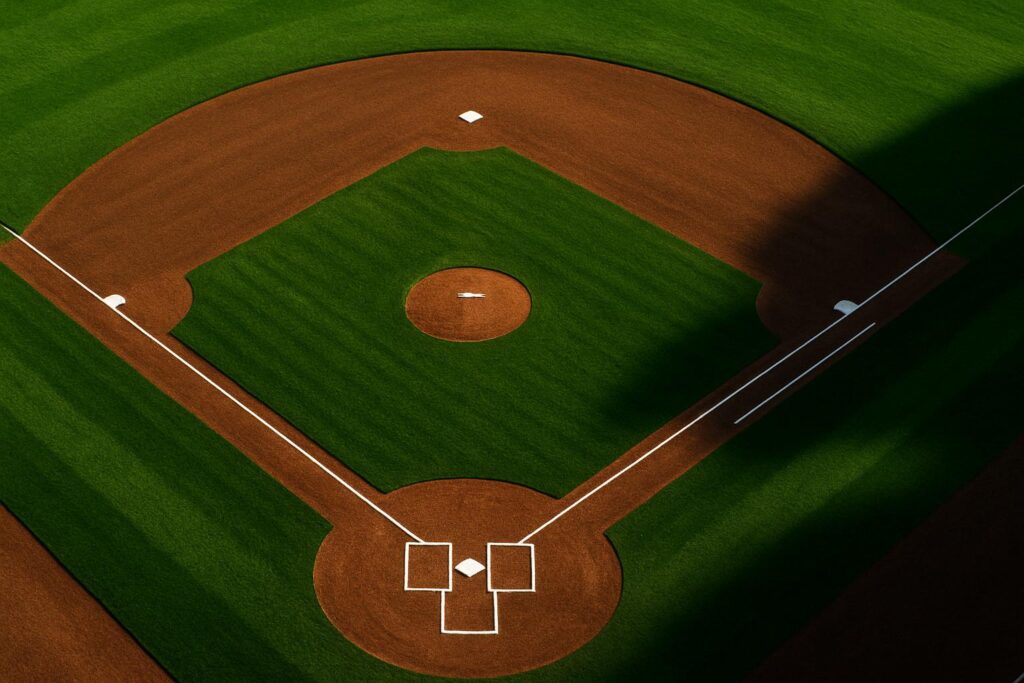
The infield is the square area formed by the four bases. In professional baseball, the distance between bases is 90 feet. The square is turned on a point, so it looks like a diamond from the stands. The edges of the diamond are the basepaths that runners follow. These lines are not walls. Runners can step off them when needed, as long as they do not leave to avoid a tag by more than three feet.
Home plate sits at one corner. First base, second base, and third base complete the square. The batter starts at home. The goal is to reach first and keep moving around the bases to score. Most plays that create or prevent those runs happen inside this square.
Dirt, Grass, and Foul Lines
The infield surface is usually a mix of dirt and grass. The basepaths and the area around the bases are dirt. The rest is often grass, although some fields use all dirt for the infield. Artificial turf fields keep a uniform surface but often include brown turf to mark the dirt areas.
Two white foul lines run from home plate past first and third base and into the outfield. They mark fair and foul territory. A batted ball that first settles on or inside a foul line before the base is fair. A ground ball that passes over first or third base in fair territory is also fair, even if it lands foul beyond the bag.
There is a chalked running lane in foul territory along the last half of the path to first base. The batter-runner is expected to use it. If the runner interferes with a throw to first by running inside fair territory when the fielder is making a play, interference may be called.
The Pitcher’s Mound and the Catcher’s Area
The pitch starts the action, and the pitcher stands on the mound in the center of the infield. In professional baseball, the mound is 60 feet, 6 inches from home plate and is slightly raised. The pitcher uses this height and the rubber for leverage. The mound sits inside the infield, so all balls hit near it involve infielders.
Behind home plate is the catcher’s box. The catcher receives the pitch, blocks balls in the dirt, and begins many throws that start infield plays. While the catcher is not listed as an infielder in most stats, the catcher works in tight connection with the infield on nearly every play.
Who Plays the Infield
The Core Infielders
When people say infielders, they mean four defensive positions. First baseman, second baseman, shortstop, and third baseman. These four are responsible for most ground balls, force plays, and throws across the diamond. Here are their core jobs:
First baseman fields throws to record outs at first, handles bunts on the right side, and often tags runners on pickoff plays. A first baseman uses a special mitt designed to scoop and secure tough throws.
Second baseman covers the right side of the infield, turns double plays, makes quick flips to shortstop, and ranges to shallow right field on pop-ups.
Shortstop is the field leader on the left side. This player covers the most ground in the infield, starts or turns double plays, and often relays throws from the outfield.
Third baseman fields the hottest grounders from right-handed hitters, guards the line, and charges bunts. The throw from third to first is the longest routine throw an infielder makes.
The Battery and Their Place in the Infield
The pitcher and catcher are called the battery. They defend inside the infield but are not labeled as infielders in most common stats or position groupings. The pitcher fields bunts and slow rollers and backs up bases. The catcher controls the run game with throws, communicates defensive plays, and leads bunt coverage.
Position Numbers and Scorekeeping
Each position has a standard number for scorekeeping. Pitcher is 1, catcher is 2, first base is 3, second base is 4, third base is 5, shortstop is 6, and the outfield is 7 in left, 8 in center, 9 in right. You will often see double play notations like 6-4-3. This means shortstop to second baseman to first baseman.
What the Infield Does on Defense
Fielding Ground Balls
The core infield play is a ground ball turned into an out at first. The defender gets a good first step, reads the hop, fields the ball with the glove out front, and sets the feet for a throw. Quick, clean exchanges and accurate throws save outs and prevent extra bases.
Infielders choose between forehand, backhand, and body-front plays depending on the hop. On slow rollers, speed to the ball and a quick release are more important than arm strength.
Force Plays and Tag Plays
A force play happens when a runner must advance because the batter becomes a runner. On a ground ball with a runner on first, the defense can get a force at second or throw to first. Tag plays happen when a runner is not forced and must be tagged with the ball. Infielders must know which type of play they have before the pitch to move fast after contact.
Double Plays
The double play removes two runners with one batted ball. The common forms are 6-4-3 and 4-6-3. Those are ground balls to shortstop or second baseman, who feed the partner at second for one out and then throw to first for the second out. Quick footwork at second base is key. The fielder glides across the bag, secures the ball, and throws while avoiding the runner.
Bunt Defense
On a bunt, the corners often charge. The pitcher moves to field the middle. The catcher reads the angle and calls the play. The first baseman or third baseman takes the ball depending on where it is placed. The other corner covers the bag, and the second baseman and shortstop adjust to cover open bases. This works only with clear communication before the pitch.
Cutoffs and Relays
When the outfield fields a hit, infielders become relay points to the bases. The shortstop or second baseman often takes the throw from the outfield and redirects it to third or home. The first baseman can serve as a cutoff for throws to home from right field. Clean alignment and a strong voice keep the ball moving and reduce extra bases.
Positioning and Strategy
Standard Depth and Adjustments
Standard infield depth places corner infielders a few steps behind the base lines and middle infielders on the grass edge. From there, teams change depth based on the hitter, the score, and the runners.
Double Play Depth
With a runner on first and fewer than two outs, middle infielders often play double play depth. They take a step or two closer to second base and slightly shallower to speed up the turn. Corners stay near normal unless the bunt is likely.
Infield In
With a runner on third and a close game, the infield may move in on the grass. The goal is to cut off the run at home on a ground ball. This reduces reaction time and increases the risk of a ball getting through, but it prevents the tying or winning run from scoring.
Corners In
When a bunt is likely, the first baseman and third baseman play in while the middle infield stays closer to standard or pinch toward second. This shortens the charge distance and gives the best angle to field the bunt.
Guarding the Lines
Late in games with a lead, corners may guard the lines to stop doubles. This position turns hard grounders down the line into easier plays and prevents extra-base hits. It concedes some singles through the hole but protects the lead.
Shifts and Modern Limits
Teams study hitters and shade infielders a step to the pull side or up the middle based on tendencies. Many leagues now limit extreme shifts. In top professional baseball, two infielders must start each pitch on each side of second base, and all infielders must have both feet on the infield dirt. The goal is to keep more balls in play as hits and reward a wider range of contact.
Key Infield Rules Every Fan Should Know
The Infield Fly Rule
The infield fly rule prevents cheap double plays on easy pop-ups. It applies when there are runners on first and second or the bases loaded with fewer than two outs. If the batter hits a fair fly ball in the infield that can be caught with ordinary effort, and it is not a line drive or a bunt, the umpire calls infield fly and the batter is out. Runners can advance at their own risk, but they are not forced and can hold. This rule removes the incentive for infielders to let the ball drop and try for multiple outs.
Interference and Obstruction in the Infield
On a batted ball, a fielder has the right of way to make a play. If a runner hinders that play, interference can be called and the runner is out. On other movements, if a fielder without the ball blocks a runner, obstruction may be called and bases can be awarded. Near first base, the running lane in foul territory helps avoid collisions and interference on throws up the line.
Fair or Foul Around the Bases
Fair and foul calls can decide close innings. Between home and first base or home and third base, a ball that settles or is touched in foul territory is foul. If a bounding ball passes over first or third base in fair territory, it is fair even if it lands foul beyond. Touches by a fielder in foul territory make the ball foul on those sides before the base unless it has already passed the base in fair territory.
Surfaces and Conditions
Dirt, Turf, and Ball Hops
Dirt infields produce variable hops. A well-graded, moist surface plays true. A dry or chewed-up surface creates bad hops. Crews water and drag the dirt to keep it consistent. The lip, where grass meets dirt, can create high bounces if not maintained. Artificial turf plays faster and more even but can speed up grounders and reduce reaction time.
Weather and Maintenance
Wet dirt slows balls and runners. Teams use drying agents and tarps to keep the field playable. After rain, hops get softer and throws can slip. Wind changes pop-up paths. Sun angles affect visibility on high infield flies. Good infielders adjust footwork, depth, and throw strength based on these conditions.
Baseball vs Softball Infields
Distances and Mounds
Baseball and softball share infield concepts but not the same distances. In professional baseball, bases are 90 feet apart and the mound is 60 feet, 6 inches from home. In fastpitch softball, bases are usually 60 feet apart, and there is no raised mound. The pitching circle marks the pitcher’s area in softball.
These distances change timing. Ground balls reach corner infielders faster in softball. Throws are shorter, so release speed and accuracy are even more important. In baseball, longer throws put a premium on arm strength, especially for third base and shortstop.
Base Size and First Base Safety
Some youth and amateur softball leagues use a double first base. One half is in fair territory and one half in foul territory. The runner uses the foul side on close plays to reduce collisions. Not all leagues use this, but the idea is to create space for both the fielder and the runner.
Skills That Define Great Infield Play
Ready Position and First Step
Every pitch, an infielder takes a small hop into a balanced stance as the ball reaches the plate. This ready move creates a live first step in any direction. Great infielders read swing type, pitch location, and the hitter’s habits to cheat a half step toward the most likely contact.
Reading Hops
Infield hops come in three types. Short hops, in-between hops, and long hops. The goal is to take either a short hop or a long hop and avoid the in-between hop. Infielders adjust by closing ground on slow rollers or retreating a half step on hard topspin balls to create a better hop.
Footwork Around the Bag
On force plays, the fielder touches the base and clears the path. At first base, the foot stretches toward the throw while staying in contact with the bag until the ball is secured. At second base on a double play, the pivot is quick and safe. The player receives the feed, brushes the base, and throws while moving away from the slide path.
Throwing Mechanics
Accuracy beats raw arm strength at most positions. Infielders throw from many arm slots. On routine plays, they set the feet and throw overhand. On slow rollers, they throw on the run. On backhands, they may use a sidearm slot to reduce time and keep the ball low and true to first.
Glove Work and Exchange
Soft hands secure the ball, and a quick transfer turns it into an out. The best infielders keep the ball near the center of the body for a fast exchange. On feeds to second, the flip or dart is firm and at chest height. On long throws, four seams keep the ball straight.
Communication and Priorities
Infield defense is a team action. Corner infielders call on bunt plays. Middle infielders call pop-ups in shallow center or left-center based on who has the best angle. With a stolen base attempt, the shortstop or second baseman covers second by plan or by pitch type and hitter. Before each pitch, everyone knows who covers which base on a ground ball, a steal, or a bunt.
Stats and How Infield Performance Is Measured
Traditional Counting Stats
Infielders record putouts, assists, and errors. Putouts often come at first base by catching throws or on force plays at second or third. Assists are credited for fielding or throwing the ball that leads to an out. Errors record misplays that allow runners to reach or advance when an average fielder should make the play. Fielding percentage is calculated from these stats but does not capture range or difficulty.
Team Outcomes
Double plays turned, bunt outs recorded, and stolen bases prevented show how well an infield works as a unit. Teams with strong infields reduce pitch counts, escape jams, and control innings. Their relays cut runners down, and their bunt defense erases free bases.
Modern Insights
Advanced stats aim to measure how many runs an infielder saves by getting to balls others miss and by finishing plays cleanly. Range, first step quickness, and consistent throws show up in these measures. While the labels may be complex, the core idea is simple. Turn batted balls into outs and prevent extra bases.
How the Infield Shapes the Game You See
Pace and Pressure
Pitchers who trust the infield attack the strike zone. Hitters who put the ball on the ground challenge infielders to be perfect. Every runner on base raises the pressure. Late in games, one ground ball can end the inning or start a rally. The infield controls that swing.
Teaching and Development
Coaches build infield habits with repetition. Daily drills cover glove angle, short-hop picks, quick feeds, pivot footwork, and across-the-diamond throws. Consistency turns tough plays into routine outs. Young players who master footwork and decisions early move faster through levels.
Putting It All Together
The infield is a defined space and a set of skills. It includes the square around the bases, the dirt and grass where most ground balls roll, and the mound where pitches begin. The players are four core infielders and a battery that drives the plan. The jobs are clear. Field cleanly, throw accurately, move smartly, communicate constantly, and know the rules. When you watch a game with this map in mind, you will see the timing, the positioning, and the decisions that decide runs. That is the real power of understanding the infield.
Conclusion
Now you know what the infield is, who plays there, what they do, and why those choices matter. You can spot double play depth, infield in, and corners in. You can explain the infield fly rule and fair or foul near the bases. You see why a soft backhand and a fast exchange change an inning. Keep watching with this lens. The infield will reveal the plan, and the plan will reveal the game.
FAQ
Q: What is the infield in baseball?
A: The infield is the square area formed by the four bases. It includes the basepaths, the grass or dirt inside the bases, and the pitcher’s mound within that square. Most ground balls and base-running plays happen here.
Q: Which defensive positions are considered infielders?
A: Traditionally, the infielders are first baseman, second baseman, shortstop, and third baseman. The pitcher and catcher are part of the battery. They defend in the infield but are not labeled as infielders in most stats.
Q: How far apart are the bases in baseball and softball?
A: In professional baseball, the bases are 90 feet apart. In fastpitch softball, the bases are usually 60 feet apart.
Q: What does infield in mean?
A: Infield in is a defensive alignment where all infielders move onto the grass to cut off a run at home on a ground ball. It reduces reaction time and increases risk but is used to prevent a key run from scoring.
Q: When does the infield fly rule apply?
A: It applies with runners on first and second or the bases loaded and fewer than two outs, on a fair fly ball that can be caught with ordinary effort that is not a line drive or a bunt. The batter is out, and runners can advance at their own risk.