
We are reader supported. When you purchase through links on our site, we may earn an affiliate commission. Also, as an Amazon affiliate, we earn from qualifying purchases.
The wheel play is a classic bunt defense that turns moving parts into a clean out at third base. If you coach, play infield, or call pitches, you need a reliable plan for the sacrifice bunt with a lead runner. This guide explains what the wheel play is, when to use it, how each position moves, and how to protect against counters like the slash or the push bunt. You will learn the signals, the timing cues, the footwork, and the corrections that keep the defense tight. By the end, you will know exactly when to call it and how to execute it under pressure.
What Is a Wheel Play?
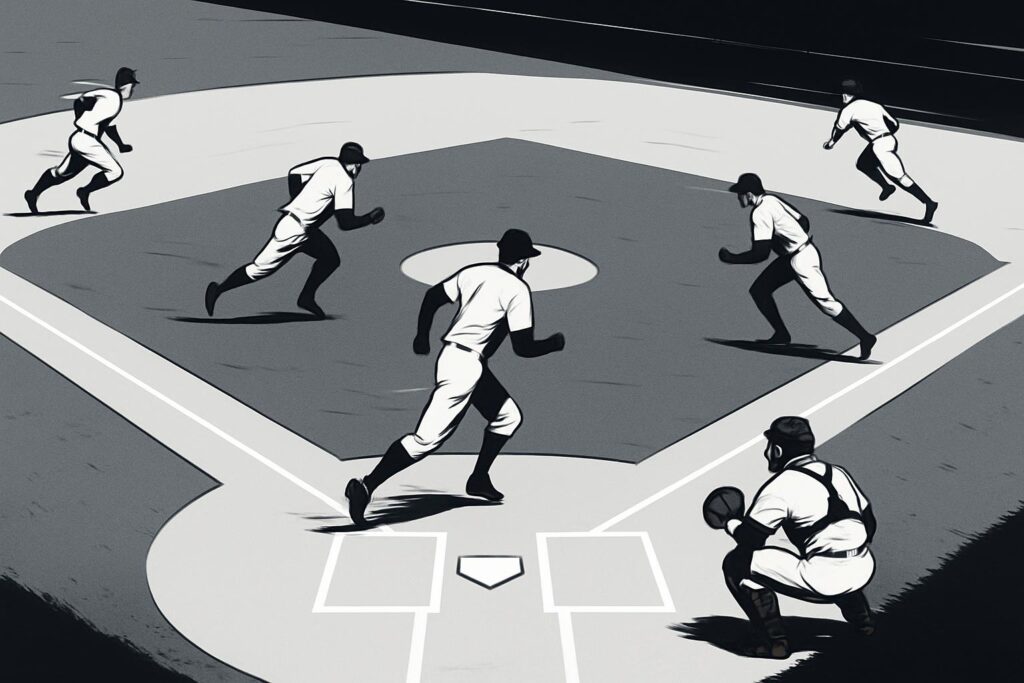
A wheel play is a bunt defense designed to force out the lead runner at third base. Corner infielders charge toward the bunt. The shortstop sprints to cover third. The second baseman rotates to cover first. The pitcher fields the middle. The catcher directs traffic and makes the throw. The goal is simple: take away the easy sacrifice and get the front runner.
The play gets its name from the circular rotation across the infield. When timed well, the defense removes the offense’s low-risk bunt and changes the inning. It is most common with a runner on second or runners on first and second with fewer than two outs. It is also effective against teams that play small-ball and value one-run tactics.
Why the Wheel Play Works
The offense wants a free base with a sacrifice bunt. The defense counters by attacking the ball and overloading the lead side. The shortstop’s early move to third base shuts down the most common bunt goal, and the corners charging reduce the bunter’s time and angle. When the catcher or pitcher cleanly fields and throws ahead of the lead runner, the play flips run expectancy and pressures the offense to swing instead of bunting again.
When to Call the Wheel Play
Use the wheel play when the bunt is likely and the lead runner matters more than the batter.
Favorable situations include these:
Runner on second, 0 or 1 out. The offense wants the runner on third with less than two outs. The wheel play focuses on that runner.
Runners on first and second, 0 or 1 out. The offense wants both runners to advance. The defense aims to cut down the runner from second.
Late innings in a close game. One run changes win probability. Forcing out at third denies the offense its goal.
Batter shows bunt early, has weak bat-to-ball power, or has a track record of sacrificing. If bunt probability is high, commit to the plan.
Pitcher-batter matchups that favor a bunt. High fastball or breaking ball sequences can increase bunt attempts. Be ready to call the wheel before the bunt is shown.
Core Assignments and Rotations
Pitcher
Break toward the third base side on right-handed batters and toward the first base side on left-handed batters, reading the bunt angle. Stay balanced and ready to field hard bunts past the catcher. Do not cross the foul line early and block the catcher’s lane. If the catcher fields, peel to back up third or the throwing lane. If you field, go quickly to third if the wheel is on and the runner from second has committed. Otherwise, secure the sure out at first if the force at third is gone.
Catcher
Own the communication. Call the wheel play with the pre-agreed signal. On the pitch, pop out fast, read bunt angle, and decide in one step whether to field or direct the pitcher. If fielding, set feet toward third and make a firm, chest-high throw. If you cannot get the out at third, redirect to first loudly and early. Control the tempo and avoid spinning blindly. Keep eyes on the lead runner until you commit to the throw.
First Baseman
Charge hard on bunt read. Keep your path inside the line to cut bunts down the first base side. If the bunt is toward third, throttle down and be ready to take a throw at first from the second baseman. If the bunt is toward first and you field, look to third first. If the runner is safe, take the sure out at first by flipping to the second baseman covering. After a throw goes to third, rotate to back up the throw or crash toward the mound to cover a deflection.
Third Baseman
Charge on bunt read. Your first step is forward, not toward the line. Take away the soft roller toward third. If you field, check third first. With a clean grip and a live runner, throw to the shortstop on the bag. If the force is gone, take the out at first with a strong, accurate throw across the diamond.
Shortstop
Rotate to third immediately on the wheel signal. Open hips toward home to see the bunt, then arrive early at the bag, set feet in fair territory, and prepare for a quick tag or stretch. Expect a short hop. If no throw comes, be ready to handle a delayed runner or a wild pitch carom. If bases are loaded and the force is on, treat third like a first base stretch and secure the bag.
Second Baseman
Rotate to first on the bunt read. Beat the runner to the bag and set a visible target. Expect flips from the first baseman, throws from the pitcher, or a catcher redirect. Keep feet light for a quick transfer if a secondary play at third opens up. After the out at first, look immediately to third for the back-end play if the lead runner overcommits.
Left Fielder
Back up third. Sprint into foul territory behind the bag to protect against overthrows. If the throw skips, keep the lead runner from scoring and prevent extra bases. Communicate loudly with the shortstop on caroms.
Center Fielder
Slide toward left center to back up throws across the infield and to cover second base if the base is vacated on rotations. If the bunt is hard up the middle and the pitcher misses it, be ready to charge a rolling ball past the infield.
Right Fielder
Back up first. Be in position on the line for errant flips or throws. If the batter-runner rounds first aggressively, be ready to throw behind.
Pre-Pitch Setup and Signals
Defensive Depth and Angles
Corners should be even with the grass or a step in against strong bunters. If the batter tends to push toward first, the first baseman sets slightly closer. If the batter drags toward third, the third baseman takes a half step in and a half step toward the line. Middle infielders shade one step toward the lead base. Outfielders shift a half step toward the lead side to shorten backup routes.
Pitcher-Catcher Communication
Choose pitches that raise bunt difficulty. Elevated fastballs and breaking balls that start in the zone and finish down can produce weak bunts. Avoid waste pitches with the wheel on if it delays the catcher’s release or creates passed ball risk.
Signals and Decoys
Use a clear wheel signal known to every defender. Have a decoy sign to prevent the offense from reading it. Confirm eye contact with the shortstop and second baseman. If any defender misses the sign, call time and reset. Do not run a wheel with half the infield unprepared.
Step-by-Step Execution
1. Read and Go
At the pitcher’s move, corners lean forward. Middle infielders prepare to rotate. The shortstop goes early enough to beat the runner to third but not so early that the offense adjusts mid-pitch. The catcher comes out of the crouch on bunt commitment by the hitter’s bat angle, feet, and hands.
2. Field the Bunt
The catcher takes anything deadened in front of the plate or up the third base line that he can field quickly. The pitcher fields hard bunts he can get without colliding with the catcher. The third baseman fields rollers to the third base side. The first baseman takes balls to the first base side when he is the best angle. Communicate loudly. One fielder claims the ball. Others peel to their coverage.
3. Throw to Third
The catcher or fielder checks the lead runner and throws to the shortstop at third if the force is on. The shortstop presents a clear target, secures the ball, and completes the force or applies a quick tag if it is a tag play situation. Keep the throw chest high and on the bag. The left fielder backs up in case of a skip.
4. If No Play at Third
If the throw to third is gone, take the sure out at first. The second baseman is on the bag at first as the primary receiver. The first baseman adjusts based on who fields the ball. Prioritize one out over a late, risky throw across the diamond.
5. Secondary Plays
After an out at first, check for a possible return throw to third if the lead runner is aggressive or loses track of the ball. The third baseman and shortstop must be ready. Do not force it. Only throw if the runner overextends.
Variations and Adjustments
Runner on Second Only
The shortstop’s timing is critical. Rotate earlier to beat the runner. The third baseman must charge hard because the bag is uncovered. The pitcher shades slightly toward third to help on hard bunts up that line. The first baseman reads if he must field or hold.
Runners on First and Second
The second baseman must reach first early because the batter-runner will be coming hard. The catcher’s decision window at third is shorter because of the traffic. The third baseman still charges but must be alert to a bunt directed at him where the catcher is blocked. The left fielder’s backup at third is non-negotiable.
Left-Handed vs Right-Handed Batter
Left-handed batters more often bunt toward third. Third baseman shades in, pitcher leans third base side. Right-handed batters often push to first. First baseman shortens up a step, and second baseman anticipates a quick exchange at first.
Fast vs Slow Runners
With a fast lead runner, the shortstop leaves early and sets deeper at third to receive a throw on the run. With a slow runner, hold position a split second longer to prevent a fake bunt and steal. The catcher can take an extra beat to secure the grip for an accurate throw.
Field Conditions
On wet dirt, expect slower bunts and dead balls near the line. Catcher takes more. On turf, the ball rolls longer. Pitcher plays through rollers and finishes with his momentum toward third. Adjust cleats and footwork to avoid slips on the baseline and in front of the plate.
Handling Offensive Counters
The Slash
The slash is a fake bunt into a swing. Protect against it by avoiding extreme crashes before the pitch is released. The corners read bat angle before full charge. Pitchers keep fastball ride or breaking balls designed to reduce flush contact. Middle infielders do not vacate too early. The catcher is prepared to block if the pitch bounces due to a late hold-up.
Fake Bunt and Steal
With a runner on second, the offense may fake bunt to draw the shortstop and steal third on timing. Counter by varying the timing of the shortstop’s break. Mix in inside moves, daylight checks, or a quick step-off if the runner gets jumpy. Catcher back-picks with the third baseman if the runner leaks.
Push Bunt Past the Charger
The batter may push the ball past the charging corner. The second baseman and shortstop must still honor coverage first, but the pitcher must be ready to field deeper bunts. Outfielders sprint to cut off balls rolling through the infield to prevent extra bases.
Bunt at the Pitcher
The pitcher decides immediately whether he has a clean throw to third. If the lead runner is already too close, take the out at first. Do not force a throw across your body. If you throw to third, commit and finish the play with your feet toward the target.
Suicide or Safety Squeeze
If a runner breaks from third, the wheel play is not the primary defense. The pitcher should throw a high fastball to make the bunt harder and the catcher must secure the ball at the plate. Communicate if the offense shows squeeze early so infielders may adjust their priorities.
Risk, Reward, and Game Context
The wheel play trades range and standard positioning for pressure on the lead runner. Done well, it lowers run expectancy by getting an out at third. Done poorly, it can create extra bases through overthrows or uncovered bags.
Call it when the scoreboard says one out at third is worth more than a routine out at first. In a tie game late, stopping the runner from second matters more than giving up a base at first. In early innings with a weak hitter up next, you might choose a standard bunt defense to limit risk. Study the offense’s tendencies and the batter’s skill. Make the call that reduces the most likely run-scoring path.
Practice Plans and Drills
Walk-Through Rotations
Line up all defenders and walk through the rotations at half speed. Repeat the footwork ten times in a row without a ball. Add a live ball only after every defender arrives on time in the right place.
Angle-Bunt Feeds
Coaches roll or bunt balls at three angles: up the third base line, straight ahead, and up the first base line. Assign who fields each ball and where the throw goes. Emphasize the catcher’s and pitcher’s first step and voice calls.
Third-Base Tag and Force Drill
Shortstop works at third receiving short hops and high throws. Mix force and tag plays. Train footwork on the front and the back of the bag to handle different lanes and protect the throwing path.
First-Base Coverage Exchanges
Second baseman takes throws from pitcher, catcher, and first baseman. Practice different feeds: overhand, flip, and underhand. Emphasize showing a clear target early and sticking the catch before reaching for the tag on a runner who over-runs first.
Timing and Cadence Series
Run reps where the shortstop varies the break by half-steps. Teach the catcher to hold or rush the throw based on that timing and the runner’s jump. The goal is to avoid predictable rhythms that offenses can steal against.
Pressure Reps
Finish with live-speed bunts and a scoreboard. Put the tying run on second and one out. Rotate pitchers and bunters. Keep score of outs at third versus errors or late throws. Track improvement across practices.
Coaching Checkpoints and Common Mistakes
Leaving Too Early at Shortstop
If the shortstop vacates too soon, the hitter may slash or the runner may time a steal. Fix by setting a clear break cue tied to pitcher’s motion and batter’s bat angle.
Catcher Footwork Compromising Throws
Rushed spins create airmailed throws. Fix with a clean replace step, eyes to target, and a strong front side. Prioritize accuracy over max velocity on the throw to third.
Pitcher Blocking the Lane
Pitchers sometimes cross in front of the plate and screen the catcher. Fix by defining the pitcher’s lane to the ball and a default peel route when the catcher calls him off.
Uncovered First Base
Second baseman arrives late at first in many youth and amateur settings. Fix with an immediate first step toward first on bunt read, no delay. Practice with a loud cadence that triggers his move.
Quiet Communication
Low-volume calls cause two fielders to chase the same ball. Fix by requiring one clear call: Ball, Ball, Ball by the fielder taking it, and Off, Off by the one peeling away. Train this in every drill.
Forcing Bad Throws
Fielders sometimes force a risky throw to third when the play is gone. Fix by teaching a simple rule: If the runner is already beyond the cut of the grass, take the sure out at first. Review video and chart decision points to reinforce this standard.
Youth and Amateur Adaptations
Younger teams need simpler versions of the wheel play. The keys are clean communication, safe routes, and fewer moving parts.
Simplified Assignments
Keep the third baseman charging and the shortstop covering third. Make the catcher the primary fielder on balls within a few feet of the plate. Only ask the pitcher to field balls he reaches without crossing in front of the catcher. Keep the second baseman’s job simple: get to first fast and stay there.
Safety First
Teach collision-free lanes. Catcher and pitcher must have defined paths. Instruct the first and third basemen to avoid throwing across moving runners unless the lane is clear. Insist on backup by left and right fielders on every rep.
Progressive Learning
Start with runner on second only. Add runners on first and second later. Introduce slash protection after players show consistent timing on basic wheel rotations.
Checklist for a Clean Wheel Play
Confirm the wheel signal and eye contact from middle infielders before the pitch.
Set corner depth and angles based on the batter’s bunt tendency.
Pitch to produce a weak bunt and protect against the slash.
Shortstop breaks on cue and owns third base.
Catcher decides in one step and throws on a line to third if the play is on.
Second baseman beats the runner to first and shows a firm target.
Outfielders back up first and third without fail.
Take the sure out if the lead play is gone.
Conclusion
The wheel play is a clear, aggressive answer to the sacrifice bunt. It takes timing, trust, and clean footwork. When everyone knows the rotations and the catcher controls tempo, the defense cuts down the lead runner and flips the inning. Practice the signals, script the assignments, and rehearse the decision points at full speed. With discipline and repetition, your team will turn bunts from free bases into momentum-changing outs.
FAQ
Q: What is a wheel play in baseball?
A: A wheel play is a bunt defense designed to force out the lead runner at third base by having the corner infielders charge, the shortstop cover third, the second baseman cover first, the pitcher field the middle, and the catcher direct and throw.
Q: When should a team call a wheel play?
A: Call it when the bunt is likely and the lead runner matters, especially with a runner on second or runners on first and second with 0 or 1 out, and in late, close-game situations.
Q: Who covers third base on a wheel play?
A: The shortstop rotates to third base immediately on the wheel signal and sets to receive the throw for a force or quick tag.
Q: How does a defense protect against the slash during a wheel play?
A: Defenders avoid extreme early crashes, read bat angle before full charge, use pitch types that reduce flush contact, and keep middle infielders from vacating too early.
Q: What is the fallback if the out at third is gone?
A: Take the sure out at first with the second baseman covering, rather than forcing a late, risky throw to third.