
We are reader supported. When you purchase through links on our site, we may earn an affiliate commission. Also, as an Amazon affiliate, we earn from qualifying purchases.
A hitter walks back to the dugout, bat in hand, four times in one game after hearing the umpire call strike three or after swinging through a pitch. That is a Golden Sombrero. It looks harsh on the box score. It feels worse in the moment. Yet it is a simple, clear piece of baseball slang for a very specific stat line. Understanding it can help fans read a game better, see what led to those four strikeouts, and judge performance with more context. This guide breaks down what the Golden Sombrero is, how it happens, why it is more common today, and how players and coaches respond when it shows up.
What a Golden Sombrero Means
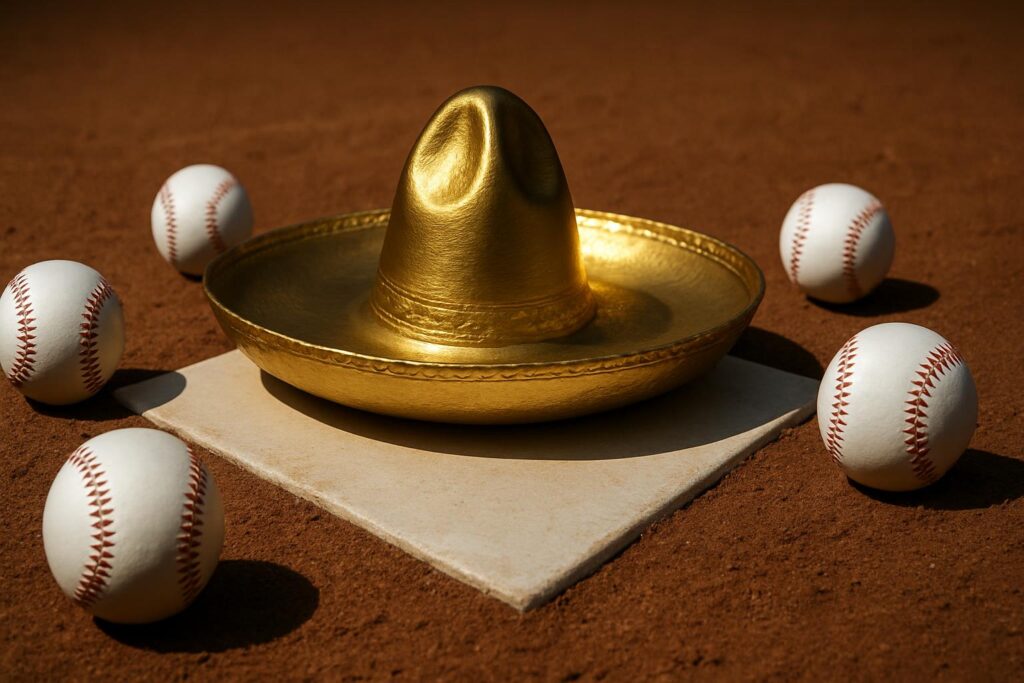
A Golden Sombrero happens when a batter strikes out four times in one game. It can happen across nine innings or spill into extra innings. It can happen to a star, a rookie, or a bench player pressed into action. It is a game-level event, not a season label. One long night can create it. One matchup can feed it. One bad timing pattern can repeat it.
It is not rare, but it is not routine either. You need enough plate appearances, some swing-and-miss or called-strike trouble, and pitchers who keep executing. When those factors line up, four strikeouts can stack up fast.
Quick Foundations: How a Strikeout Is Recorded
Looking vs Swinging
A strikeout can be looking or swinging. Looking means the pitch was called a strike by the umpire and the batter did not swing. Swinging means the batter swung and missed or made contact that qualifies as a strike, such as a foul tip caught by the catcher with two strikes.
Dropped Third Strike Still Counts
If the catcher fails to secure strike three, a batter can try to reach first base on a dropped third strike under the rule set in play. Even if the batter reaches safely, it is still a strikeout for the batter and a putout or error for the fielders depending on what happens next.
Not a Separate Official Category
Golden Sombrero is slang. The official record shows four strikeouts in the box score, but you will not see a separate line labeled Golden Sombrero in MLB statistical summaries. Media, fans, and players use the term because it is clear and quick.
Where the Term Comes From
Baseball borrows a lot from hockey’s hat trick idea of three in one game. In baseball, three strikeouts by a batter in one game is often called a hat trick. Four upgraded the label. The Golden Sombrero became the common slang for four strikeouts, and the theme extended upward. Five strikeouts in a game is often called a platinum sombrero. Six strikeouts in a game is rare and sometimes called a titanium sombrero. You do not need to memorize the names. The key is that Golden Sombrero equals four strikeouts in one game.
Why It Happens More Often Than You Think
More Velocity, More Spin, More Specialization
Modern pitchers throw harder and spin the ball more than in earlier eras. Teams use bullpen matchups to expose a hitter’s weaknesses. Starters show high-velocity fastballs and sharp breaking balls. Relievers add extreme pitch shapes late. One hitter might face three very different pitchers in a single game.
Approach Trade-offs
Hitters chase power, launch, and damage. That approach brings more home runs and extra-base hits, but it often raises strikeouts. A hitter who hunts damage may let borderline pitches go early, fall behind, and pay for it with two-strike counts. Four strikeouts can be the price of that risk in one game.
Plate Appearance Volume
To record four strikeouts, a batter usually needs four or five plate appearances. Leadoff and core lineup hitters are more likely to see that many chances, especially in high-scoring games or extra innings. More trips mean more chances for patterns to repeat, for pitchers to attack the same hole, or for a hitter to run into a night of poor timing.
Reading a Golden Sombrero in the Box Score
Context Matters
A game with four strikeouts and two deep fly balls can show different underlying timing than a game with weak swings and noncompetitive chases. Without video you cannot see everything, but you can still note the opponents, the pitch types faced, and whether the team as a whole struggled against a specific pitcher profile.
Not a Judgment on Talent
Many elite hitters have worn a Golden Sombrero at least once. It often reflects a tough matchup, a night of narrow misses, or a specific hole a staff exploited. Evaluate the next week more than one game. The sport runs on sequences and adjustments, not one-night verdicts.
Inside the At-Bats That Stack to Four Strikeouts
Getting Behind Early
The first two strikes matter more than the third. A first-pitch called strike can set up a pitcher to expand later. Falling behind 0-2 or 1-2 shrinks the hitting zone and forces defensive swings. If a hitter keeps losing that first pitch or misses the early fastball, a pattern takes hold that can repeat through a game.
Two-Strike Vulnerabilities
Some hitters chase breaking balls below the zone. Some freeze on sliders that land on the backdoor corner. Others struggle to cover the top of the zone late. Pitchers hunt those zones once a hole is clear. A Golden Sombrero often reflects one or two two-strike weaknesses being hit again and again.
Sequencing and Tunneling
Pitchers mix speeds and locations to hide their intent. A fastball up followed by a splitter that starts high and drops below the zone can produce repeated swinging strikes. A cutter in followed by a slider away can trap a bat path. When the sequencing fits a hitter’s weak spot, the strikeouts pile up.
How Managers React During the Game
Stick or Switch
A manager might stick with a hitter who has three strikeouts if the underlying contact quality was close or if the next matchup favors the hitter. A manager might switch to a bench bat if the opposing reliever owns a bad matchup for the starter being replaced. It is a calculus of platoon splits, pitch profiles, and the game state.
Lineup Ripple Effects
Pulling a starter changes defensive alignments and late-inning pinch-hit options. Sometimes a team rides with the struggling hitter because the defense matters more or because the bench options are thin. The decision is game-by-game, not a rule.
The Mental Game After Strikeout Number Three
Reset and Narrow the Plan
Good hitters reset the count-to-count focus. They pick one or two pitches to hunt. They commit to zone control instead of chasing the result. The best response to three early strikeouts is often a cleaner plan for the fourth at-bat, even if the outcome does not change immediately.
Routine Beats Emotion
Routines lower noise. Breathing cues, release-point tracking, and on-deck timing checks help a hitter quiet the game down. That steadiness is how many players avoid the spiral that can lead to strikeout number four.
Adjustments Hitters Use to Avoid the Fourth Strikeout
Earlier Preparation for Velocity
Starting the load a touch sooner helps against high velocity. One small timing fix can change swing decisions by inches at contact. Hitting coaches often cue starts and stops rather than overhauling mechanics mid-game.
Two-Strike Mechanics
Many hitters use a two-strike approach. That can mean choking up, quieting the leg kick, or shifting the target from pull power to hard line drives. The goal is contact quality that stays inside the zone rather than protecting everything.
Zone Commitment
Commit to swing in the heart of the plate and take the painted edges when the count allows. Chasing off the edges is how strikeouts multiply. When a hitter zones in on a smaller hot spot, he can shrink ugly swings even if he still strikes out once or twice.
How Pitchers Create a Golden Sombrero Against One Hitter
Repeat the Hole Until It Closes
Pitchers will attack the hole that shows up. If a hitter cannot hold the top of the zone, fastballs keep climbing. If he freezes on sliders down and away, more are coming. The burden shifts to the hitter to force a change by laying off or by punishing a mistake.
Tunnel With Intent
Fastballs and breaking balls that share a visual path until late make late swing decisions harder. A pitcher who hits the tunnel can earn swing-and-miss without living in the strike zone. That is a common thread behind four strikeouts against the same batter.
Leverage the Umpire’s Zone
Every zone has edges that get called more or less often on a given night. Pitchers test those edges early, note what holds, and return there with two strikes. A hitter who disagrees with the edge might freeze again in a key spot, which feeds another called strikeout.
Golden Sombrero and Today’s Game Trends
Why It Is More Common in the Modern Era
In today’s game, strikeout rates are higher than in past decades. Pitchers throw harder, bullpens are deeper, and pitch design is sharper. Hitters trade some contact for damage. That adds up to more games in which four strikeouts are on the table for a single hitter.
Extra Innings and Opportunity
Extra innings add plate appearances. More chances can mean more strikeouts. That said, one crisp swing in extras can erase a tough night in one swing. Golden Sombrero does not block a late-game hero moment. Both can live in the same box score.
How Broadly the Term Is Used
The Golden Sombrero label shows up across professional baseball, minor leagues, and college baseball. It is common fan and media slang. It is not a formal statistic in any of those settings. You will see it in headlines, broadcasts, and postgame chatter whenever a hitter strikes out four times in one game.
What the Golden Sombrero Does and Does Not Tell You
It Signals a Tough Night, Not a Flaw in Stone
Four strikeouts tell you the hitter lost four at-bats by strikeout. It does not tell you everything about future performance. It does not define a player’s ceiling. One game is a thin slice of skill.
It Often Reflects Matchup Dynamics
Pitcher handedness, pitch mix, command quality, and game plan persistence matter. If a hitter profile lines up poorly against a certain pitch type, a full staff can keep throwing versions of it for nine innings. The result can be a Golden Sombrero that says more about the matchup than about the hitter’s baseline ability.
Practical Scouting for Fans
What to Watch During the Game
Watch how the hitter reacts in the third at-bat after two early strikeouts. Look for a smaller move, an earlier load, or different swing decisions. If timing looks better and chase rates fall, that is a useful sign even if the third at-bat ends in a strikeout.
What to Check After the Game
Check the opposing pitchers and their pitch types. If the batter faced multiple dominant relievers with elite swing-and-miss stuff, a Golden Sombrero is easier to understand. Also note the team approach. If several hitters showed similar chase patterns, the issue may have been the pitcher plan, not one hitter’s collapse.
Coaching Takeaways at Amateur Levels
Normalize Bad Days
At youth and high school levels, explain that four strikeouts in a game can happen to any player. The key lesson is how to respond next at-bat and next game. Teach routines for reset, breathing, and pitch recognition instead of dwelling on the label.
Simple, Actionable Adjustments
Encourage early readiness against fastballs. Practice two-strike bat control with smaller moves. Emphasize swing decisions in the heart of the plate. Those habits help reduce strikeouts without killing power or confidence.
Media, Clubhouse, and Fan Culture
How the Term Is Used
Golden Sombrero is standard broadcast and media language for four strikeouts. Players and fans use it as shorthand rather than as an insult. It travels easily because it names a clear outcome without needing extra explanation.
Keeping Perspective
Even the best hitters will run into nights like this. Fans who understand the forces behind a Golden Sombrero can focus on the process the next day. That view is more useful than a one-night verdict.
Frequently Paired Terms
Hat Trick
Three strikeouts in one game by the same batter is often called a hat trick. You will hear this most when a player reaches three and the broadcast hints at the next step if a fourth strikeout comes.
Platinum Sombrero
Five strikeouts in one game by the same batter is often called a platinum sombrero. It is less common than four because it usually needs extra innings or a rare streak of unproductive at-bats.
Titanium Sombrero
Six strikeouts in one game is rare and often requires an extended extra-inning game. You might hear titanium sombrero for that case. Most fans will not see many of these in a season.
Golden Sombrero and Player Evaluation
Fantasy and Analytics Perspective
In fantasy, one night with four strikeouts hurts counting stats but says little about the week ahead. In analytics, the focus shifts to chase rate, contact rate, swing decisions, and pitch-type performance over larger samples. A single Golden Sombrero is noise without trend support.
When to Worry
Worry if the four strikeouts fit a long run of the same misses against the same pitch type. Worry if the hitter stops adjusting, keeps chasing the same out-of-zone pitch, and loses hard contact week over week. Otherwise, file it as a tough night against tough pitching.
Real-World Example Patterns Without Names
High Fastball Trouble
A hitter whiffs three times on fastballs at the top of the zone, then gets rung up on a borderline heater up and in. That is a Golden Sombrero built on a clear hole that pitchers exploited all game.
Breaking Ball Trap
A hitter sees sliders away all night, takes two called strikes on the edge, and chases two down and off the plate. That is a Golden Sombrero built on discipline lapses and relentless sequencing.
Mixed Staff, Same Result
Starter throws sinkers and changeups, the setup reliever rides high fastballs, and the closer spins a power slider. If the hitter is late or indecisive against each style, the four strikeouts come from variety rather than a single hole.
How to Talk About It Like a Pro
Use Neutral Language
Say the hitter wore a Golden Sombrero or struck out four times. Add context on pitchers faced, pitch types, and counts. Avoid sweeping claims about a player’s talent based on one game.
Spot the Adjustments
Did the hitter change the leg kick with two strikes. Did he spit on a pitch he chased earlier. Did the timing improve even if the outcome stayed a strikeout. Those clues tell you whether tomorrow looks better.
Conclusion
The Golden Sombrero is a clear label for a simple outcome. A hitter struck out four times in one game. It stings, but it is not a sentence on a career or even a month. It usually reflects a tough combination of velocity, spin, sequencing, and approach trade-offs that did not break the hitter’s way that night. Understand how pitchers created it, how the hitter responded, and how the next at-bat changed. That is how to watch baseball with clarity. File the Golden Sombrero as a data point, not a definition, and pay attention to the adjustments that come next.
FAQ
Q: What is a Golden Sombrero in baseball
A: A Golden Sombrero happens when a batter strikes out four times in one game.
Q: Is a Golden Sombrero an official MLB statistic
A: Golden Sombrero is slang and not an official statistic, although the box score will show four strikeouts.
Q: Why are Golden Sombreros more common today
A: They are more common because pitchers throw harder, bullpens are deeper, pitch design is sharper, and hitters often trade some contact for power.
Q: Does a Golden Sombrero mean a player is slumping
A: Not necessarily; it often reflects a tough matchup or a one-night pattern, and it does not define future performance.
Q: What comes after a Golden Sombrero
A: Five strikeouts in one game is often called a platinum sombrero, and six strikeouts is sometimes called a titanium sombrero.