
We are reader supported. When you purchase through links on our site, we may earn an affiliate commission. Also, as an Amazon affiliate, we earn from qualifying purchases.
The forkball is a pitch with late, heavy drop that comes from an old-school grip and a direct, simple idea. It looks like a fastball out of the hand, then falls below the barrel. The goal is to change the hitter’s eye level, mess with timing, and win the bottom of the strike zone. You will learn what a forkball is, how it moves, how it differs from the splitter and other offspeed pitches, how to throw it, when to use it, how hitters can adjust, and why this pitch still matters in modern baseball.
What Is a Forkball
The basic idea
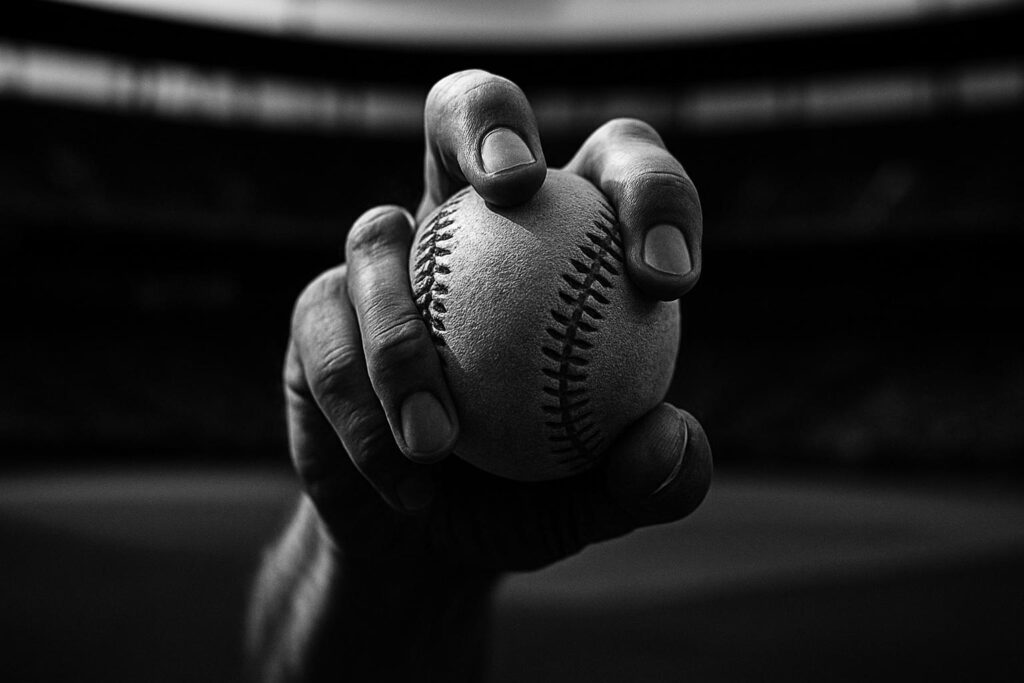
A forkball is an offspeed pitch thrown with the index and middle fingers spread wide, with the baseball seated deep between them. The grip reduces spin and creates a tumbling, dropping action. It is thrown with fastball arm speed but arrives slower, typically well below the fastball, and dives late under the bat.
How it moves
The forkball has clear vertical movement. It falls more than a typical changeup and more than most splitters. It can also show a slight arm-side tilt, but its identity is the vertical drop. The ball appears to lose lift right before it reaches the plate. When the pitcher commands it low, it produces chases, whiffs, and weak contact on the ground.
Forkball vs Splitter vs Changeup vs Curveball
Forkball and splitter
The splitter uses a similar finger spread but not as deep and is usually thrown harder. The splitter often lives in the mid to high 80s for many pitchers, while the forkball is slower. The forkball shows more drop and less consistent side movement. The splitter is often a power pitch with late dive, while the forkball is a softer, deeper drop used to undercut the zone.
Forkball and changeup
The changeup works with pronation and a more standard grip, often the circle change, and carries arm-side fade with softer drop. The forkball is less about fade and more about straight-down movement. A changeup is a speed disruptor that mirrors fastball shape with arm-side run. A forkball is a drop specialist that targets the bottom of the zone.
Forkball and curveball
The curveball creates topspin with a clear bend. It has a big vertical break but travels on a visible arc. The forkball does not show the same visible hump. It looks like a fastball longer and then falls. The curveball is a breaking ball with defined spin cues. The forkball is an offspeed dropper with reduced spin that tunnels well with the fastball.
A Short History of the Forkball
Early roots
The forkball has roots in the early twentieth century. It predates the splitter and earned a place as a crafty alternative to the curveball and changeup. The idea was simple. Split the fingers, take off spin, and let gravity and reduced lift do the work.
The Elroy Face era and beyond
The pitch gained real fame with Pittsburgh reliever Elroy Face in the 1950s and 1960s. He rode the forkball to one of the greatest relief seasons on record and built a long career around it. His success showed the pitch could carry a role. After that, usage rose and fell across eras, with some pitchers making it a main weapon and others keeping it as a change-of-pace secret.
Why it faded in MLB
The splitter era and improved changeup teaching reduced the forkball’s footprint. Coaches believe the forkball grip can be hard on the hand and elbow if overused. Teams also value command and repeatability. The forkball can be harder to locate than a well-built changeup. As a result, many pitchers moved to splitters, changeups, and sliders as their main offspeed options. But the forkball never vanished. It remains alive in pockets, especially in international baseball, and still appears as a specialist pitch in pro ball.
Mechanics and Grip
The grip
Spread the index and middle fingers wide apart on the top of the ball. Seat the baseball deep so that the ball rests between those fingers. Place the thumb under the ball for support, often on the smooth leather rather than a seam. Do not squeeze to pain. Grip firm enough to control the ball but loose enough to let the fingers work at release.
Release and arm speed
Maintain normal fastball arm speed. Do not slow down. The drop comes from the grip and the release, not a slower arm. At release, think of sending the ball forward with a firm wrist and letting the fingers kill spin. Some pitchers feel a slight downward snap of the wrist. The goal is reduced backspin and a clean tumble.
Wrist and fingers
Keep the wrist firm. If the wrist is floppy, the ball can sail or bounce. The wide fingers do the heavy lifting. The deeper the ball sits between the fingers, the more the spin dies. But too deep and you can lose command. Start with a moderate depth and adjust one small step at a time to find the right balance between drop and control.
How to Throw a Forkball Step by Step
Prerequisites and safety
Build a solid fastball and a simple changeup first. Add the forkball only if the hand is large and flexible enough to hold the grip without pain. This pitch places stress on the fingers and can stress the elbow if thrown with poor mechanics. Young pitchers should avoid it until mature enough to handle the grip. When in doubt, keep working on a standard changeup.
Setup and grip steps
Start with a neutral, comfortable split of the index and middle fingers. Seat the ball between them until you feel secure but not cramped. Put the thumb under the ball for balance. Keep the ring finger gently against the side of the ball if it helps stability. Check that the wrist feels neutral and the forearm relaxed.
Throwing steps
Use your normal delivery and stride. Keep the same tempo as the fastball. At foot strike, stay on line to the target. Do not open early. As the arm comes through, keep the elbow healthy by avoiding wild supination. Let the fingers stay wide and firm. Release the ball out in front. Think clean, straight extension. Maintain fastball arm speed through release.
Beginner drills
Dry reps without a ball. Practice the hand shape and forearm angle.
Short-catch at 45 to 60 feet. Focus on clean release and a smooth drop without bouncing.
One-knee throws or seated catch to emphasize fingertip action and front release.
Low target drill. Aim at the catcher’s shin guards or the bottom edge of the strike zone.
Mix in fastballs. Keep the arm speed identical to prevent tipping.
Common mistakes and fixes
Choking the ball too deep. Loosen the grip slightly and seat the ball a touch higher.
Slowing the arm. Throw with full intent. Trust the grip to take off speed.
Yanking the wrist down too hard. Use a firm wrist, not a violent snap, to protect the elbow and improve control.
Missing up in the zone. Start the forkball higher than the knees only if you expect a late drop. When in doubt, target below the mid-thigh.
Telegraphing the pitch. Use the same hand position in the glove for all pitches and keep the same pre-pitch routines.
When to Use a Forkball
Count strategy
Even or pitcher’s counts are ideal. Use it 0-1, 1-2, and 2-2 to expand the zone under the bat. It also works as a first-pitch surprise to a free-swinger. In 3-ball counts, throw it only if you can land it at the knees. Most pitchers prefer to save it for chase counts to avoid free passes.
To righties and lefties
The forkball works to both sides because its strength is vertical movement. To same-side hitters, aim middle to low and let it fall under the barrel. To opposite-side hitters, start it on the plate and drop it off the bottom. It can induce weak grounders from both sides when located down.
Game planning
Pair the forkball with a high four-seam fastball. The rise effect of the fastball and the drop of the forkball create a vertical plan. Use the forkball after elevated heaters or hard sliders off the plate. Against aggressive hitters, start it in the zone and trust the late fall. Against patient hitters, use it late in the count just below the knees to draw a chase.
How Hitters Should Adjust
Visual cues
Track the ball out of the hand. The forkball can show reduced spin cues and a slightly dead look. It holds plane, then dies. Pick a firm visual on the logo area of the ball and stay with it through the flight. Expect down action if the ball starts mid-thigh or higher and seems to pause late.
Swing decisions
Commit to a down-and-up zone read. If it starts below the knees, take it. If it starts at the thighs, be ready for drop. If you swing, aim to contact the front half of the ball to avoid top-spin grounders. Stay short and compact. Do not chase below the zone with a long barrel.
Hitting drills
Short toss with underhand drop feeds to train barrel control on falling pitches.
High tee to low tee progression to simulate the path change and finish through the ball.
Machine work with variable speed settings to train timing against a slower pitch that looks like a fastball early.
Take rounds. Force discipline by taking any pitch that starts below the knees.
Coaching Notes for Youth and Amateurs
For youth pitchers, the forkball is usually not necessary. A good changeup, a four-seam fastball, and a simple breaking ball are enough. Hand size and finger flexibility matter. If a player cannot hold the forkball grip without strain, skip it. For high school and college pitchers with larger hands, the forkball can be a useful third pitch, especially if the changeup lacks feel. Keep volume low at first. Track command and recovery. If the elbow or fingers feel sore, reduce usage and return to the changeup while the arm settles.
Data and Scouting View
What the numbers say
A good forkball generates late swing decisions and under-contact. Expect higher whiff rates when located just below the zone. Ground ball rates rise when the pitch is down and in to same-side hitters or down and away to opposite-side hitters. Command is the separator. If you cannot land it below the belt or just off the bottom, hitters will spit on it. When tunneled off a high fastball, the forkball’s chase rate improves.
Scouting language
Scouts often note a firm wrist, late tumble, and fastball arm speed. They look for consistent release height, arm slot match with the fastball, and repeatable depth. A plus forkball shows big drop with enough strike landings to keep hitters honest. Average versions show inconsistent depth and too many non-competitive takes. Below-average versions float with no finish or bounce too early.
Forkball in Japan and International Baseball
In Japan and other parts of Asia, the word fork is often used for what North American coaches might call a splitter. That family of grips is widely taught and trusted. The boundary between forkball and splitter can blur, but the core idea remains. Use a finger-split grip to kill spin, throw with fastball intent, and play below the barrel. Many international pitchers build careers using this concept, and the pitch remains a staple in game plans overseas.
Maintenance, Health, and Recovery
Arm care
Keep a normal arm care routine. Use light band work for the shoulder, gentle forearm exercises, and post-throw recovery like soft tissue work and hydration. Volume control matters. Limit high-intent forkballs in bullpens to a small share of total throws. Build tolerance slowly. If the elbow or forearm tightens, back off and focus on movement quality rather than total throws.
Finger care
The wide finger spread can stress the finger webbing and flexors. Add light finger extension and flexion drills. Use contrast baths for hand recovery if needed. Check fingernails and keep them smooth to avoid catching on the seams. If you feel nerve tingling or persistent finger pain, reduce or pause forkball work and consult a qualified coach or medical provider.
Why the Forkball Still Matters
The game keeps shifting. Hitters train for velocity and spin. They track high fastballs and power sliders. The forkball attacks a different space. It punishes hitters who hunt up in the zone. It offers a distinct look that pairs with today’s velocity. It can become a weapon for pitchers who struggle to master a traditional changeup. It can give a starter a ground-ball option late in counts or give a reliever a chase pitch to close at-bats. Even if the splitter and the changeup get more attention, the forkball has a clear role when built and used with intent.
Conclusion
The forkball is a classic pitch that still plays. It is a grip-driven, fastball-arm-speed offspeed with heavy drop. It sits between a splitter and a changeup in shape but carries its own identity. Learn the grip, keep the arm speed, and aim for the knees and below. Use it in chase counts and pair it with a high fastball. Hitters can adjust by reading start height and refusing to chase below the zone. Coaches can use it for the right athletes with the right hand size and with careful volume. The forkball will not be the main pitch on every staff, but it remains a smart tool when you need a reliable way to win the bottom of the zone.
FAQ
Q: What is a forkball
A: A forkball is an offspeed pitch thrown with the index and middle fingers spread wide and the ball seated deep between them, producing reduced spin and a late, heavy drop that plays at the bottom of the zone.
Q: How is a forkball different from a splitter
A: The splitter uses a similar finger spread but not as deep and is usually thrown harder, while the forkball is slower and shows more vertical drop with less consistent side movement.
Q: Is a forkball safe for youth pitchers
A: Most youth pitchers should avoid the forkball because the wide grip can stress the fingers and elbow; a standard changeup is a safer and more useful choice until the hand is large and strong enough.
Q: When should a pitcher throw a forkball
A: Use it in even or pitcher’s counts, aim for the knees or just below, and pair it with a high fastball to create a vertical plan that draws chases and weak contact.
Q: How can a hitter adjust to a forkball
A: Read start height, avoid chasing pitches that start below the knees, stay short with the swing, and aim to contact the front half of the ball when committing to a forkball in the zone.