
We are reader supported. When you purchase through links on our site, we may earn an affiliate commission. Also, as an Amazon affiliate, we earn from qualifying purchases.
The Baseball Hall of Fame sits at the center of how the sport remembers greatness. It honors the best. It guards history. It sparks debate. If you follow baseball even a little, you have heard of it. But what is it exactly, how does someone get in, and why does Cooperstown matter so much? This guide breaks it all down in clear steps. You will learn what the Hall is, how players and contributors are elected, what happens after election, and why some cases split opinion. Keep going. The rules are precise, the traditions run deep, and the details answer questions fans ask every year.
What the Baseball Hall of Fame Is
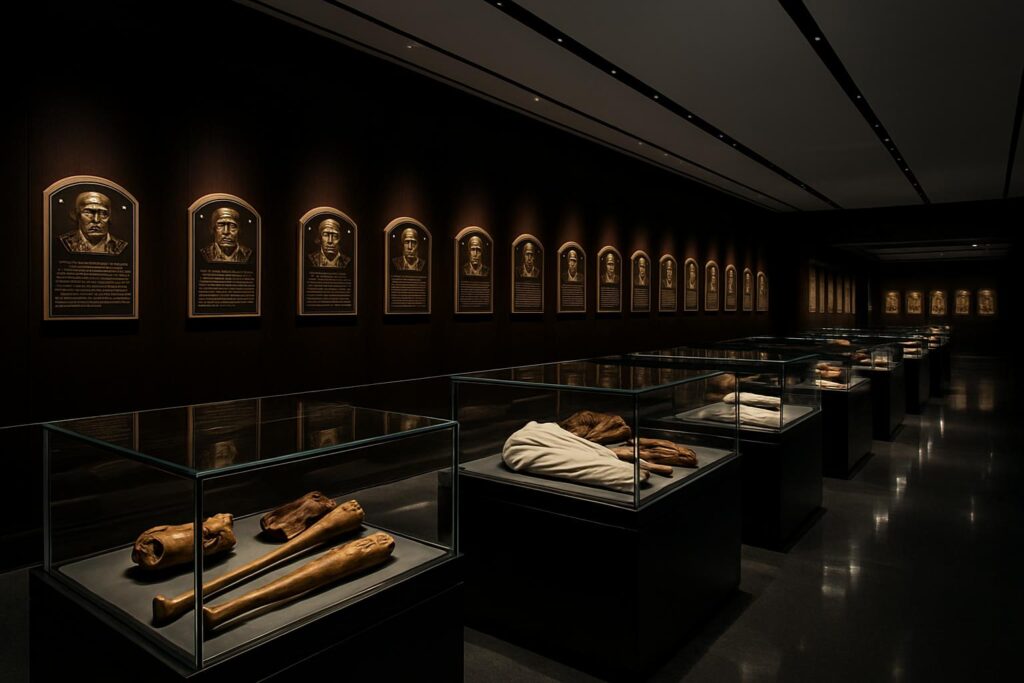
The National Baseball Hall of Fame and Museum is a nonprofit institution in Cooperstown, New York. It has two core roles. First, it is a museum that preserves and tells the story of baseball through artifacts, exhibits, and a research library. Second, it is the Hall of Fame, a select group of players, managers, umpires, and executives honored with bronze plaques. Those plaques sit in the Plaque Gallery, the heart of the building. The Hall aims to preserve history, honor excellence, and connect generations of fans and families.
Why Cooperstown
Cooperstown became the home of the Hall in the 1930s. A popular story once claimed baseball began there. Historians have shown the game grew from many bat-and-ball games and evolved over time. Still, the town embraced the role. The museum opened in 1939, and the first class of Hall of Famers had been elected in 1936. Since then, Cooperstown has become a destination. Induction Weekend each summer brings fans, families, and legends together. The setting adds charm and focus. When you arrive, baseball is the point of the whole visit.
What Induction Means
Induction is the highest formal honor in baseball. It is reserved for career excellence and lasting impact. Inductees include several categories.
- Players who performed at an elite level over a full career
- Managers who led teams and shaped winning eras
- Umpires who upheld the game at the highest standard
- Executives and pioneers who built teams, leagues, or innovations
Each inductee receives a bronze plaque with a portrait, a short text, and the teams and years served. That plaque joins the Plaque Gallery permanently. Induction is not a temporary award. It is a final verdict on a career.
How Player Elections Work
Most players enter the Hall through voting by members of the Baseball Writers Association of America, known as the BBWAA. The process is orderly and strict. It balances access and standards. Here is how it works from start to finish.
Player Eligibility
A player must meet three main requirements to appear on the BBWAA ballot.
- At least 10 seasons played in Major League Baseball
- Retired for at least five full seasons
- Not on Major League Baseball’s ineligible list
The BBWAA screens the pool and prepares a ballot each winter. It includes newly eligible players who meet the standard and holdover players who received at least five percent of the vote in the prior year.
How Voting Works
Eligible BBWAA voters can vote for up to 10 candidates on a ballot. A player needs 75 percent of the vote to be elected. If a player receives less than five percent, the player drops off the ballot the next year. If a player remains above five percent but below 75 percent, the player can stay on the ballot for up to 10 years. This system keeps the ballot competitive while allowing time for re-evaluation. Voters can and do change their views when new analysis or context emerges.
What Voters Consider
Voters are guided by performance, records, playing ability, integrity, sportsmanship, character, and contribution to team and sport. In practice, that means a blend of traditional stats, advanced metrics, awards, leadership, postseason value, and era context. Advanced metrics such as WAR, OPS+, ERA+, and defensive runs saved are common tools. They help compare players across eras, parks, and roles. Voters also consider position scarcity. Few catchers have long peak offense. Shortstop defense matters as much as power for some careers. Relief pitchers and designated hitters raise role questions too. The point is fit and impact. Did the player dominate or build a long, high-value career? The strongest cases do both.
What Happens After Election
Once elected, a player works with the Hall on plaque details and the induction ceremony. The Hall decides the team logo on the cap of the plaque. That policy ensures the cap reflects the most meaningful portion of the player’s career. The induction ceremony takes place in Cooperstown, usually in late July. Inductees deliver speeches. Fans gather on a large lawn. A weekend of events surrounds the ceremony, including autograph sessions, panel talks, and a parade. The new plaque is then installed in the Plaque Gallery.
Era Committees Explained
Not every worthy candidate gets elected by the BBWAA. Some careers are hard to judge in a 10-year window. Others belong to different roles, such as managers or executives. To cover the full story, the Hall uses Era Committees. These committees consider players, managers, umpires, and executives from defined timeframes and contexts. They focus on balance and expertise. Members include Hall of Famers, executives, historians, and media members.
Contemporary and Classic Eras
Today, the Hall uses two main eras. The Contemporary Baseball Era covers candidates from roughly 1980 to the present. It includes a committee focused on players and another focused on managers, executives, and umpires. The Classic Baseball Era looks at earlier periods before the 1980s. The Hall schedules these committees on a rotating basis, so each group receives regular review.
How Committees Vote
Era Committees usually have 16 voters. A candidate needs 75 percent of the vote to be elected. That means 12 votes out of 16. The small-room discussion helps voters compare careers in detail. It can surface context the larger BBWAA process may not capture well, such as league strength, team situations, injuries, or defensive value that did not show in older box scores. Many managers, umpires, executives, and players from earlier eras have entered the Hall through these committees.
The Museum Experience
The museum is more than the Plaque Gallery. Exhibits stretch across multiple floors and cover the sport from the 1800s to today. Artifacts include bats, gloves, uniforms, and championship rings. Displays explain rule changes, equipment evolution, and key seasons. There are sections on the World Series, ballparks, and the minor leagues. The museum also holds a deep research library used by writers, scholars, and fans. Many families plan several hours for a visit. The Plaque Gallery is quiet and reflective. Other spaces are more interactive and visual. The combination works well for both first-time visitors and dedicated fans.
Negro Leagues and Inclusive History
The Hall has long honored stars from the Negro Leagues. Special committees began electing Negro League greats in the 1970s, and Era Committees continue that work today. Exhibits show the skill, strategy, and culture of Black baseball. They trace the impact on the major leagues and on American life. In recent years, research and outreach have grown. The story is fuller than it once was, and many visitors spend extra time in these galleries.
Women in Baseball
Women have contributed to baseball as players, executives, writers, and advocates. The Hall recognizes this legacy in several ways. The All-American Girls Professional Baseball League has an exhibit first opened in 1988. It highlights the league’s players and its place in wartime and postwar sports. Effa Manley, a Negro Leagues executive, became the first woman elected to the Hall of Fame in 2006. Additional exhibits continue to expand the story of women in the game, including roles in front offices, media, and scouting.
Awards That Are Not Induction
Two annual honors bring attention to celebrated voices, but they are not Hall of Fame induction. The Ford C Frick Award recognizes excellence in baseball broadcasting. The BBWAA Career Excellence Award honors meritorious contributions to baseball writing. Recipients are honored with permanent displays in the museum. They are not inducted as Hall of Famers and do not receive Hall of Fame plaques. This distinction matters. Fans often see those names during Induction Weekend and assume they joined the Hall. They did not. They are honored in the museum for outstanding careers.
Standards, Context, and the Big Debates
No Hall of Fame is free from debate. Baseball’s Hall is famous for it. Several recurring topics shape how fans and voters think.
Peak vs Career
Some players reach a legendary peak for six to eight years. Others produce very good value for 20 seasons without a single historic peak. Voters weigh those shapes of value differently. The strongest cases show both a high peak and a long career, but not all stars fit that model. The ballot reflects this balance each year.
Relief Pitchers and Designated Hitters
Role changes complicate comparisons. Relief pitchers pile up saves and leverage innings rather than starter workloads. Designated hitters can be elite run producers without playing the field. Over time, voters have become more comfortable judging these roles on their own terms. That means higher value and leverage for relievers, and elite offense sustained over time for designated hitters.
Ballparks and Eras
Run-scoring levels vary by era and park. A 35-home-run season in one park can be equal to 25 in another. A 3.50 ERA can be elite in a high-offense era and average in a low-offense era. Normalized statistics help. So does simple context. Voters and fans need to know where and when a player performed to judge the result fairly.
The Character Clause
The Hall’s guidelines ask voters to consider integrity, sportsmanship, and character along with performance. This clause plays a major role in debates about performance-enhancing drugs. Era Committees and BBWAA voters both face these cases. Fans differ on how much to weigh suspected or confirmed use. Some prefer a strict standard. Others prefer to focus on performance and era norms. Another clear line exists. Players on Major League Baseball’s ineligible list are not considered for election. That covers lifetime bans for gambling or other severe violations.
How to Think Like a Hall Voter
You can apply a simple framework when you argue a Hall case with friends or on social media. It keeps you disciplined and fair across positions and eras.
- Career value. Totals across a full career, including playing time and rate performance
- Peak value. Best three to seven seasons, with dominance compared to peers
- Era and park. Adjust for context to avoid punishing or overpraising
- Position and role. Catcher, shortstop, reliever, and designated hitter need tailored standards
- Defense and baserunning. Not all value shows up in home runs
- Awards and honors. MVPs, Cy Youngs, Gold Gloves, All-Star selections can capture reputation at the time
- Postseason. October is a small sample, but sustained excellence helps a case
- Durability and consistency. Health and reliability add real value over time
If you work through those steps, you will see why some cases that look close on the surface become clearer after context. You will also see why the Hall ballot spurs new debate every winter. Voters are weighing the same factors with fresh analysis and a shifting baseline as the game evolves.
The Cap Logo on the Plaque
The team logo on a Hall of Fame plaque draws attention every time a star with multiple teams gets elected. The Hall decides which cap appears on a plaque. The goal is to reflect the most significant part of the player’s career. It is not a simple count of seasons or awards. It looks at impact, role, and identity. This policy avoids commercial pressure and ensures the plaque tells a fair story at a glance.
Induction Weekend in Practice
The schedule is steady each year. The Hall announces BBWAA results in January. Era Committees announce results during the offseason. Spring brings planning for events and exhibits. Summer brings the ceremony. Induction Weekend includes:
- Parade of Legends with returning Hall of Famers
- Panel discussions and Q and A sessions
- Museum spotlights on new artifacts
- The induction ceremony on a large open field
Cooperstown fills with fans wearing jerseys from every era and team. The ceremony itself is formal and direct. Inductees deliver speeches, accept their plaques, and join a photo with living Hall of Famers. The next morning, visitors find the new plaques in the gallery.
Research, Education, and Outreach
The Hall runs a robust research and education program. Scholars use the library for books, documentaries, and genealogy. Teachers bring students for programs that link baseball to math, social studies, and language arts. The museum updates exhibits with new research. Digital access has grown. Fans can explore online collections, video, and timelines. This work supports the mission to preserve history and engage new fans.
Common Myths and Clear Facts
Myth 1: Frick and BBWAA writing honorees are Hall of Famers
They are not inductees. The Ford C Frick Award honors broadcasters. The BBWAA Career Excellence Award honors writers. Recipients are honored in the museum, but they do not receive Hall of Fame plaques and are not Hall of Famers.
Myth 2: A player chooses the cap logo
The Hall selects the cap logo to reflect the most significant part of the career. This ensures the plaque aligns with history rather than marketing.
Myth 3: One great postseason run guarantees election
Postseason success helps a case, but it does not replace a full career record. Voters look at the whole picture.
Myth 4: Advanced stats decide everything
Modern metrics inform the conversation. They do not end it. Voters still consider awards, reputation, roles, and character. A strong case usually shows up across many measures.
International Roots and Global Reach
Baseball’s Hall tells a global story. Many Hall of Famers were born outside the United States. The museum’s exhibits highlight the influence of Latin America, the Caribbean, and Asia. Players who starred in Major League Baseball have joined the Hall from countries across the world. The Hall also documents international tournaments and the growth of scouting networks that widened the game’s talent base. The message is steady. Excellence can come from anywhere, and the Hall preserves that record.
The Hall’s First Principles
When debates get heated, it helps to return to basics. The Hall exists to preserve baseball history, honor excellence, and connect generations. That means high standards. It means careful research. It means telling the stories behind the numbers, the seasons, and the leagues. It welcomes hard conversations about fairness, opportunity, and change. The Hall can honor pioneers who broke barriers while also celebrating numbers that changed record books. Both are central to the sport’s identity.
How Fans Can Engage All Year
You do not need to wait for July to care about the Hall. You can track the winter ballot, study past classes, and compare eras. You can visit the museum in any season. Off-season visits are quieter and leave more time for the library and exhibits. Summer brings family travel and the buzz of Induction Weekend. Many fans combine a trip to Cooperstown with ballgames in nearby cities. The key is simple. Give yourself time. The museum rewards slow walks and second looks.
A Short Guide to Reading a Plaque
When you stand in front of a bronze plaque, read it in three passes.
- Scan the portrait and teams to fix the timeline in your head
- Read the text for impact, awards, and signature moments
- Note the cap logo and think about why it fits the career
Then step back and connect that player to others. Look for a manager from the same era. Find a rival. Find a teammate who also made it. This turns a single plaque into a web of baseball history.
Why the Hall Still Matters
Baseball changes. The ball, the strike zone, the schedule, and the strategy evolve. The Hall of Fame gives the sport a steady anchor. It says excellence has a place that lasts beyond a contract or a news cycle. It keeps records in context. It keeps arguments honest by laying out facts in public. It welcomes new voices and new research. If you love baseball, the Hall becomes a reference point. You can measure careers against it. You can be inspired by it. You can question it and still respect its role.
Conclusion
The Hall of Fame is simple to define and deep to explore. It is a museum in Cooperstown that preserves baseball’s story. It is a roll of honor that names the sport’s greatest players and contributors. Players become eligible after 10 Major League seasons and five years of retirement. The BBWAA votes each winter, and Era Committees fill the gaps and honor other roles. A 75 percent threshold protects the standard. Plaques and ceremonies give the honor a lasting shape. Debates over roles, eras, and character keep the conversation alive. You can enter as a new fan and still grasp the core ideas. You can return for years and still find new details and connections. That is why the Hall matters. It delivers clarity, memory, and a fair test of what greatness means in baseball.
FAQ
Q: What is the Baseball Hall of Fame and where is it located?
A: The National Baseball Hall of Fame and Museum is a nonprofit institution in Cooperstown, New York, that preserves baseball history and honors the game’s greatest figures with bronze plaques.
Q: How does a player become eligible for the Hall of Fame?
A: A player must have at least 10 Major League seasons, be retired for at least five full seasons, and not be on Major League Baseball’s ineligible list.
Q: How many votes are needed to be elected by the BBWAA?
A: A player needs 75 percent of the vote to be elected.
Q: What are the Era Committees and what do they do?
A: Era Committees are small panels of Hall of Famers, executives, historians, and media members that consider players, managers, umpires, and executives from defined timeframes and contexts, using a 75 percent threshold for election.
Q: Are award winners like the Ford C Frick Award inductees?
A: Recipients of the Ford C Frick Award and the BBWAA Career Excellence Award are honored in the museum, but they are not inducted as Hall of Famers and do not receive Hall of Fame plaques.