
We are reader supported. When you purchase through links on our site, we may earn an affiliate commission. Also, as an Amazon affiliate, we earn from qualifying purchases.
A manager’s challenge is the tool that turns a close, possibly game-changing call into a second look. It is a formal request to use video replay to review an on-field ruling and either confirm it or overturn it. If you watch baseball and wonder how a call gets sent to replay, who decides the outcome, what can be reviewed, and when a manager should use it, this guide will walk you through every piece with clear steps and simple language.
Introduction
Baseball moves fast in crucial moments. One safe or out call can swing a game. To reduce errors, Major League Baseball built a replay system that allows managers to challenge certain calls. This system balances accuracy with pace of play. You will learn the purpose of a manager’s challenge, how the process works from the dugout to the Replay Operations Center, which plays are eligible, and how managers think about using a challenge. By the end, you will be able to follow any challenge on TV or at the ballpark and know exactly what is happening and why.
The core idea of a manager’s challenge
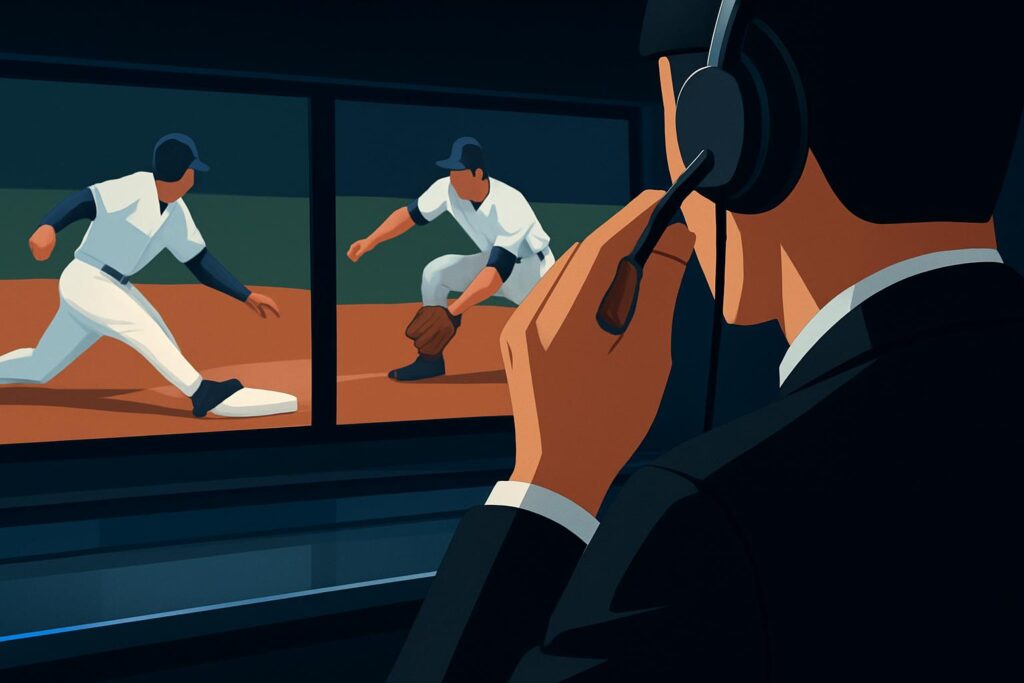
The manager’s challenge exists to correct clear mistakes without stopping the rhythm of the game for long. On a close play, a manager can ask the umpires to send the call to video review. A Replay Official, located at the league’s Replay Operations Center, watches all available camera angles and communicates the final ruling back to the crew chief on the field. The Replay Official does not re-umpire the game. The job is to look for clear and convincing evidence that the original call was wrong. If that level of proof is found, the call gets overturned. If not, the call stands or is confirmed.
When can a manager challenge
The decision window
Managers must decide fast. After a play ends, there is a short window to request a challenge. The ready-for-play moment or the next pitch closes that window. If the pitcher starts the next play or a pickoff happens, the chance to challenge that previous call is gone. This keeps the game moving and stops late challenges that could disrupt the flow.
Before the next pitch rule
One simple test controls the timing. If the next pitch, play, or attempted play happens, you can no longer challenge the previous play. Managers will often pause action briefly while checking with the video room, but there is a limit. Umpires will move the game forward once the time window ends.
How many challenges a team has
Each team starts with one challenge. If the challenge is successful, the team keeps the right to challenge again later. If the challenge is unsuccessful, the team loses that ability for the rest of the game. This structure rewards managers who use the system well and discourages weak, low-probability challenges.
Late-inning crew chief reviews
In the late innings, the crew chief can initiate a review on any reviewable play even if a team has no challenges left. This serves as a safety net in high-leverage spots. The crew chief uses discretion. If a manager is out of challenges and a pivotal, reviewable call occurs, the crew chief can still send it to replay.
What plays are reviewable
Not every call can be challenged. The replay system focuses on objective plays where video can provide a clear answer. These categories are the backbone of review.
Force plays and tag plays
Most safe or out calls at any base can be reviewed. This includes force plays, tag plays, pickoffs, and stolen base attempts. Questions like whether a runner beat the throw, whether a tag touched the runner, or whether the fielder maintained possession fall in this bucket.
Catch or no catch
Whether a fielder caught the ball before it hit the ground is reviewable. This includes trapped balls and shoestring catches. The Replay Official will check glove closure, control, and whether the ball touched grass or dirt.
Boundary calls and home runs
Home run boundary issues are reviewable. This includes fair or foul at the pole near the outfield fence, whether the ball cleared the wall, whether a ball hit a railing above the wall, and whether a fan interfered. Fair or foul on deep balls near the line is reviewable, especially in the outfield where camera coverage is strong.
Hit by pitch
Whether a pitched ball hit the batter can be reviewed. The Replay Official can look for deflection off clothing, batting gloves, or the bat. If the ball hit the bat first, that changes the call and can affect whether the pitch counts as a strike or the ball is live.
Tag-up timing
Whether a runner left a base before a catch on a sacrifice fly or tagging situation can be reviewed. The replay will sync the moment of the catch with the runner’s first movement off the bag to decide if the runner left early.
Plate blocking and home-plate collisions
Plays at the plate often decide games. Replay can review whether a catcher blocked the runner’s path illegally and whether a collision followed the rules. The Replay Official looks at catcher position, possession of the ball, and the runner’s line.
Spectator interference
If a fan reaches over and affects the play, replay can help determine the correct call. The Replay Official can also assist with runner placement when interference occurs by awarding bases based on what would likely have happened.
What is not reviewable
Replay stays away from calls that are judgment-only or that lack clear video standards. Managers cannot challenge these areas.
Balls and strikes
Pitch location, the strike zone, and check swings are not reviewable. Umpires keep control of the zone. While technology is improving, the manager’s challenge does not apply to pitch-by-pitch calls.
Balks and most obstruction or interference
Balks are not reviewable. Many obstruction and interference calls are also not reviewable, with the exceptions noted above for spectator interference and some aspects of home-plate collisions.
Infield fly and similar rules calls
Calls like infield fly and certain runner placement decisions that rely on judgment are typically not reviewable. The system aims for objective determinations supported by camera angles.
How a challenge works step by step
Step 1: The play happens
A close call occurs. It might be a bang-bang out at first, a tag at second, a diving catch in the gap, or a potential home run near the pole. Players react. The crowd reacts. The scoreboard crew may start to show replays.
Step 2: The manager makes a quick decision
The manager looks to the bench video coordinator and coaches. Many clubs have a dedicated staffer watching feeds who can give a fast yes or no. The manager may hold play briefly while waiting for that signal. The decision must come before the next pitch or play and within the short allowed window.
Step 3: The manager requests the challenge
The manager steps out and notifies the umpires of the challenge. The crew chief coordinates the process. All umpires will then put on headsets to connect with the Replay Operations Center.
Step 4: The Replay Official reviews
In the Replay Operations Center, the Replay Official accesses all broadcast angles, including high-speed cameras. The Official watches multiple views and replays them in sync when needed. The standard is clear and convincing. If the video shows the call was wrong, it gets overturned. If the view is mixed or inconclusive, the original call stands or is confirmed.
Step 5: The ruling comes back
The crew chief receives the decision and announces it on the field with clear signals. If a call is overturned, umpires also handle base awards or runner placement to put the game in the state it would have been without the incorrect call. Play resumes promptly.
Replay outcomes explained
Confirmed
Confirmed means the video clearly supports the original call. The Replay Official found decisive evidence that the call was correct. If the manager challenged, the team loses its challenge for the rest of the game unless it still had retained rights from earlier successful challenges.
Stands
Stands means the video was not clear enough to overturn. The call on the field remains because there was not clear and convincing evidence either way. In practice, this feels like a tie goes to the original ruling. A stands result also costs the challenging team its challenge.
Overturned
Overturned means the video showed the original call was wrong. The play is corrected, and any necessary runner placement is handled. The challenging team keeps its ability to challenge again later because a successful challenge is retained.
Runner placement after an overturn
When a call changes, umpires sometimes must place runners where they believe they would have advanced. This shows up on boundary plays, spectator interference, or complex sequences where a catch changes to a trap or vice versa. The goal is to restore the most likely outcome if the correct call had been made on the field.
How managers think about using a challenge
Leverage first
In the first inning, a marginal call may not be worth a low-odds challenge. With two outs and a runner at third in the eighth, the same marginal call could swing win probability. Managers weigh the base-out state, the score, and the inning. High-leverage spots deserve more aggressive use.
Probability and evidence
A manager listens to players who were closest to the action and the video staff. If two or three good angles are likely, the manager challenges. If the replay is muddy and the odds of an overturn are low, it is smarter to hold the challenge for later.
Retaining the challenge
Because successful challenges are retained, managers can be bold when the video looks strong. You are not burning the right to challenge if you win. Use that to protect crucial outs on the bases and hard-hit boundary calls.
Trust your players
Fielders feel tags and transfers. Runners feel a graze on a sleeve or a swipe on a hip. Quick, confident input from the players involved can tip the decision. Many teams teach players to communicate right away so the bench can act within the time window.
Home vs. road and scoreboard angles
Some parks deliver in-park replays very fast. Others show fewer angles. Managers do not rely only on the scoreboard feed. The video room has access to multiple broadcasts and angles, but they still face the same short decision window. Clear, rehearsed communication improves success.
Tips for players during challenge moments
Signal confidently and quickly
After a close tag or catch, give your dugout a clear yes or no. Delay or uncertainty can waste the window. A quick point, head nod, or direct look to the bench helps trigger the review process in time.
Stay on the base
Runners should hold the bag firmly after a slide. Small overslides are a common source of overturned calls. If you lose contact while the tag remains, replay can change a safe to an out. Awareness here prevents free outs.
Tag through the play
Infielders should complete the tag and show the ball. On review, control and contact matter. Clear, sustained possession often decides a close replay.
What fans should watch during a challenge
Umpire signals and headset routine
Look for the crew chief gathering the crew and putting on headsets. That means the play is under review. When they return the headsets, watch for three outcomes. Arms signaling the original call with emphasis often means confirmed. A reversal signal and repositioning of runners means overturned. Minimal change with a brief announcement often means stands.
Why some reviews take longer
More camera angles are not always better if they conflict. A catch or no catch with bodies obscuring the view can take longer as the Replay Official matches frames. Boundary calls often take longer because small details near the pole or railing decide the play.
Pace of play and etiquette
Keep it moving
The system is designed to be fast. Managers have a brief window. Replay Officials work quickly. Umpires resume play immediately after the ruling. This balance keeps accuracy high without turning every inning into a long delay.
Accept the final ruling
Once a replay decision comes back, further argument does not change it. Teams must accept the outcome and move on. Prolonged disputes can lead to ejections. The next pitch is the best response.
Common myths
Managers can challenge balls and strikes
They cannot. The strike zone and check swings are outside the challenge system.
You always get multiple challenges
You start with one. You keep the ability to challenge only if you win. If you lose, you are out of challenges for the rest of the game unless the crew chief initiates a late-inning review.
Challenges let you re-argue judgment calls
Replay targets objective outcomes. Judgment-only calls without clear video standards remain with the umpires on the field.
Case study: a close out at second
There is a bang-bang tag at second on a steal attempt. The runner is called safe. The defensive manager looks to the bench. The video coordinator saw a quick angle that shows the tag brushing the runner’s hand before it touches the bag. The manager requests a challenge before the next pitch.
The umpires connect to the Replay Operations Center. The Replay Official matches the moment of tag with the runner’s first touch of the bag across multiple angles. The video shows clear contact just before the touch. The call is overturned to out. The defensive team retains its right to challenge because the review was successful. The inning continues with the bases empty and one out instead of a runner on and none out. That swing matters.
Case study: trap or catch in the outfield
A low liner is ruled a catch. The offensive manager thinks it was trapped. With two runners on, the call could change everything. The bench confirms a strong angle that shows the ball hitting dirt first. The manager challenges in time.
On review, the Replay Official sees a firm bounce into the glove. The call is overturned to no catch. Umpires place runners where they would have advanced on a trap. The batter gets credited with a hit, runners move up, and the offense keeps its challenge because it won. The game restarts quickly with the correct state.
Why the standard of clear and convincing matters
Replay is not about freezing on one unclear frame. The standard sets a high bar for changing what the umpires saw live. This protects the rhythm of the game and respects the skill of on-field officiating. Overturns happen when the video leaves little doubt. Stands happens when it does not. That line keeps reviews from drifting into guesswork.
Manager’s challenge in context
Fairness and fan trust
Replay supports competitive fairness. Players and fans deserve accurate outcomes on decisive plays. The challenge system builds trust because it shows a transparent process with a neutral Replay Official. Even when a call stands, fans can see that the league used every available angle to make the decision.
Preparation on the bench
Clubs rehearse the process. The manager, bench coach, and video coordinator establish a fast chain of command. Clear signals, clear words, and fast decisions improve the odds of correct challenges and lower the chance of burning the only challenge on a low-percentage play.
Putting it all together
A manager’s challenge is simple in concept and precise in practice. You get a short window to request a replay on specific types of calls. The league’s Replay Official applies a firm standard. The result is confirmed, stands, or overturned. Successful challenges are retained. Unsuccessful ones cost your only challenge. Strategy matters. Timing matters. Evidence matters. Fans can follow the flow by watching the umpire signals and the headset routine. Players can help by communicating fast and finishing plays with control.
Conclusion
The manager’s challenge is a focused tool for accuracy without bogging down the game. It corrects big mistakes, protects crucial outs and runs, and supports fair outcomes in critical moments. Know the rules, know the reviewable plays, and watch the signals. When a call goes to replay, you can now predict the steps and outcomes with confidence. That knowledge turns confusion into clarity and makes every close play more engaging to follow.
FAQ
Q: What is a manager’s challenge?
A: A manager’s challenge is a formal request to use video replay to review an on-field ruling and either confirm it or overturn it based on clear and convincing evidence.
Q: How many challenges does a team get in MLB?
A: Each team starts with one challenge, and if a challenge is successful, the team keeps the right to challenge again later.
Q: What calls can be challenged?
A: Reviewable calls include force and tag plays, catch or no catch, boundary and home run issues, hit by pitch, tag-up timing, plate blocking, and spectator interference.
Q: What happens if a challenge fails?
A: If a challenge is unsuccessful, the team loses its challenge for the rest of the game, though the crew chief can still initiate a late-inning review at discretion.
Q: What are the possible outcomes of a replay review?
A: The outcomes are confirmed, stands, or overturned, with runner placement handled as needed after an overturn.