
We are reader supported. When you purchase through links on our site, we may earn an affiliate commission. Also, as an Amazon affiliate, we earn from qualifying purchases.
The sliding mitt in Major League Baseball looks simple, but it solves a serious problem for baserunners. Fingers and wrists take a beating on headfirst slides and dive-backs. A small mistake can cost a player weeks on the injured list. The mitt protects the hand, keeps runners aggressive, and can turn tight plays at the base. This guide explains what the mitt is, why players rely on it, how it helps performance, what the rules say, and how you can use one the right way. Keep reading if you want a clear picture without extra noise.
Introduction: The clear purpose of the sliding mitt
Baseball has always rewarded aggressive baserunning, but that aggression used to come with a high price. Broken fingers, sprained thumbs, and bloody knuckles were common side effects of a hard slide. The sliding mitt changes that risk profile. It gives players a safer way to go headfirst and a more stable way to hold a base under pressure. The concept is simple. The execution matters. And once you understand how it works, you will see why almost every MLB base stealer carries one.
What a sliding mitt is and how it is built
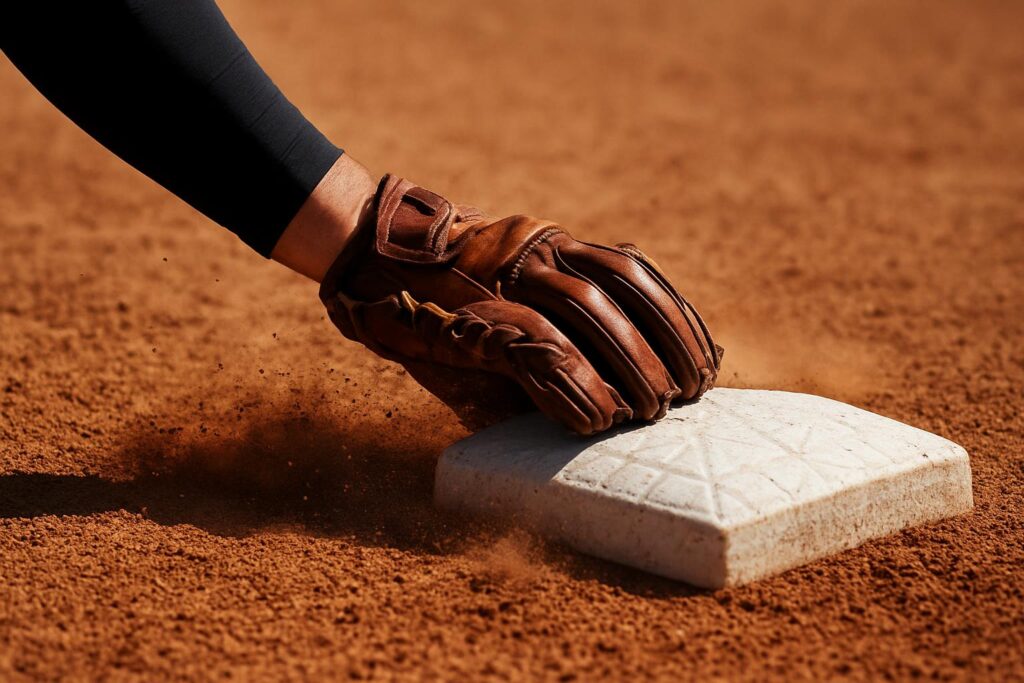
A sliding mitt is a padded hand guard worn by baserunners to protect the lead hand during headfirst slides and dive-backs. It looks like an oven mitt, which is why many fans call it that, but it is designed for baseball. The shell covers the fingers and often includes a reinforced thumb channel. The wrist has a strap or two to lock the mitt in place so it does not slip during contact.
Common materials include flexible neoprene for comfort, foam padding for impact absorption, and a firmer plate or ribbing on the top side to prevent finger and thumb hyperextension. The palm area is usually thinner for feel against the bag. Many models add a grippy surface near the fingertips to help maintain contact when the base is slick or when a fielder pulls on the arm during a tag.
Key design goals
Manufacturers aim for protection, secure fit, and enough feel to control the slide. The mitt must be firm enough to guard bones and joints but flexible enough to avoid awkward angles. It must stay tight without cutting off circulation. It must let the runner aim for the front corner of the bag with accuracy.
The injury problem the mitt solves
Headfirst slides and dive-backs put stress on small joints and delicate bones. Here are the common injuries the mitt helps reduce:
Finger jams and fractures
When bare fingers strike the base or a fielder’s leg, joints can jam backward. The mitt spreads impact across padding and a protective plate. That lowers peak force on a single finger and limits the bend at contact.
Thumb sprains and UCL injuries
The thumb is vulnerable when a tag hits the side of the hand. A reinforced thumb channel keeps the thumb aligned and limits extreme angles. That reduces strain to the ligaments that stabilize the joint.
Wrist hyperextension
On a dive-back, the wrist can fold under the body. A structured mitt adds a stop before the joint passes a safe range. Padding also softens the shock that travels from the hand into the forearm.
Abrasions and cuts
Sliding across rough dirt or a hard infield lip can slice the skin. The mitt forms a barrier, so runners avoid open wounds that can linger and get infected.
Cleat contact
On chaotic plays, a defensive player’s spikes can hit the hand. The mitt limits direct contact and lowers the chance of punctures or severe bruises.
Performance gains that matter in tight plays
Safety is the first reason to wear the mitt. Performance benefits stack on top of that foundation.
Stable contact with the base
The mitt increases friction at the fingertips and spreads pressure across the hand. This helps a runner hold the front corner of the bag during a tag attempt, especially on wet or dusty surfaces where a bare hand might skid.
A small reach advantage
The mitt can extend the functional length of the hand by a small margin. In bang-bang plays, that extra bit can make the difference between safe and out. Umpires treat the mitt as legal protective equipment worn by the runner.
Confidence equals aggression
When runners trust their gear, they take sharper lines and commit earlier. The mitt removes hesitation about where to place the hand and how hard to reach. The result is cleaner slides, more steals attempted, and fewer second thoughts in motion.
Cleaner swim moves
On a swim move, a runner shows one hand to draw the tag, then pulls it away and reaches the bag with the other. The mitt reduces drag on the reaching hand and protects the hand that takes the fake tag. This keeps the move smooth and reduces the risk of finger contact during the pull-away.
Legality and MLB rules in plain terms
Players would not use the mitt if it risked a penalty. Here is how it fits within MLB rules and customs.
Protective equipment is allowed
MLB allows protective sliding mitts on the bases as long as they are used for safety and not to interfere with a play. The mitt is treated as worn equipment, similar in spirit to batting gloves and sliding pads.
Touching the base and tags
In practice, umpires accept a base touch with the gloved hand as the runner completing the touch. For tags, any contact with the runner or worn equipment can record an out. This keeps play consistent and avoids confusion about what part of the hand counts.
No interference
If a runner uses the mitt to swat at a throw, push the ball, or obstruct a fielder, interference can be called. The mitt protects the hand; it is not a tool to alter the ball or a defender.
Color and logos
Teams and leagues prefer simple, non-distracting colors that match uniforms. The focus is on function, not style. The safest approach is to use a mitt that aligns with team equipment guidelines.
Which hand to wear it on
Most runners put the mitt on the hand they plan to reach the base with. That is the lead hand on a headfirst slide and the hand used to grab the front corner on a dive-back. The choice can change by situation.
Stealing second
Right-handed hitters often choose the left hand for the lead because it reaches the outside corner of second base more naturally on a typical path. Left-handed hitters sometimes favor the right. Good baserunners practice both so they can switch based on where the tag is coming from.
Dive-back to first
Most runners wear the mitt on the right hand if they expect a lot of pickoff throws, since that hand is usually the one they extend back to first base. Again, it depends on comfort and angle.
Sliding into home
Plays at the plate are physical and often messy. Many runners wear the mitt on their dominant control hand for security. The goal is to get to the front edge, avoid the tag, and keep the hand intact even if the catcher blocks part of the lane.
Technique and the mitt work together
Gear does not replace skill. The best results come when the mitt supports sound sliding mechanics.
Hook slide
Approach the base on a shallow line. Aim the mitt at the front corner farthest from the tag. Keep the elbow slightly bent to absorb force. As the hand reaches the bag, let the body follow and rotate so the tag misses the torso.
Swim move
Show the mitt toward the tag side to bait the swipe. As the tag comes, pull the mitt across and back while the other hand shoots to the base. The mitt protects the decoy hand during contact and reduces scrapes during the pull-through.
Dive-back
Push off hard with the back leg, keep the head up, and lead with the mitt. Keep the wrist neutral, not bent. Slide the mitt to the front corner of the bag. Let the arm extend enough to get there without locking the elbow.
How the mitt changed MLB baserunning
Early versions showed up as custom gear on a few clubs. Adoption was slow at first. By the late 2010s, the mitt had moved from niche to normal. Now you see it in almost every game. The change did not alter the core of base stealing, but it reduced the injury tax for headfirst slides and encouraged assertive base running. Players and teams now treat the mitt like standard protective gear alongside shin guards and elbow guards.
Fit and sizing that actually work
A poor fit defeats the purpose. You want a mitt that protects without getting in the way.
Length and coverage
The mitt should fully cover the fingertips and sit past the first knuckles. The thumb channel should hold the joint in line without pinching. The top plate should extend over the back of the hand and stop before the wrist joint so you can flex naturally.
Wrist security
Two straps are better than one for most players. One strap sits near the base of the hand; another sits a bit lower on the forearm. Tighten until there is no slip, then back off slightly to keep blood flow normal. You should be able to make a light fist without numbness.
Comfort and feel
Slide your hand into the mitt and tap it against a firm surface. You should feel a soft contact with little pressure on a single finger. Check that seams do not rub and that the palm can contact a flat surface without bunching.
Left, right, or ambidextrous
Some mitts are hand-specific; others are ambidextrous. Hand-specific models often fit more snugly around the thumb. Ambidextrous models are practical if you plan to switch hands between innings.
How to put it on and test it
Preparation matters during live action. You do not have time to adjust at the last second.
Pre-inning setup
Before you reach base, set the straps to known positions. Many players mark strap holes so they can fasten by feel. Keep the mitt where you can grab it quickly after reaching base.
On-base routine
As soon as you reach base safely, put on the mitt. Check strap tension with a quick pull. Flex the thumb and fingers once. Touch the front corner of the bag to confirm you can feel the edge. Reset your lead and plan for the next pitch.
In-game test
On a pickoff throw, note whether the mitt slides on contact. If it shifts, tighten one hole. If your hand tingles or goes numb by pitch two, loosen one hole. Aim to forget the mitt is on until you need it.
Care and maintenance
A sliding mitt takes dirt, sweat, and impact. Simple care stretches its life and keeps performance steady.
Cleaning
Knock off dirt after each game. Hand wash with mild soap and cool water if needed. Avoid harsh heat. Air dry fully before storing. Do not leave it in a hot car where adhesives can weaken.
Inspection
Check the top plate for cracks, the seams for fray, and the strap for worn Velcro. If the mitt flexes more than usual or padding feels thin, replace it. A tired mitt invites the same injuries it was built to prevent.
Youth and amateur use
Youth players copy what they see in MLB, but safety and development come first.
Teach technique before gear
Show players feet-first slides, pop-up slides, and safe headfirst form before relying on the mitt. Good body control prevents more injuries than any single product.
League rules check
Confirm that your league allows sliding mitts. Most do if the mitt has no sharp edges or hard external parts. Coaches should approve gear during pregame checks.
Value tradeoff
For players who slide often or steal bases, the mitt is worth it. It prevents missed games and builds confidence. For beginners who rarely slide, a basic model or a focus on feet-first slides may be enough.
Situational breakdowns
To see how the mitt helps, walk through a few common plays.
Steal attempt at second with a tag to the inside
The catcher’s throw takes the fielder toward the front inside corner. The runner angles to the outside corner and reaches with the mitt hand. The mitt absorbs the tag across the back of the hand while the fingertips lock on the edge. The tag pressure does not pry the fingers off the bag. The call stays safe.
Pickoff move at first with a late dive-back
The pitcher picks quickly. The runner reacts late. The right hand with the mitt reaches across the line and skims the front corner. The firm top plate prevents the wrist from folding under as the body lands. The hand stays intact, and the runner avoids a sprain on a play that often causes it.
Close play at home with a swipe tag
The throw beats the runner. The catcher sweeps the tag up the line. The runner shows the mitt to draw the tag high, then swings the other hand to the plate or returns to the mitt once the tag passes. The mitt protects on contact and limits scrapes from the shin guards. The runner finds a path to the front edge with less risk.
Common mistakes and how to avoid them
The mitt is simple, but poor habits can waste its benefits.
Straps too loose
If the mitt slides on contact, it will not protect the joints. Set a baseline tension and stick to it. Adjust only for weather or swelling.
Straps too tight
Numbness kills feel and slows reactions. If your fingers tingle, loosen one notch. A safe mitt still allows the hand to flex and the blood to flow.
Wrong hand for the situation
Do not commit to one hand forever. Practice both sides so you can respond to where the tag is coming from. You will save outs across a season.
Relying on gear instead of form
The mitt helps, but bad angles and reckless dives still cause injuries. Keep your head up, choose the right slide, and go to the front corner with control.
Buying checklist
You do not need the most expensive model. You need the model that fits and protects.
What to look for
- Solid top protection with a smooth inner lining
- Secure dual-strap system with durable Velcro or a robust closure
- Reinforced thumb channel that resists bending backward
- Grippy fingertip area for base contact
- Low-bulk palm for feel against the bag
Fit test in two minutes
- Slide hand in, tighten straps, make a light fist
- Tap the mitt on a firm surface; no single finger should sting
- Bend the wrist gently; it should move but not collapse
- Touch a flat edge; you should feel stable contact at the fingertips
Why the mitt is here to stay
The game values availability. A baserunner cannot steal a base with a broken thumb. The sliding mitt protects the tools that matter most on the bases. It keeps stars on the field and gives role players a safe edge. It does not change rules or undermine skill. It supports them. As long as outs at the bag are decided by inches, players will choose the extra security.
Conclusion
The sliding mitt solves a real problem with a clear design. It protects fingers, thumbs, and wrists during headfirst slides and dive-backs. It adds stability on the bag and a small reach advantage on close plays. MLB permits it as protective gear, and players across the league trust it. If you run the bases, the mitt is worth serious consideration. Choose a model that fits, wear it on the lead hand for the situation, and pair it with solid technique. You will slide safer, play freer, and stay on the field longer.
FAQ
Q: What is a sliding mitt in baseball
A: A sliding mitt is a padded hand guard worn by baserunners to protect the lead hand during headfirst slides and dive-backs.
Q: Why do MLB players wear a sliding mitt
A: They wear it to prevent finger jams, thumb sprains, wrist hyperextension, and abrasions, and to gain a small reach and stability advantage on close plays.
Q: Is a sliding mitt legal in MLB
A: Yes, MLB allows protective sliding mitts on the bases as long as they are used for safety and not to interfere with a play.
Q: Which hand should a runner wear the sliding mitt on
A: Wear it on the lead hand you plan to reach the base with; most runners switch based on the situation and the angle of the slide.
Q: Does a sliding mitt make you faster
A: No, a sliding mitt does not increase speed; it protects the hand and can add confidence and control during slides and dive-backs.