
We are reader supported. When you purchase through links on our site, we may earn an affiliate commission. Also, as an Amazon affiliate, we earn from qualifying purchases.
For more than a century, catchers wiggled fingers and pitchers nodded. Those signs were simple, visible, and vulnerable. Today, a small keypad and a quiet voice in the ear have replaced that dance. PitchCom changed how professional baseball communicates. It cut the risk of stolen signs, supported the pitch clock era, and reshaped the rhythm between pitcher and catcher. This guide explains what PitchCom is, how it works, why MLB adopted it, how it affects strategy, and what it means for the future of the sport.
Introduction
Baseball values routine and repetition. Changing core habits is rare. When MLB approved PitchCom for the 2022 season, it changed a foundation of the game. No more elaborate sign sets. No more mound visits just to reset a code. Instead, one device now handles what used to require a complex choreography. That shift did not end strategy. It moved it into a new medium.
If you are new to baseball or returning after a few years away, you will see catchers tapping a small pad on their forearm and pitchers adjusting a cap. You might notice fewer delays and cleaner defensive positioning. This article breaks down the system step by step, shows how teams use it, addresses common concerns, and outlines where the technology could go next.
What PitchCom Is
Basic Definition
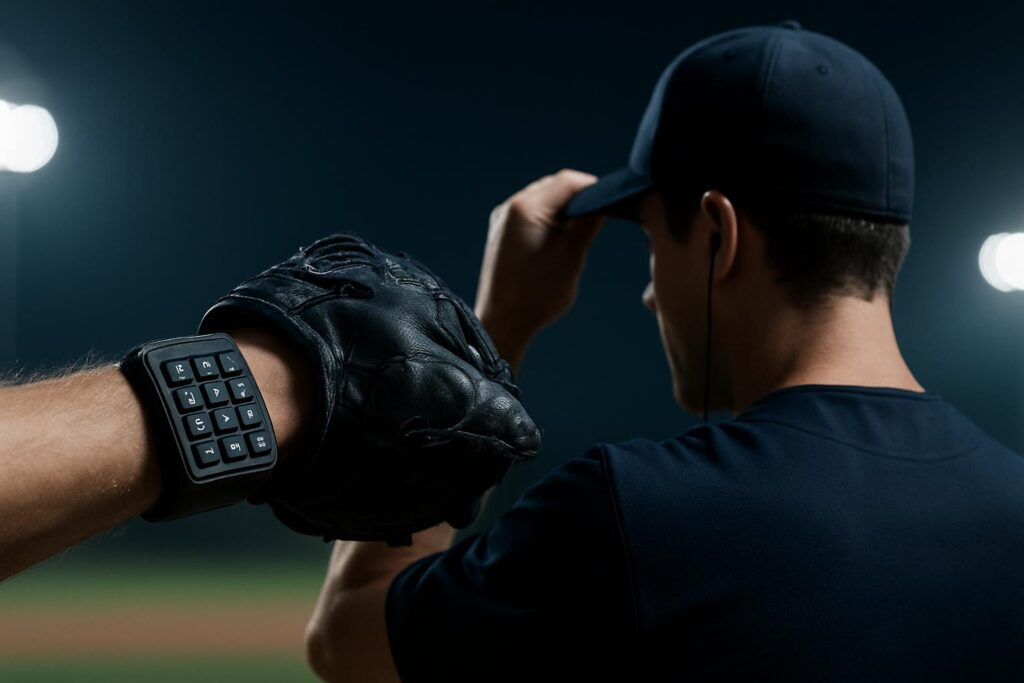
PitchCom is a wireless communication system. The catcher uses a wearable keypad to select pitch type and location. The pitcher and selected fielders wear small receivers with earpieces. The receiver plays a short, encrypted audio message like fastball in or slider away. The system is legal under MLB rules and optional for each team.
Core Components
Teams typically use these parts:
- Catcher keypad on the wrist or forearm, with buttons mapped to pitches and targets
- Receivers for the pitcher and up to several teammates, worn under the cap or in a headband
- Earpiece for each receiver that delivers a brief spoken prompt
- Controller or app used by staff to set language, volume, and mappings
The system runs on batteries, uses encryption to prevent interception, and offers multiple channels to avoid interference.
Who Can Hear It
The pitcher always gets the call. Many teams also route calls to the shortstop or second baseman, and sometimes the center fielder. That way, defenders anticipate pitch type and likely contact, which improves positioning and first steps.
How a Pitch Call Travels
Step One: The Signal
The catcher taps the keypad. Each button or combination maps to a pitch and a target zone. Teams program this before the game and can adjust it on the fly.
Step Two: Secure Transmission
The keypad transmits an encrypted signal to receivers assigned to that channel. Range is built for the size of the field. Stadium noise does not impact the signal.
Step Three: Audio in the Ear
The pitcher hears a short audio cue naming the pitch and location. The message is fast and clear. Volume is adjustable to cut through crowd noise.
Step Four: Confirmation or Change
The pitcher accepts the call by setting and delivering the pitch. If the pitcher wants a different option, the catcher can quickly tap a new sequence. Many teams keep two or three ready alternatives to move fast.
Why MLB Adopted PitchCom
Reduce Sign Stealing
Traditional finger signs could be read by runners on second base or unscrupulous observers. Teams countered with complex sequences that slowed the game and raised error risk. PitchCom blocks this path. The call is not visible and travels through a secure channel.
Support Pace of Play
MLB wants fewer dead moments. PitchCom removes long sign cycles and reduces the need for mound visits to reset codes. When paired with the pitch clock, it helps pitchers get on the same page faster.
Clarity in Loud Environments
Postseason crowds are loud. Road stadiums can be chaotic. Hand signs sometimes fail in that noise. A direct audio message in the ear is more reliable than reading subtle gestures across 60 feet.
Better Communication Across Languages
Rosters are multilingual. With PitchCom, teams can set audio in a pitcher’s preferred language or use simple standardized prompts. This reduces confusion and speeds trust between pitcher and catcher.
Adoption Timeline and Options
MLB Approval
MLB permitted in-game use beginning in 2022 after testing in spring training and minor leagues. Teams could choose to use it or not. Most clubs adopted it quickly due to clear benefits.
Pitcher-Initiated Calling
Beyond catchers calling pitches, MLB has allowed systems that let pitchers initiate calls with their own wearable input. Some staffs prefer this because it gives the pitcher more control and can speed decisions when a plan is clear. Others keep the catcher as the primary caller to manage the whole field and game flow. Many teams use a hybrid approach based on the pitcher’s comfort.
Spread to Other Levels
Minor leagues and many college programs have followed MLB’s lead. Adoption patterns vary by budget, rule sets, and culture. The trend is toward broader use as coaches see fewer miscommunications and cleaner tempo.
How PitchCom Changes Strategy
Less Time Hiding Signs
Without visible signs, runners cannot relay the call. Catchers can focus on pitch selection and sequencing, not on sign security. That frees attention for framing, blocking, and checking runners.
Defensive Positioning Improves
When infielders hear the pitch type and location, they make better first moves. On a high fastball, middle infielders may shade for a fly ball or a pop. On a changeup away, they may expect weaker contact to the opposite side. Those tiny adjustments add up over nine innings.
Fewer Mound Visits
Before PitchCom, catchers often walked out to reset signs when a runner reached second or when the sequence was too complex. Now, most teams avoid that trip unless strategy or mechanics require a talk. That keeps the pitcher in rhythm and supports the pitch clock.
Cleaner Sequencing Under the Clock
The pitch clock places a deadline on every decision. PitchCom lets the catcher relay a plan quickly, even when changing from a fastball on the edges to a breaking ball in the dirt. The time saved can be the difference between a rushed pitch and a deliberate one.
Pitcher Autonomy Where It Fits
Some pitchers prefer to drive the plan. With pitcher-initiated calling, they select the pitch that matches their conviction. This can shorten hesitation and lower shake-offs. Teams balance this with catcher expertise, scouting reports, and situational context.
What PitchCom Does Not Do
It Does Not Guarantee Better Pitches
Technology delivers the call. It does not improve command, movement, or deception. Execution still decides outcomes.
It Does Not Replace All Strategy
Scouting, usage patterns, and in-game reads still matter. Pitchers and catchers still adjust based on swings, timing, and count leverage. PitchCom only accelerates communication.
It Does Not Remove All Delays
Batter timeouts, pickoff attempts, replay reviews, and pitching changes still exist. PitchCom cuts one source of delay, not all.
Hardware, Security, and Reliability
Encryption and Channels
The system uses encrypted signals to lower the risk of interception. Teams also have multiple channels. If interference appears, they can switch channels between innings or on the fly.
Battery and Maintenance
Clubs manage battery rotation and test audio before games. They carry spares for receivers and keypads. Staff track signal strength and volume to suit the park and weather.
Backup Plans
Even with strong reliability, teams prepare contingencies. They prearrange a simple fallback sign set, especially when runners are on base. They rehearse what to do if a receiver fails or if noise makes audio unclear for a moment. Good teams treat backups as part of routine.
Impact on the Running Game
Less Opportunity to Decode
Runners on second used to study the catcher’s hands and share hints. PitchCom removes that path. Runners now focus more on the pitcher’s move, timing patterns, and tendencies, which are separate from the call delivery.
Bigger Factors Elsewhere
Stolen base rates shift with many variables such as pitcher tempo, boisterous leads, and league rules on disengagements. PitchCom mainly affects sign security, not the core running math. The running game still requires jumps, reads, and speed.
How Teams Configure the Keypad
Simple Mappings
Teams reduce complexity by mapping the most-used pitches to the most intuitive buttons. For example, one button could be fastball, another slider, another changeup. Location can be a second tap or a modifier button. Simplicity lowers errors and speeds rhythm.
Prebuilt Alternatives
Catching staffs program two or three common sequences for a given hitter. That lets the catcher cycle to a backup call instantly if the pitcher shakes off or if the count changes. Preplanning keeps the pace steady during high-pressure counts.
Language and Volume Settings
Clubs set audio prompts in the language and tone that the pitcher prefers. Pitchers can test levels under simulated crowd noise so the message is clear in big moments.
Game Flow and Fan Experience
Faster Decisions on Camera
Broadcasters now show the catcher’s wrist device instead of finger wagging. Viewers who like strategy can learn common patterns and understand how quickly batteries coordinate. The visible part is shorter, but the purpose is the same.
Less Dead Time Between Pitches
Shorter communication leaves more time for hitters to prepare and for pitchers to execute. The pace feels cleaner without frequent resets and huddles.
Concerns and Criticisms
Tradition and Feel
Some players and fans miss the old code language. They believe catchers built relationships through signs and subtlety. Many of those dynamics still exist after the call. Target setting, sequencing judgment, and pitcher trust remain personal.
Overreliance on Tech
Critics worry about technical failures in critical moments. Teams counter this with backups and training. They also keep hand signals as a reserve. Coaches remind players to read swings and trust eyes, not only a keypad.
Security Anxiety
Encryption reduces risk, but teams still act with caution. They change channels, rotate devices, and monitor signal quality. No system is free of risk, but this one is harder to exploit than visible signs.
Cost and Access
At amateur levels, budgets differ. Some leagues adopt slower. As costs drop and leagues approve use, adoption spreads where it solves clear problems like miscommunication and slow tempo.
Best Practices from the Field
Train Under Stress
Teams practice with stadium speakers playing loud noise to simulate playoffs. They run pitch-calling drills with time pressure. That builds habits for staying within the clock.
Keep Codes Consistent
Keypad maps remain consistent across series and only change when needed. Repetition lowers input error rates. Any change is briefed in the clubhouse and reinforced in bullpens.
Use Hybrid Calling
Some pitchers call the first pitch and let the catcher manage deeper counts. Others let the catcher drive unless they feel a specific weapon. Hybrid approaches fit a variety of personalities and keep tempo high.
Limit Receiver Count to Essentials
Send calls to only the fielder positions where it clearly helps. Fewer devices mean fewer potential failure points. Communication should enhance defense, not distract it.
Backups Ready and Visible
Spare receivers, extra earpieces, and a second keypad sit near the dugout rail. Staff can swap a device between pitches if needed. Everyone knows where backups live and how to pair them fast.
Situations Where PitchCom Shines
Loud Playoff Environments
In full stadiums, hand signs can be missed or misread. Audio prompts cut through noise and remove doubt. This prevents cross-ups on critical two-strike pitches.
Cross-Language Batteries
When pitcher and catcher grew up speaking different languages, even simple finger patterns can cause hesitation. PitchCom lets the audio match the pitcher’s comfort, which reduces confusion under pressure.
Quick Adjustments During Traffic
With runners on base and the clock ticking, the catcher can switch plans instantly. No need to cycle through five signs with decoys. That saves seconds and prevents a rushed delivery.
Preplanned Attack Versus an Opponent
Coaches can load preferred calls and variants before the series based on scouting. When a matchup calls for more sliders or fastballs up, that emphasis is easy to execute with a tap.
Coaching Tips for New Users
Start Simple
Begin with three pitches and two locations. Build speed and comfort. Add complexity only when execution with the base set is clean and fast.
Rehearse the Reset
Practice what happens when a device fails or the message is unclear. Set a single universal fallback sign and drill it. Players should respond without hesitation.
Align on Philosophy
Agree when the pitcher can override the catcher and how to signal that. Clarity avoids conflict in big spots. The rule should be clear and short.
Audit and Improve
After games, review sequences that felt slow. Adjust keypad mappings and volume settings. Solicit feedback from pitchers about clarity and timing.
How PitchCom Affects the Box Score
Run Prevention Factors
Better positioning and fewer cross-ups can shave runs at the margin. It is hard to isolate the effect in public stats. Still, a cleaner plan between battery mates leads to fewer mistakes and more quality pitches in leverage counts.
Error Reduction
Cross-ups used to cause passed balls, wild pitches, and mislocated targets. Direct calls lower that risk. Less confusion also reduces unnecessary timeouts and frustrated body language that can tip opponents.
Rules and Compliance
Optional but Regulated
MLB allows but does not require PitchCom. Each team chooses its use. Umpires can enforce equipment checks and time rules. Any tampering is prohibited.
Within the Pitch Clock Framework
The system must operate within existing rules on delivery times. Calls need to arrive fast enough for the pitcher to start the motion before the clock expires. Teams practice to meet this requirement.
Where the Technology Could Go
Better Ergonomics
Expect lighter receivers, longer battery life, and more comfortable earpieces. Simpler keypads reduce mis-presses and speed input.
Tighter Integration with Scouting
Clubs will streamline how they load plans from scouting databases. Custom profiles by hitter, count, and base state could rotate in faster.
Expanded Access in Amateur Ball
As leagues approve and prices drop, more high schools and colleges will adopt. Coaches will use it to cut miscommunication, especially with multilingual rosters.
Continuous Security Upgrades
Vendors will update encryption standards and channel management. Teams will audit procedures to keep risk low.
Common Misunderstandings
It Is Not a Live Coaching Line
Coaches do not speak into players’ ears during the pitch. The device relays preprogrammed prompts. Strategy meetings still happen in the dugout and during breaks.
It Does Not Hide Delivery Tells
Hitters still read pitch grips, release points, and timing. PitchCom only hides the call before the pitch. Pitchers must still protect their motions and grips.
Simple Workflow Example
Here is a clean, repeatable flow many teams use:
- Before the game, staff sets the keypad map and audio language per pitcher
- In the first inning, the catcher calls the base plan while confirming the pitcher’s feel
- As the game evolves, the catcher selects faster sequences keyed to the hitter’s timing
- With traffic on base, the catcher switches to a prebuilt set that keeps tempo under the clock
- If the pitcher wants a different look, the catcher immediately taps the next option
- Between innings, battery checks and adjustments keep audio crisp
What Players Say Through Their Actions
Adoption rates remain high because the system helps. When players stay with a tool, it usually means it reduces friction and error. Pitchers who like control often use pitcher-initiated calling. Catchers who manage the staff still lead the sequencing when it fits. Flexibility is the new standard.
Conclusion
PitchCom replaced a visible, vulnerable system with a faster, quieter one. It removed a major sign-stealing path, supported the pitch clock, and sharpened defense. It did not erase strategy or the human element. It pushed communication into a channel that is faster and harder to exploit. For modern baseball, that is a practical upgrade.
If you are learning the game, watch the catcher’s wrist and the pitcher’s tempo. Notice how few times they need to meet on the mound. See how infielders react a beat earlier. Those small edges are the new normal, and PitchCom is a big reason why.
FAQ
Q: What is PitchCom and how does it work?
A: PitchCom is a wireless system that lets the catcher send pitch and location calls through a keypad to audio receivers worn by the pitcher and selected fielders, delivering short encrypted prompts that guide each pitch.
Q: Why did MLB allow PitchCom?
A: MLB allowed PitchCom to reduce sign stealing, improve clarity in loud environments, and support pace of play by cutting down on long sign sequences and unnecessary mound visits.
Q: Does PitchCom speed up games?
A: PitchCom helps speed up the decision phase between pitches and works well with the pitch clock, which reduces dead time even if other delays such as timeouts and replay still exist.
Q: Can pitchers call their own pitches with PitchCom?
A: Yes, MLB permits setups where pitchers initiate calls with their own wearable input, and many teams choose a hybrid approach based on the pitcher’s comfort and the game plan.
Q: What are the risks or failures teams prepare for with PitchCom?
A: Teams prepare backups for device or battery issues, practice a simple fallback sign set, and manage channels and volume to handle interference and stadium noise while using encryption to lower interception risk.