
We are reader supported. When you purchase through links on our site, we may earn an affiliate commission. Also, as an Amazon affiliate, we earn from qualifying purchases.
Base running looks fast and chaotic from the stands, but there is structure behind every turn and slide. A key part of that structure is the base coaching box, the small marked area near first and third where offensive coaches stand to guide runners and hitters. If you understand the box, you understand how a lineup moves efficiently, safely, and within the rules. This guide breaks down what the base coaching box is, where it sits on the field, what coaches are allowed to do, and how great coaching inside the box turns close plays into runs.
What Is the Base Coaching Box
The base coaching box is a marked rectangular area in foul territory beside first base and third base. It designates where the offensive team’s base coaches stand during play. From those boxes, coaches provide real-time information and instruction to runners and the on-deck hitter, help manage traffic around the bases, and keep the game safe and fair by operating within clear boundaries.
Where the Boxes Are Located
First-Base Coaching Box
The first-base coaching box sits in foul territory alongside the first-base line. It gives the first-base coach a direct view of the pitcher, the first baseman, the right side of the infield, and the right-field corner. This location makes it easier to help a batter-runner transition to first, manage primary and secondary leads, and respond to pickoff attempts. It also places the coach close enough to communicate with hitters who reach first, without stepping onto the field of play.
Third-Base Coaching Box
The third-base coaching box sits in foul territory alongside the third-base line. From here the coach gets a clean sightline to left and center field and to the plate. This is the primary control tower for runners advancing from second to third and from third to home. The vantage point allows quick, decisive send or hold signals on base hits, bunts, and sacrifice flies, while staying out of the way of defenders fielding the ball in fair territory.
Markings and Maintenance
Boxes are outlined with chalk or paint on dirt and grass fields and with paint on turf. They are rectangular, clearly visible, and entirely in foul territory. The lines should be refreshed when they fade so coaches, runners, and umpires can see the boundary. On temporary or shared fields, setting the boxes before warmups prevents confusion and keeps both teams aligned with the rules.
Why the Box Exists
Safety First
Batted balls and hard throws move fast. The box places coaches in a protected, expected location, away from the base path and the flight path of most throws. When everyone knows where coaches stand, players and umpires can track the ball and the runners without worrying about collisions with a coach stepping into fair territory.
Clear Communication
Runners look to the same spots every pitch. The box standardizes where a voice and a pair of hands will appear. That reduces confusion, speeds up decision-making, and keeps timing consistent with the pace of the play. The result is cleaner reads on hits, smarter base advances, and fewer hesitation steps that cost outs.
Fair Play Boundaries
The box draws a bright line between helpful instruction and illegal assistance or interference. It keeps coaches from drifting into the action and affecting plays. That protects defenders trying to field the ball and preserves competitive balance by limiting what coaches can physically do during live play.
What Base Coaches Do
First-Base Coach Core Duties
The first-base coach is the runner’s first checkpoint after contact. Duties include reminding the batter-runner of game situation as they approach first, directing a hard turn or a hold, and reading the right fielder on shallow hits. Once a runner reaches first, the coach manages primary and secondary leads, alerts for pickoffs, gives the pitcher’s time to the plate if tracked, and cues jumps on steals or hit-and-runs as signaled by the manager. After balls put in play to right field, the first-base coach also tracks whether to press for an extra base. This coach keeps the runner informed but never touches them during a live play.
Third-Base Coach Core Duties
The third-base coach handles the most decisive send decisions. Responsibilities include receiving and relaying signs from the manager, positioning for a clean view of the outfield and infield, and making instant send or hold calls for runners at second and third. The coach manages bunt coverage instructions for the hitter and any runner on third, preps the on-deck batter for potential plays at the plate, and keeps runners updated on outs, score, and how many risks the situation allows. Timing is everything, and this coach strives for early, loud, and clear guidance.
Between-Pitch Checklist
Great base coaching is built between pitches. A reliable checklist includes counting outs and reviewing force or tag plays, confirming the sign from the manager, noting defender positions and outfield depth, checking the wind or sun if relevant, preplanning a response to grounders and fly balls, and aligning with the runner on the next-pitch plan. This keeps the coach ahead of the action rather than reacting late.
The Rules You Must Know
Stay in the Box
Rules instruct base coaches to remain within the coaching box. In real games coaches may step slightly to improve sightlines, avoid a thrown or batted ball, or deliver a clear signal. The expectation is simple. Use the box as home base, make brief, safe adjustments only when needed, and return promptly. If a coach’s movement affects a play, umpires can act, and the consequences can be severe.
Illegal Assistance and Interference
A coach cannot physically assist a runner during a live ball. Pushing, pulling, holding, or steadying a runner counts as assistance. The penalty is immediate. The ball is dead, and the runner is out at the moment of the assist. This applies whether the coach is inside or outside the box. A coach also must not impede a fielder attempting to field a batted ball or make a play. Physical interference with a defender can result in the ball being declared dead and an out being called. Coaches avoid trouble by keeping hands off runners, staying in foul territory, and yielding space when a fielder approaches.
Verbal Interference and Decoy Actions
Coaches should use voice to guide their own runners, not to distract defenders. Intentional verbal deception aimed at confusing a fielder can be considered unsportsmanlike and can draw warnings or stricter action. Focused, direct cues to your runners are fine. Anything that diverts a defender’s attention crosses into risk.
Protective Equipment
Base coaches often operate within a few yards of the hitting zone. Leagues commonly require base coaches to wear protective helmets. Even when not required by a specific rule set, wearing a helmet is a smart safety standard. Foul liners, ricochets, and errant throws arrive in an instant. A helmet is a simple layer of protection that fits the realities of modern velocity.
Live Ball vs Dead Ball Movement
During a live ball, movement should be minimal and centered on the box. During a dead ball, coaches can step out to confer briefly with a runner, reset positioning, or clarify signs, then return to the box before the next pitch. When action resumes, be still, be visible, and let the play develop without drifting toward fair territory.
Communication That Works
Simple Visual Cues
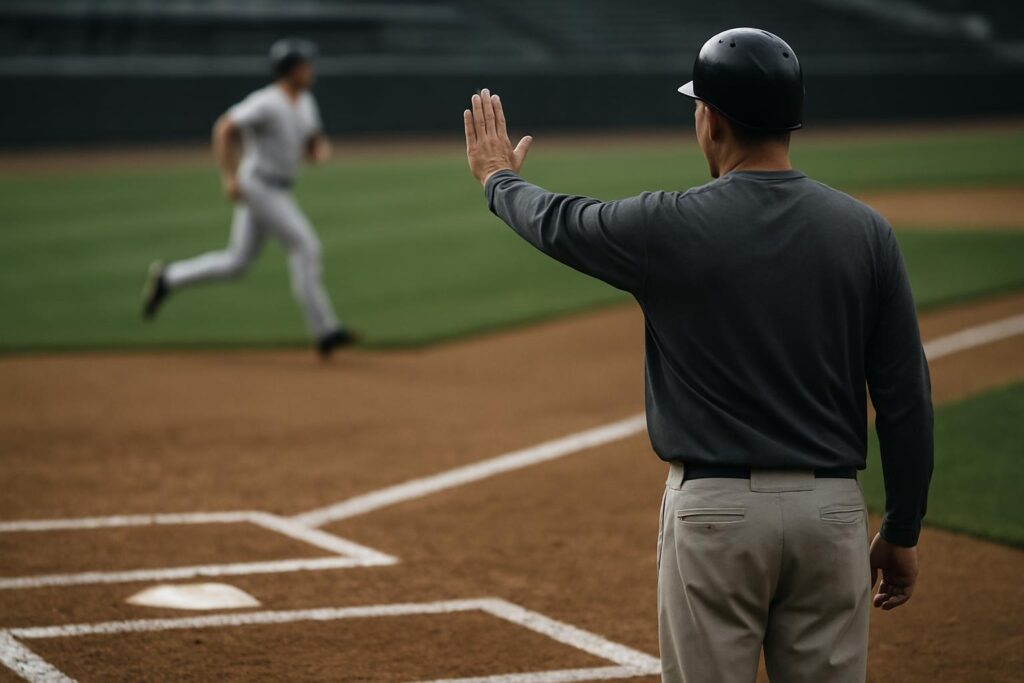
Clarity beats complexity. Most teams use a few standard visual cues. A raised, firm hand signals stop. A circular, continuous arm motion at chest or shoulder level signals send. Pointing to the base signals the next target. Tapping the chest or helmet can indicate specific pre-agreed actions such as a safety squeeze or delayed steal, but the meaning should be set before the game. Keep motions big and early, and maintain the signal as the runner approaches the decision point.
Use of Voice
Visual signals carry distance, but voice adds urgency. Coaches should call out early reminders such as two outs, round it, or back. Keep phrases short and consistent, with a steady cadence. The goal is to cut through crowd noise without creating a wall of words that overwhelms the runner. As contact happens, the coach should go loud and focused, then drop volume as soon as the runner commits.
Eye Contact and Pre-Inning Planning
Before each pitch, coaches seek eye contact with their runners. A quick nod confirms that both sides have the same plan. Use dead-ball moments to set expectations. Discuss if the runner will score on a single to left, if the runner will break on contact, or how to handle a ball in the gap. The more you decide in advance, the faster the runner can commit when the ball is put in play.
Loud Parks and Night Games
In loud atmospheres, increase the size of your visual signals and hold them longer. Under poor lighting, adjust your position within the box to stand in better-lit sightlines and avoid background clutter. Always make it easy for the runner to find you. If necessary, step slightly to gain a clearer angle, then return to the box once the decision is made.
Positioning Inside the Box
Depth Relative to the Bag
On third, standing a few steps deeper into foul territory creates a better angle to read throws from the outfield and reduces the chance of colliding with a runner rounding third. On first, standing slightly behind the base line gives a clear view of pickoff moves and ground balls to the right side. Depth also affects how soon a runner can see your signal. Aim to be visible as the runner looks up out of their turn.
Body Angle and Sightlines
Turn your body so both the ball and the runner stay in your field of view. On third, angle your shoulders toward left-center when a right-handed batter pulls, and shift toward right-center when a left-handed batter pulls. On first, stay square to the pitcher for pickoff reads but pivot quickly on contact to track the ball and the runner’s lane.
Adjustments by Situation
With a runner at third and less than two outs, the third-base coach favors a position that supports a quick read on shallow fly balls for tag decisions. With two outs, stand where you can judge an aggressive send on almost any single. With a bunt likely, creep closer to the plate side of the box to manage fair-foul guidance and push or drag bunt reactions. Always reset to a safe, legal position before the pitch.
Youth and Softball Notes
In youth baseball and softball, throws are less predictable and fielders develop at varied paces. Coaches should stand a touch deeper to protect themselves, make signals extra large, and simplify instructions to one clear cue at a time. In fastpitch softball, the field is smaller and everything happens faster after contact. That raises the premium on earlier signals and firmer stops near third because defenders can complete plays at home from shorter distances.
Send or Hold: A Decision Framework
Ball Location and Speed
Start with the ball. A single cleanly to left in front of the outfielder with the fielder moving toward the infield favors a hold. A ball driven into the gap with outfielders running away from the infield favors a send. If the ball is bobbled or the fielder double clutches, upgrade your aggression. If the outfielder is charging with momentum toward home, lean conservative.
Defender Arm Strength and Momentum
Clock the outfield arms early in the game. Note carry and accuracy. When a left fielder shows a strong, accurate arm, you must see a clear advantage to send from second. If a center fielder fields flat-footed with a long transfer, that is your window. Momentum matters. A fielder running away from home takes longer to stop, turn, and throw. Use that time.
Runner Speed and Leads
Know your runner. A plus runner can beat an average arm on a routine single to right center. A heavier runner needs a bigger margin. Factor in the jump off the base. A runner who read the pitch and got a strong secondary lead deserves more trust than a runner who froze at contact.
Outs, Score, and On-Deck Hitter
With two outs, push the envelope because the risk of ending the inning on the bases is offset by the need to score on contact. With none out, a conservative hold at third can be correct if the next hitters are strong and the defense is well-positioned. With a weak on-deck hitter, be more willing to challenge a borderline throw to the plate. Adjust for inning and score. Late in a tight game, one run can be worth more than a clean base state for the next batter.
Field Conditions and Fences
Wet grass slows balls and can cause slips on turns. Loose warning track material eats up speed. Odd fence angles create unpredictable caroms that favor the offense. Straight walls reduce chaos and often reward a hold unless the ball splits the outfielders. File these reads during pregame and update as the surface changes.
Drills to Build Better Base Coaching
Two-Ball Read
During batting practice, position a coach in the third-base box and a fungo in the outfield. On contact, the outfield coach throws different types of returns. The third-base coach makes real-time send or hold calls. Rotate runners through second and third. The goal is decision speed and consistent cues.
Pickoff Watch
For first-base coaching, run a controlled session with a pitcher and catcher focusing on pickoffs. The coach practices calling back, diving cues, and reset instructions. Emphasize steady posture and early voice so the runner hears the cue even as the pitcher lifts the leg.
Signal Clarity Test
Film coaches during scrimmages from the runner’s view. Evaluate how early and how big the signals appear, and whether they remain visible through the commit point. Trim extra motion and standardize the stop and send positions so every runner reads the same language.
Situational Scrimmage
Script innings that begin with a runner at second or third. Vary outs, batter profiles, and outfield depth. Base coaches call every decision live. After each rep, debrief with the runner. Did the signal come in time. Was it unambiguous. Did the coach return to the box before the pitch. Improvement comes from repetition and feedback.
Common Mistakes and How to Fix Them
Late or Vague Signals
Hesitation at third leads to runners stutter-stepping and losing speed. Fix this by committing to a call earlier and holding the signal until the runner is past the final decision point. Adopt a rule to decide by the time the runner hits a chalk landmark near third.
Drifting Toward Fair Territory
Some coaches creep onto the grass to get closer to the action. This risks interference and creates traffic problems for runners rounding the bag. The fix is to set a visual boundary within the box and practice staying behind it. If you step out for a safety reason, reset as soon as possible.
Too Many Words
Shouting full sentences during live plays overwhelms runners. Replace long instructions with one or two crisp cues. Establish your vocabulary in practice so it means the same thing every time. The runner should only have to decode tone and motion, not language.
Touching the Runner
Grabbing a jersey to slow a player or pushing them toward the plate is illegal assistance and gets the runner called out. Train your hands to stay visible but away. Use stance and voice to position the runner, not contact.
Setting Up a Proper Coaching Box on Game Day
Layout Basics
Place each box entirely in foul territory along the base line near first and third. Make the rectangle large enough to stand, move slightly for sightlines, and stay visible to the runner. Straight, bright lines help the umpire see that you are operating where you should. Refresh the lines after infield practice if they fade.
Temporary and Shared Fields
In parks that host multiple sports, the boxes may not be permanent. Arrive early with chalk or paint, a tape measure if needed, and a plan. Mark clean rectangles and confirm with the opposing coach and the umpire before the first pitch. Clear markings reduce disputes and keep both teams working from the same map.
Umpire Interactions and Etiquette
Before the Game
Introduce yourself to the umpire during the plate meeting if possible. Confirm any ground rules that affect your space near the dugout or camera wells. Ask where the umpire prefers you stand on in-play balls down the line, then stay consistent with that guidance.
During Play
Do your job without becoming part of the scene. Stay in the box, avoid crossing behind the plate during live action, and yield to umpires tracking fair-foul calls. If a close play occurs near you, let the umpire make the call without commentary. If you need a quick clarification, ask calmly between pitches and return to your box.
Softball-Specific Notes
Faster Decision Windows
On a softball diamond, base paths are shorter and the ball gets home quicker. Coaches on third must decide earlier and hold the stop signal longer because the play develops in tight space. On slap hits and bunts, be especially clear about hold and back calls to prevent accidental lead-offs that turn into easy tags.
Safety and Visibility
Because of proximity to the plate, a helmet is even more important. Choose a stance in the box that avoids backspin fouls off the third-base side and errant throws from the left fielder. Keep your voice steady and your signals compact, since the runner’s view window is short.
Advanced Tactics at Higher Levels
Reading Outfield Footwork
A veteran third-base coach reads more than the ball. Foot placement, exchange times, and crow-hops announce arm intent and distance. Track those cues from the first inning and build a living chart in your head. When the game is on the line, trust that chart.
Preloading the Runner
Use dead-ball time to preload decisions. Tell the runner you will send on any ball through the infield to the right side unless the first baseman knocks it down in front. Outline exceptions so the runner executes without looking back for every choice. Fewer looks mean faster turns and better chances to beat close throws.
Managing the On-Deck Hitter
On potential plays at the plate, cue the on-deck hitter to position for the next base or to secure bat removal and runner guidance. While the on-deck player cannot assist physically during a live ball, they can prepare to clear equipment and help the next runner start the next play once time is called. The third-base coach sets this plan before the pitch.
Putting It All Together
The base coaching box is more than a painted rectangle. It is a clear boundary that keeps coaches safe, runners informed, and plays fair. Used well, it becomes a platform for consistent signals, sharp decisions, and disciplined movement that avoids interference. Stand where the rules expect you to stand. Give fast, simple cues your runners trust. Keep your hands off during live plays. Wear a helmet. Reset to your box between moments of action. Those habits transform chaos into clean execution and turn close plays into runs across the plate.
Conclusion
Guiding runners is a craft built on position, timing, and respect for the rules. The base coaching box anchors that craft. It tells everyone where coaching belongs, defines what coaches can do, and protects the rhythm of the game. When coaches master visibility, voice, and legal boundaries, they give their team an edge that shows up in every inning. Start with a clear box, a clear plan, and clear signals. Then let repetition forge speed and trust. Your runners will feel it, the scoreboard will show it, and the game will flow the way it should.
FAQ
Q: What is a base coaching box
A: It is a marked rectangular area in foul territory beside first base and third base where offensive coaches stand to guide runners and hitters during play.
Q: Do base coaches have to stay in the coaching box
A: Rules instruct coaches to remain in the box. Brief steps for safety or clearer signals are commonly tolerated, but coaches should return promptly and must not affect the play.
Q: Can a base coach touch a runner during a live ball
A: No. Physical assistance such as pushing, pulling, holding, or steadying a runner is illegal. The ball is dead, and the runner is out at the moment of the assist.
Q: Why do base coaches wear helmets
A: They operate near the hitting zone and along active throwing lanes. Many leagues require helmets for safety, and wearing one protects against foul balls and errant throws.
Q: What signals mean send or stop from the third-base box
A: A circular, continuous arm motion signals send, and a raised, firm hand signals stop. Teams pre-agree on these cues so runners can commit without hesitation.