
We are reader supported. When you purchase through links on our site, we may earn an affiliate commission. Also, as an Amazon affiliate, we earn from qualifying purchases.
If you cannot see the ball, you cannot hit the ball. That truth sits at the core of hitting, yet most fans and many players do not think about the one feature that makes or breaks visual clarity on every pitch. It is the large, dark, motionless backdrop beyond center field known as the batter’s eye. Understand it well and you will see why elite hitters obsess over backgrounds, why parks invest in design and maintenance, and why small choices like paint sheen and tree movement decide at bats. This guide breaks down what a batter’s eye is, why it matters, how it works for human vision, how teams build it, and how hitters use it in real games.
Introduction
Hitting is a race between the ball and your brain. The ball travels from the pitcher’s hand to the plate in a blink. Your eyes must pick up the release, read spin, estimate flight, commit to swing, and square the barrel, all within a fraction of a second. A clean, dark, static background makes that job possible. A cluttered, shiny, or moving background makes it harder. That is the entire point of the batter’s eye.
Whether you play in the big leagues, coach a high school team, or set up a weekend field, the principles are the same. A good batter’s eye amplifies contrast, removes distractions, and stays consistent across innings, weather, and crowds. This article gives you the practical knowledge to evaluate any background and improve it, plus the habits hitters use to adapt when conditions are not perfect.
What is the batter’s eye
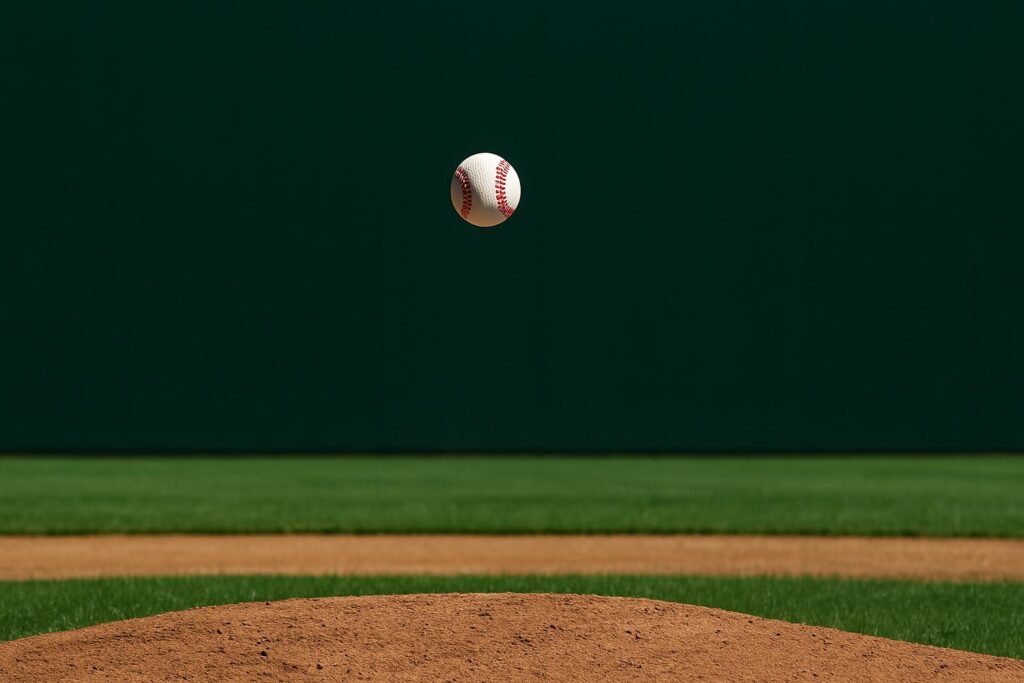
The batter’s eye is a dedicated area beyond center field designed to provide a clean, dark, and uniform backdrop for the baseball as it leaves the pitcher’s hand and travels toward the plate. It is usually a solid wall, a panelled structure, a dark windscreen, or a landscaped hill of dense trees or shrubs. The goals are simple:
- Maximize contrast between the white baseball and the background
- Eliminate movement and visual clutter behind the pitcher
- Reduce glare and reflections that wash out the ball
- Provide the same look for right handed and left handed hitters
When the background fails on any of those points, hitters lose the ball at release, misread spin, and make later, worse decisions. When the background succeeds, hitters see earlier, adjust sooner, and put more quality swings on the ball.
Why hitters need it
Hitters track the ball with a tight visual window. They fix their gaze near where the pitcher releases. Then they make quick saccades and smooth pursuit eye movements to follow the ball into the zone. This process depends on clean edges and stable contrast. If the background is busy or bright, the ball blends in and your visual system works harder to lock on. That costs time and accuracy.
Two things matter most for hitters:
- Contrast sensitivity. Your eyes detect the ball better when it pops off a dark matte background than when it sits against lights, white shirts, or sky
- Uniformity. A steady background lets the brain predict motion and read spin. Variations and movement force resets and add noise
Hitting already pushes human reaction limits. Anything that buys a hitter a few more milliseconds of clean information directly improves contact quality.
How the batter’s eye works with human vision
Vision science explains why a dark, matte, motionless field is best:
- Luminance contrast. A white baseball stands out most against low luminance environments. Dark green or black materials minimize reflected light and raise contrast
- Edge detection. Matte finishes preserve crisp edges around the ball. Glossy finishes bloom light and soften edges, making the ball look fuzzy
- Motion noise. A moving background competes for attention. Fans waving objects, trees swaying, or videos running behind the pitcher inject visual motion that pulls the eyes away from the ball
- Color channels. The standard white baseball with red seams is easiest to resolve against deep green or black. Mid tones or bright colors behind the pitcher lower color separation and reduce seam visibility
- Adaptation. Eyes adapt to ambient brightness. If you stare into a bright background and then try to see a small white object, you need more time to adapt. A dark background shortens adaptation time between pre pitch and release
Core design principles
A strong batter’s eye is not an accident. Parks use a few non negotiable principles that work at all levels.
Make it wide enough for all release points
Hitters face righties and lefties with different arm slots. The background must stay clean for the full range of likely release points, not just dead center. If a sidearm pitcher releases in front of a gap or a bright section, the advantage disappears. A good target is to span the zone from left center to right center so that any typical release lives inside a uniform, dark field with room to spare.
Make it tall enough to clear the eye line
Height matters more than most people think. The background should clear the pitcher’s cap and the projected ball flight above the center field wall. If the top edge cuts right through that band, the ball will travel from dark to bright mid flight and pop in and out of visibility. Taller is safer, especially for day games with high sun angles.
Use dark, matte finishes only
Dark green and black are the most common choices. The surface should be non reflective to avoid glare during sunny games and under stadium lights. Many parks repaint or rewrap panels regularly to keep the finish consistent. Avoid mid greens, blues, or anything that shines.
Eliminate movement
Any motion behind the pitcher is a problem. Movement draws the eyes and creates false cues. That includes fans walking, employees in bright uniforms, birds, flags, waving towels, or LED video elements. During pitches, the batter’s eye should be a dead zone with no motion.
Simplify edges and transitions
Hard transitions from dark to bright near the release point create halos and pull focus. Better designs soften or push transitions outside the tracking window. Curved edges, offset panels, or additional dark trim can reduce contrast cliffs that distract the eyes.
Plan for both day and night
Daylight changes through the game. Sun, clouds, and shadows move across the background. At night, stadium lights can create reflections if the finish is not truly matte or if glass is present. Good parks test both conditions and fix issues with paint, shade structures, or light shields.
Build for durability and upkeep
The best background today can be mediocre next month if it fades, peels, or stains. Choose materials that hold color and texture, and build a maintenance plan. Windscreens need tension checks. Painted walls need touch ups. Plantings need pruning to keep density consistent.
Common configurations
Parks achieve a clean background in different ways.
- Solid walls or panels. Steel, wood, or composite panels painted dark matte. Reliable and relatively easy to service
- Windscreens. Heavy duty, non reflective windscreens mounted on fences. Cost effective for high school and youth fields. Must be taut to avoid ripples and flapping
- Landscaped berms. Dense evergreens or shrubs form a deep green field. Attractive and quiet, but require seasonal care and can move with wind
- Hybrid systems. Panels in the core release window with flanking trees or screens to extend width
Rules and restrictions in organized baseball
Professional and collegiate leagues expect a dark, unobstructed background beyond center field during pitches. Ballparks commonly restrict fans, movement, and signage in that zone while the ball is in play. Many parks allow ads or graphics in the area before the game and between innings, then cover or disable them for live pitches. LED boards behind the pitcher are typically set to a static dark state during at bats. Exact wording varies by league, but the intent is consistent: protect hitter visibility.
Game day variables that change everything
Even the best design must handle real world conditions. These are the common factors that make a good batter’s eye perform like a bad one.
Sun angle and sky brightness
Afternoon sun can light up a dark surface and turn it into a gray wash. Twilight creates a balanced but relatively bright sky behind the pitcher. Clouds can swing the brightness from pitch to pitch. Taller backgrounds and true matte finishes reduce damage, but hitters still notice big shifts.
Shadows across the mound and plate
When the mound is in sun and the plate is in shade, or vice versa, hitters must deal with extreme contrast. The ball will pass through light bands and seem to change speed. A consistent background helps the eyes stabilize, but shadows still complicate timing and depth.
Wind and foliage
Planted batter’s eyes look good until wind turns leaves into a moving pattern. Movement distracts and creates flicker in your peripheral vision. Dense evergreens with low movement help. Strategic windbreaks or combining plants with a solid panel core reduces motion.
Crowd clothing and giveaways
Light clothing in the seats behind a slender background edge can leak into the tracking window. White rally towels are the worst offenders. Parks often deploy ushers to hold items down and adjust seating directly behind the release window when needed.
Rain and glare at night
Wet surfaces reflect stadium lights. If the background finish is not matte enough, water creates a mirror that washes out the ball. Operators should have protocols to wipe key panels, angle light spill, and keep the center window as dark and dry as possible.
How hitters use the batter’s eye
Great hitters do not just look in the general direction of the pitcher. They build a visual routine around the background and the release window. The pattern looks like this:
- Pre pitch focal set. Lock eyes on a small point near the expected release, inside the dark zone
- Pick up early cues. Shoulder tilt, hand break, and arm slot tell where the ball will come from
- Find the ball at release. Move focus a small distance to catch the white ball jumping off the dark field
- Track cleanly. Keep head stable and use smooth pursuit as long as possible before shifting to swing execution
Hitters also adjust when the background is bad. They may narrow the swing zone, hunt a specific pitch they can see early, or sit on velocity. They will move in the box to shift the release angle against the background. They will add eye black or flip down a visor to reduce glare. None of those fixes equal a great batter’s eye, but they make a poor one survivable.
Vision and pitch recognition training
Even with a perfect background, hitters need sharp visual skills. Coaches can train these in simple ways.
Release point focusing
During bullpens and live BP, have hitters set their eyes on a tiny target near the pitcher’s expected release before every pitch. The goal is to reduce big eye jumps and improve the first frame of ball flight pickup.
Spin identification
Use mix BP sessions where pitchers show fastballs and breaking balls without telling the pitch. Hitters call spin early out loud. The batter’s eye helps make seams and axis more visible so this drill becomes more productive.
Occlusion and decision windows
Use short flight tosses that stop the ball pathway at roughly halfway to the plate. The hitter must decide yes or no without a full view. This trains early commit thresholds that rely on clean pickup at release.
Tracking under different backgrounds
When possible, practice at the same field and time of day as games. Let hitters experience sun angles and shadow bands with the real background. Build routines to adapt.
Pitcher tactics against the background
Pitchers know how backgrounds affect hitters. They will adjust arm slots or work edges of the release window to make pickup harder. In late day games with heavy shadows, they will pound fastballs at the zone where the ball passes through the toughest contrast band, then drop breaking balls into shade. If jerseys or undershirts blend with parts of the background, they may use that window to hide the ball longer. Good hitters expect this and prepare by locking earlier on the release and simplifying the plan.
Ballpark operations and maintenance checklist
Operations teams can harden the batter’s eye with simple routines.
- Pre game inspection. Walk the center field area and confirm the panel or screen face is clean, matte, and uniform
- Lighting check. At night, confirm no light spill produces hotspots on the background
- Movement control. Assign staff to keep the zone behind the pitcher free from fan movement, towels, and bright objects during pitches
- Signage protocol. Disable or cover any ads or LEDs in the window for live pitches
- Weather plan. Have covers, wipes, and fasteners ready to manage rain, wind, and loose screens
- Seasonal upkeep. Repaint, rewrap, or prune as needed to maintain a dark, dense, matte finish
Youth and amateur field solutions
Most schools and clubs do not have permanent structures. You can still build a strong batter’s eye with modest budgets.
Windscreen on a center field fence
Install a high quality, non reflective dark green or black windscreen on the center field fence. Pull it tight and use enough fasteners so it does not ripple or flap. Extend it wide so both lefty and righty releases sit cleanly against it.
Portable panel system
Build or purchase lightweight, matte painted plywood or composite panels. Mount them to temporary frames behind the fence, aligned with the pitcher’s release window. Secure them against wind and check for glare before games.
Plantings with a panel core
If you have room, plant dense evergreens for a natural look. In the center, install a solid matte panel to anchor the core release window so wind driven leaf movement does not ruin the target area.
Low cost fixes on game day
If the window is still weak, limit fan movement directly in line with the pitcher, ask fans to avoid white shirts in that zone, and post volunteers to manage towels or signs. Small changes matter for hitters.
Common mistakes and myths
Mistake: thinking any green wall works
Color alone does not guarantee performance. Finish, height, width, and movement control matter as much as paint choice.
Mistake: ignoring day night differences
A background that looks fine at noon can fail under lights. Always test both and adjust lighting or surfaces accordingly.
Myth: a great batter’s eye fixes hitting
It improves visibility. It does not fix timing, swing path, or approach. It simply gives hitters a fair chance to use their skills.
Myth: one size fits all
Arm slots, sun paths, and fence geometry vary. Parks must tune width, height, and edges to their specific field and climate.
How to evaluate your batter’s eye quickly
Use this simple field test on any park.
- Stand in the box at both sides. Look over the pitcher’s shoulder at the release window. Do you see a continuous, dark, matte field without gaps
- Walk the outfield and note any bright panels, exposed seats, or reflections inside that window. Can you eliminate them
- Check at the same time of day as your games. Look for sun hotspots, sky bright bands, or moving foliage
- Bring a pitcher and tossers for a quick live test. Ask three hitters if they can pick the ball at release every time. If not, fix the exact spot they lose it
Future directions
Parks continue to refine backgrounds with better materials and smarter operations. Trends include modular panel systems that can change width quickly, ultra matte coatings that resist glare and weather, and integrated lighting shields to kill hotspots at night. Digital displays near the window remain risky, so most clubs default to static dark fields during play and move graphics away from the release zone.
Conclusion
The batter’s eye is not decoration. It is a performance tool that safeguards the most valuable resource a hitter has, clear vision at the moment of release. Build it wide, tall, dark, matte, and still. Maintain it as if at bats depend on it, because they do. Train hitters to use it with a deliberate focal routine and a clear plan. Manage game day variables with discipline. Do those things, and the ball will show up earlier, spin will read cleaner, and your offense will earn more quality contact across the season.
FAQ
Q: What is a batter’s eye and why do hitters need it
A: The batter’s eye is the dark, motionless backdrop beyond center field that gives hitters a clean, high contrast view of the baseball at release. It reduces glare and distractions so hitters can pick up the ball sooner, read spin, and make better swing decisions.
Q: What color should a batter’s eye be
A: Dark green or black with a true matte finish works best. The goal is a low reflectance surface that keeps the baseball’s white color and seams distinct.
Q: How wide and tall should a batter’s eye be
A: It should be wide enough to cover the full range of likely pitcher release points for both righties and lefties, with extra buffer on each side, and tall enough to clear the pitcher’s cap and ball flight above the center field wall so the ball never crosses into a bright band.
Q: How do day and night games change the batter’s eye effect
A: Daylight can create glare and moving shadows, while stadium lights can cause reflections on glossy or wet surfaces. A tall, matte background and good light control keep the window dark and uniform in both conditions.
Q: Can teams put ads or fans in the batter’s eye area during play
A: Parks generally keep the batter’s eye free of ads, movement, and fans during pitches to protect visibility. Signs or LED boards may be shown before the game or between innings but are covered or disabled for live at bats.