
We are reader supported. When you purchase through links on our site, we may earn an affiliate commission. Also, as an Amazon affiliate, we earn from qualifying purchases.
Pitch spin rate is one of the clearest windows into how a baseball moves. Once you understand what the number means and how it links to movement, you can design pitches on purpose instead of guessing. This guide breaks down spin rate in simple steps, shows how RPM changes shape for every common pitch, and gives you a plan to train it without hurting your command or your arm. Keep reading if you want pitches that play better in the zone and earn more bad swings out of it.
Introduction
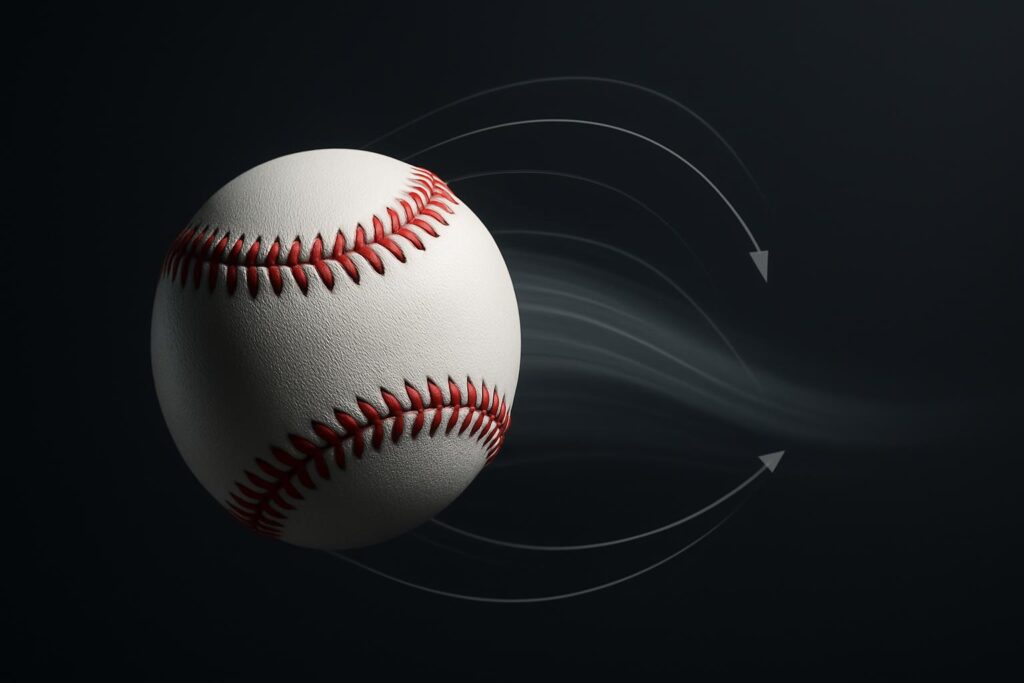
Spin creates force on the ball. Force creates movement. Movement changes how hitters see the pitch and where the bat meets the ball. That path is direct, testable, and measurable. Spin rate is the speed of that rotation, reported in revolutions per minute. Higher or lower spin is not good or bad by itself. What matters is how the spin is oriented, how much of it is driving movement, how it matches your velocity, and where you throw it. If you learn those links, you can change outcomes.
Understanding Pitch Spin Rate
What spin rate means
Spin rate is the number of times the ball rotates in one minute. A pitch at 2400 RPM spins 2400 full turns per minute. Since a pitch is in flight for about half a second, that same pitch turns roughly 20 times on the way to the plate. That rotation interacts with air and seams to make the ball move up, down, or sideways.
Units and typical ranges
Spin rate is measured in RPM. Here are broad adult ranges you will see in competitive baseball:
- Four-seam fastball: about 1800 to 2600 RPM
- Two-seam or sinker: about 1700 to 2300 RPM
- Cutter: about 2000 to 2600 RPM
- Slider: about 2000 to 3000 RPM
- Curveball: about 2200 to 3200 RPM
- Changeup: about 1400 to 2200 RPM
- Splitter: about 800 to 1700 RPM
These are not rules. They are context. Your goal is not to hit a number. Your goal is to get movement that fits your plan and plays off your other pitches.
How spin is measured
Radar and optical systems measure spin in games and practices. Stadium systems like Hawk-Eye and older TrackMan units, and portable units like Rapsodo, can read RPM, axis, and movement. A high-speed camera can confirm seam orientation and finger release, which helps you connect feel to numbers.
The physics: Magnus effect and seam-shifted wake
Backspin and ride
Backspin on a fastball reduces drop. The spinning surface pushes air down, and an opposite force pushes the ball up. Pitchers call this ride or hop. The ball still drops due to gravity, but it drops less than hitters expect, so they swing under it. More backspin with a stable axis tends to increase induced vertical break.
Topspin and drop
Topspin produces the opposite vertical force. That adds natural drop. Curveballs and many sliders use this to get depth. More topspin with a clean axis often increases downward break.
Sidespin and arm-side glove-side movement
Sidespin shifts force sideways. A right-handed pitcher with arm-side sidespin on a two-seam will see the ball move to the arm side. A glove-side component shows up on sweepers and some cutters. Horizontal break grows as more spin energy points sideways and the axis holds stable.
Gyrospin and tilt
Gyrospin is rotation around the direction of travel. Think of a football spiral. Gyrospin by itself does not move the ball much through Magnus force. Instead, it stabilizes the pitch. Many sliders use a blend of sidespin and gyrospin to get late movement and tighter shape. High gyro reduces active movement but can help deception and late bite if paired with velocity and location.
Seam orientation and seam-shifted wake
Seams change airflow. If the seams are oriented so that smooth and rough surfaces split the flow unevenly, the wake behind the ball shifts. That shift can add or subtract from Magnus movement. This is called seam-shifted wake. Two-seams and sinkers can gain extra arm-side run or drop from seam effects even at moderate spin rates. That is why two sinkers with the same RPM can move very differently if the seams are oriented in different ways.
Spin efficiency and axis
Active spin versus gyro spin
Not all spin turns into movement. Active spin is the percent of spin that points in a direction which produces Magnus force. Gyrospin does not create Magnus movement. A fastball with 95 percent active spin converts most of its RPM into ride and slight arm-side run. A slider with 30 to 60 percent active spin will show less total break for the same RPM but can still be effective due to velocity gap, tilt, and late break.
Spin axis and clock face
Axis is the direction the ball spins around. Coaches use a clock face to describe it. For a right-handed pitcher:
- Four-seam fastball axis near 12 to 1 o clock produces ride with slight arm-side run
- Two-seam axis near 1 to 2 o clock increases arm-side movement and drop
- Slider axis near 9 to 10 o clock creates glove-side movement and some depth
- Curveball axis near 6 to 7 o clock creates depth with a bit of glove-side break
Left-handed pitchers mirror those positions. Tilt must stay stable through flight for predictable movement. Wobble reduces consistency.
Axis stability at release
Axis is set by grip, finger pressure, and wrist angle at release. If the index and middle fingers come off the ball unevenly, the axis tilts and can wobble. Clean seam presentation and a strong fingertip finish improve spin efficiency and axis stability. Stable axis equals repeatable movement.
How RPM changes movement by pitch type
Four-seam fastball
Goal: ride that stays above barrels at the top of the zone. Higher RPM with high spin efficiency and a near 12 o clock axis creates more vertical break. At the same velocity, adding 200 RPM on a high-efficiency four-seam can add an inch or two of ride. That can shift whiff rates and pop-up rates if you locate up. If your four-seam has lower spin or lower efficiency, you can still win by working lower in the zone or pairing with a high-drop secondary. Do not chase RPM if it destroys command. Ride only works when it starts in the zone.
Two-seam or sinker
Goal: arm-side run and drop to miss barrels and induce ground balls. Many effective sinkers live at moderate RPM but use axis and seam orientation to add movement. Some two-seams gain more from seam-shifted wake than from pure RPM. If you increase RPM on a sinker without improving seam effects or axis, you might lose run and produce a straighter pitch. Prioritize axis tilt, seam alignment, and pronation over raw RPM.
Cutter
Goal: short glove-side movement that looks like a fastball and bores in late. Cutters often sit near fastball RPM but with a slightly different axis. Too much RPM with high efficiency can turn a cutter into a small slider. Too little RPM can make it blend with the fastball. Work toward a tight, short break window that pairs with your primary fastball location.
Slider
Goal: glove-side movement with depth or sweep. There are two broad families. Gyro-heavy, hard sliders that look like a fastball until late and then move a short distance. And sweepers with more sidespin that move wider across the zone. Both can succeed at varied RPM, but shape is the key. For a sweeper, more total RPM helps if you raise the share of sidespin and keep axis stable. For a gyro slider, more RPM matters less than tight spin and late break.
Curveball
Goal: consistent down break that steals strikes and finishes bats. Curveballs benefit from higher topspin RPM with high efficiency. More RPM usually increases depth if axis is clean. That said, location and velocity gap are just as important. A medium RPM curve that you can land often can be more valuable than a high RPM curve you cannot command.
Changeup
Goal: speed differential, arm-side fade, and drop. Many good changeups spin slower than the fastball and use pronation to add sidespin and reduce efficiency. That lowers lift, increases drop, and tilts the pitch arm side. Chasing more RPM on a changeup is often the wrong path. Focus on axis, seam orientation, and maintaining fastball arm speed.
Splitter
Goal: sharp drop with late tumble. Splitters often show low RPM because the grip kills spin and the ball slips between the fingers. Low spin and low efficiency increase drop and make the pitch hard to square. A splitter with very low RPM can be effective even if it is slower. The key is consistent release and arm speed.
Release variables that shape spin
Grip and finger pressure
Finger placement on seams controls friction. Pressure placement controls which edge of the ball leaves the hand last. For fastballs, balance the index and middle finger and keep pressure on the pads, not the palm. For sinkers, shift pressure slightly to the inside edge and align the fingers with seams that support pronation. For sliders, get the middle finger stronger on the outside seam and let the index finger act as a guide. For curveballs, place the middle finger along a seam and pull through the front edge.
Wrist position and forearm rotation
Wrist and forearm control axis at release. Supination opens the wrist to create glove-side spin for sliders and cutters. Pronation closes the wrist to create arm-side spin for two-seams and changeups. For a four-seam, keep the wrist firm with slight extension and a fast rip through the fingertips. For a curveball, flex the wrist and pull down through the front. Do not force extreme angles that create pain. Small changes at speed produce big axis shifts.
Seam orientation at release
Choose grips that present clean seam lines to the air. On two-seams and sinkers, tilt the horseshoe and align fingers along the narrow seams to encourage seam-shifted wake. On sweepers, find a seam that stabilizes the sidespin axis. Use a high-speed camera to confirm that the ball shows a tight red dot or a consistent seam pattern that matches your intent.
Spin mirroring across the arsenal
Spin mirroring means pairing pitches so that axis and movement work in opposite directions from the same tunnel. A high-ride four-seam mirrors a top-down curveball. A sinker with arm-side fade mirrors a sweeper. When your fastball and primary breaking ball mirror each other, hitters must cover both vertical halves or both sides of the plate. That increases swing decisions in your favor even if your raw RPM is average.
Spin rate and velocity
Why not chase RPM alone
Velocity and spin work together. Many pitchers gain RPM as velocity goes up because the hand moves faster through release. If you gain RPM but lose velocity or command, the pitch may not improve. Measure outcome first. Whiffs, weak contact, and called strikes matter more than the RPM number on a screen.
Spin per speed as a guide
One way to compare pitches is to divide spin by velocity. This normalizes for different speeds. A fastball with 2400 RPM at 95 mph has more spin per speed than a fastball with 2400 RPM at 90 mph. Use this as a loose guide, not a target. It helps you judge if a change in RPM is real improvement or just tied to a jump in velocity.
Command, deception, and tunneling with spin
Spin makes pitches move, but the hitter sees tunnel, angle, and release height first. If two pitches share the first part of flight and then separate, spin and axis differences become more powerful. A high-ride fastball at the letters pairs with a dropper below the zone. A sinker arm side at the knees pairs with a sweeper off the glove side. Use your spin to create planned separations late in flight, not random movement early.
Training spin: tools and drills
Feedback tools
Use a radar or optical unit to read RPM, axis, and movement. Use a high-speed camera to confirm finger release and seam patterns. Use a baseball spinner tool to feel clean axis. Use plyo balls to exaggerate wrist angles at lower stress.
Fastball ride drill
Goal: raise active spin and stabilize axis. Throw at 60 to 80 percent intent. Focus on a firm wrist, slight extension, and ripping the last two seams with the fingertips. Film from the side and in front. Check for a stable backspin axis and a clean line on the seams. Small cue: keep the index and middle fingers tight together through release.
Sinker pronation drill
Goal: improve axis tilt and seam effects. Grip a two-seam with the fingers along the narrow seams. Lighten index finger pressure and feel the middle finger lead. As you release, allow gentle pronation. Do not roll the wrist early. Film seam pattern. Target low arm-side. Compare arm-side run and drop to your baseline at equal velocity.
Sweeper seam and axis drill
Goal: increase sidespin share and axis stability. Grip across a seam seam with the middle finger dominant. Throw at 70 percent with light supination just before release. Watch for a stable red dot or a crisp seam track. If movement is short and late, add a touch more supination. If the pitch cuts and dies, reduce supination and focus on a longer finger pull across the outside seam.
Curveball topspin drill
Goal: increase topspin RPM and depth. Use a grip with the middle finger on a seam and the thumb opposite. Start with a hammer cue by flexing the wrist and pulling the front of the ball down. Keep the elbow moving forward so the hand stays behind the ball until the last instant. Check for a tight forward spin and growing depth at consistent velocity.
Changeup fade drill
Goal: reduce spin rate and improve arm-side fade. Grip with more surface on the ball and deeper in the hand to lower friction. Throw with full arm speed. Allow mild pronation through release. Target bottom arm-side. Monitor RPM and axis. You want a meaningful drop in RPM and a tilt that adds fade and drop.
Interpreting data and setting goals
Establish a baseline
Collect at least 30 to 50 throws per pitch type across a few sessions. Record velocity, RPM, spin efficiency, axis, vertical and horizontal break, and location. Note how each pitch plays in bullpens and live at-bats. The goal is a stable snapshot of your current arsenal.
Define the job of each pitch
Give each pitch one clear job. Four-seam: earn whiffs at the top. Sinker: steal early contact and ground balls. Slider: chase away from same-side hitters or back foot to opposite-side hitters. Curveball: land for strikes early and finish late. Changeup: beat barrels below the zone. Once the job is clear, you can shape RPM, axis, and location to match.
Set movement targets, not just RPM targets
Decide on movement windows that serve each job. Example targets for a right-handed pitcher:
- Four-seam: 16 to 20 inches induced vertical break, 0 to 6 inches arm-side run
- Sinker: 10 to 15 inches drop beyond gravity, 10 to 16 inches arm-side run
- Sweeper: 12 to 18 inches glove-side with modest drop
- Curveball: 12 to 18 inches drop with slight glove-side
- Changeup: 10 to 16 inches drop with 8 to 14 inches arm-side
Use RPM and efficiency to reach those windows. RPM is the lever. Movement is the output.
Use small A B tests
Change one thing at a time. Alter finger pressure by a small amount. Shift a seam by a few millimeters. Add or remove a tiny bit of supination or pronation. Record 10 to 15 throws per change. Keep the best shape and discard the rest. Do not keep a change that wins on a monitor and loses in the zone.
Protect command and health
New spins should not cost you the strike zone or your arm. If a cue makes you miss arm side by a foot, it is not ready for games. If a grip hurts your fingers or elbow, stop. Good spin comes from clean mechanics, not forceful wrist cranks. Build load slowly, keep your throwing schedule, and check in with your coach or trainer.
Common mistakes and myths
Myth: higher RPM always wins
Context wins. A 2400 RPM four-seam at the top can dominate. That same pitch in the middle of the zone over the heart can get crushed. A 1900 RPM sinker with strong seam-shifted wake can beat bats all day. The right spin for your plan is the right spin.
Myth: changeups should match fastball RPM
Many elite changeups spin far less than the fastball. Lower RPM with pronation often increases fade and drop. Speed gap and action matter more than a matching number.
Mistake: copying another pitcher
Your arm slot, wrist mobility, and hand size shape what is possible. Use other pitchers as ideas, not blueprints. Build the version that fits your body and your delivery.
Mistake: ignoring axis
RPM without the right axis can produce a straight, hittable ball. Check efficiency and axis on every pitch design session. Protect the axis first, then add RPM.
Mistake: making five changes at once
Stacked changes cloud the picture. Tweak one knob, test, then move on. Keep the best two or three changes that move you toward your plan.
Quick case studies
Four-seam ride boost
Baseline: 92 mph, 2150 RPM, 80 percent efficiency, 14 inches induced vertical break. Change: moved grip a seam higher, focused on fingertip rip and firmer wrist. Result: 92 to 93 mph, 2350 RPM, 92 percent efficiency, 17 inches ride. Outcome: more top-zone whiffs, fewer foul balls straight back.
Sinker shape unlock
Baseline: 91 mph, 2050 RPM, 1 to 2 o clock axis, modest run. Change: shifted fingers along the narrow seams, lightened index pressure, allowed natural pronation. Result: similar RPM, stronger arm-side run and added drop due to seam-shifted wake. Outcome: more ground balls, earlier contact on the handle.
Sweeper development
Baseline: 82 mph, 2200 RPM, inconsistent break. Change: reinforced middle finger use, set seam for a stable red dot, added mild supination late. Result: 82 to 83 mph, 2400 RPM, stable 15 inches glove-side break. Outcome: chase up versus right-handed hitters and back-door strikes to left-handed hitters.
Changeup fade and drop
Baseline: 85 mph, 1900 RPM, little movement. Change: deeper grip, more surface contact, same arm speed, mild pronation. Result: 84 to 85 mph, 1600 RPM, added fade and drop. Outcome: weak contact below the zone and more swings over the top.
Putting it together on the mound
Plan the zone with spin
If your four-seam rides, work above the belt and climb. Pair it with a curveball that starts middle and finishes below. If your sinker runs, hammer arm-side edges and pair it with a sweeper off the opposite edge. Use your best movement to attack the most valuable swing decisions for each hitter.
Sequence to your strengths
Open with your most reliable strike pitch. Show the mirroring pitch next so the hitter must protect both halves. Use velocity and movement gaps late. Do not spam the same movement three pitches in a row to a locked-in hitter unless your location changes the picture.
Adjust in game
Hot days can change movement. Slick balls can change seam feel. If your ride is down a tick, aim a bit lower and lean on the breaker more. If your sinker is running extra, attack earlier in counts and trust contact. Let feel and feedback guide you, not pride in a target RPM.
Conclusion
Spin rate tells you how fast the ball rotates. Spin axis and efficiency tell you how that rotation turns into movement. Seam orientation and release style add more layers. When you link these factors to your pitch jobs, zone plan, and sequencing, you turn data into outs. Improve axis before you chase RPM. Train with clear A B tests. Protect command and your arm. The path is simple. Shape the ball on purpose. Then throw it where it wins.
FAQ
Q: What is pitch spin rate and how is it measured?
A: Spin rate is the speed of a baseballs rotation, reported in RPM, and radar or optical systems measure it along with axis and movement.
Q: How does higher spin on a four-seam fastball affect movement?
A: Higher spin with high efficiency and a near 12 o clock axis increases induced vertical break, which reduces drop and helps the pitch play at the top of the zone.
Q: What is spin efficiency and why does it matter?
A: Spin efficiency is the share of total spin that creates Magnus movement, and higher efficiency means more of your RPM turns into useful break.
Q: What are typical spin rate ranges for common pitches?
A: Four-seam 1800 to 2600 RPM, two-seam 1700 to 2300, cutter 2000 to 2600, slider 2000 to 3000, curveball 2200 to 3200, changeup 1400 to 2200, splitter 800 to 1700.
Q: How can a pitcher safely increase spin rate?
A: Improve fingertip finish, firm the wrist, stabilize spin axis, and use small A B tests; do not force extreme wrist actions or sacrifice command and health.