
We are reader supported. When you purchase through links on our site, we may earn an affiliate commission. Also, as an Amazon affiliate, we earn from qualifying purchases.
Every play in baseball starts with a ball. Its design looks simple, but every stitch, fiber, and surface detail shapes how the sport is played. If you understand the ball, you understand the game better. This guide walks through what a baseball is made of, how it behaves, and how players use it. Along the way you will see how small changes in storage, weather, and grip affect performance you can see with your own eyes.
What a Baseball Is
Size and Weight
A regulation baseball has a circumference between 9 and 9.25 inches. Its weight falls between 5 and 5.25 ounces. That range is not an accident. It balances durability, safety, and performance. Too light and the ball would carry too far and be too hard to control. Too heavy and it would be sluggish off the bat and unsafe for youth play. This tight spec keeps games consistent from park to park.
Core, Winding, and Cover
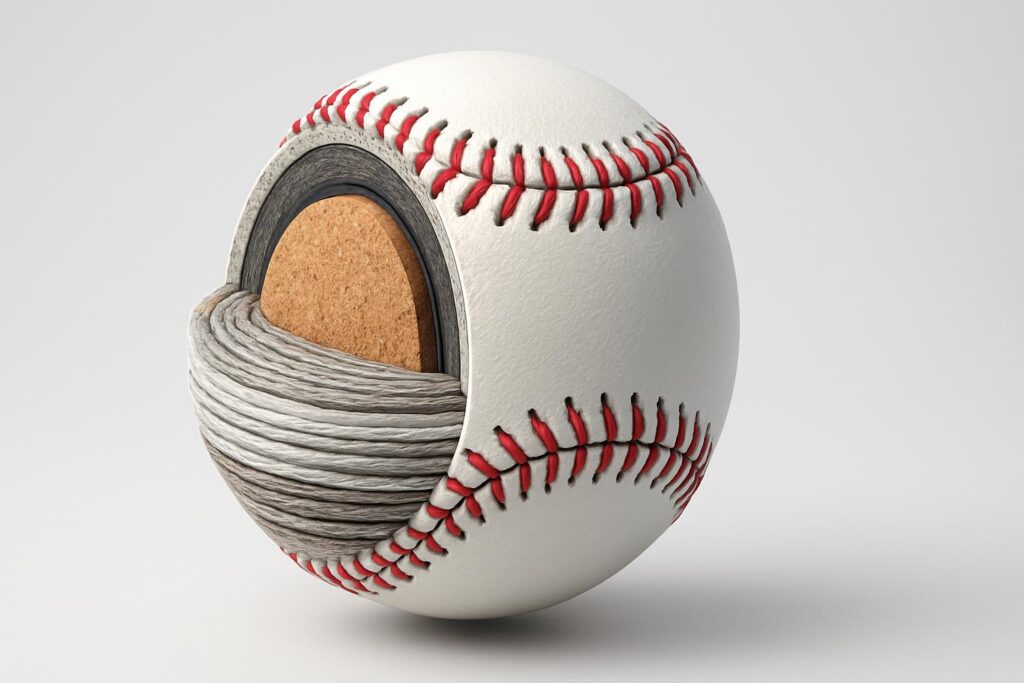
Inside the baseball is a small core called the pill. It typically blends cork and rubber for a mix of rebound and stability. Around the pill, manufacturers wrap several layers of yarn. The winding sequence uses wool and poly or cotton blends at different tensions. Tighter layers near the core lock in shape. Outer layers fine tune bounce and firmness. The cover is quality cowhide leather in two figure eight panels. Leather is strong, holds shape, and gives the tactile feedback pitchers and fielders need.
Seams and Stitches
The two leather panels are hand stitched with red thread in 108 double stitches. Seams do more than hold the cover. Their height and spacing give pitchers grip and create aerodynamic effects in flight. Those raised seams are why you can throw a sharp curve or a two seam sinker. They are also why a ball can ride or fall late even when released with similar speed and spin.
How a Baseball Is Made
From Pill to Finished Ball
Manufacturing follows a strict order. The pill is molded for consistent mass and diameter. Winding machines wrap layers of yarn under controlled tension. Each phase is measured for weight and diameter. Once the winding reaches its target thickness, workers hand apply two leather panels. Skilled stitchers close the seam with uniform tension through all 108 double stitches. The final ball is rolled to smooth high points, then ink stamped.
Quality Control
Every finished ball is tested for circumferential size, weight, roundness, seam height, and hardness. Balls that fall outside tolerance do not reach games. Professional leagues also check rebound performance across a set speed and compression range. This keeps live play inside narrow bounds so that skill, not equipment randomness, decides outcomes.
Why the Ball Feels Different Day to Day
Humidity, Temperature, and Altitude
Leather absorbs moisture. Yarn does too. In humid air, a baseball gains a little weight and becomes slightly less bouncy. In dry air, it loses moisture, gets a touch lighter, and can feel livelier off the bat. Temperature changes the elastic response of the core and leather. Cold conditions make the ball firmer and less springy. Warm conditions soften it and can add carry. Altitude affects air density. Thinner air at higher elevation reduces drag, so the same swing can send the ball farther and certain pitches move less. Dense air at sea level increases drag and can enhance break on some spins.
Mud, Rubbing, and Game Use
Brand new baseballs are glossy and slick. Before games, attendants apply a fine, natural rubbing mud. This removes gloss and adds a matte feel so pitchers can grip without adding illegal substances. During play, small scuffs and seam wear appear quickly. Even a single ground contact or foul tip can change the surface. Umpires remove balls that are too scuffed, too dirty, or otherwise compromised to keep play fair.
Humidors and Standardized Storage
To stabilize performance across parks and climates, MLB clubs use humidors. Balls are stored at controlled temperature and humidity, commonly around 70 degrees Fahrenheit and 57 percent relative humidity. This keeps leather moisture content steady, reduces extreme hot or cold effects, and narrows variation from April chill to August heat. For players, that consistency builds trust in grip and flight.
The Physics You Can Feel
Mass, Rebound, and Compression
How far a batted ball travels depends on swing speed, impact quality, and how the ball deforms and rebounds. The pill and yarn layers control compression. A ball that compresses and springs back efficiently transfers more energy to flight, within the legal limits. A colder, drier ball tends to return less energy. A warmer ball often rebounds a bit more. The allowed range keeps those changes modest but noticeable over a season.
Aerodynamics and Seams
Air flowing around a spinning baseball creates pressure differences that move the ball. This is why topspin drives a ball down and backspin helps it carry. Seams complicate the flow. Raised stitches trip the air and can shift the wake behind the ball. That can add or subtract movement beyond what spin alone would predict. The seam pattern and orientation during flight matter. This is apparent in two seam movement and in pitches that show late run or sink without extreme spin.
Spin, Direction, and Movement
Spin rate, spin axis, and seam presentation define pitch movement. A ball with pure backspin and a stable axis resists drop and appears to ride. A ball with topspin drops more sharply. Side spin produces lateral movement. When seams hit the airflow at different points around the ball, they modify the lift and drag forces. Experienced pitchers learn to repeat grips and releases that present the ball to the air the same way on every throw. This is advanced, but you can watch the outcome in real time when fastballs rise above bats, sinkers dive at the last moment, and sliders sweep.
How Pitchers Use the Ball
Four Seam and Two Seam Fastballs
A four seam fastball uses a grip across the horseshoe seam so that four seams cut the air on each revolution. This creates a stable backward spin and straight flight with perceived rise. A two seam fastball uses a grip along the seams. It often spins with a tilt that, along with seam effects, adds arm side run or sink. The difference is visible to hitters, and the grip feels different in the hand because of seam placement.
Breaking Balls
Curveballs rely on topspin. The pitcher pulls down on a seam with the middle or index finger to create forward rotation. Sliders blend sidespin and some topspin, thrown with a firm wrist and an off center grip that biases the axis. Cutters live between sliders and fastballs, using a fastball arm speed with a slight offset grip that tilts the spin enough to get late cut. Seams give tactile cues that help fingers locate the precise pressure points for these moves.
Changeups and Deception
Changeups reduce speed while maintaining arm action. Common grips are circle change with a circle formed by the index finger and thumb on the side of the ball, or a three finger grip that spreads the ball deeper in the hand. More surface contact and seam placement reduce velocity and alter spin, so the pitch arrives later and may fade arm side. Split finger fastballs wedge the ball between fingers to kill spin and gain drop. The ball design allows all these grips to be repeatable and precise.
Grip Legality and Care
Pitchers may use rosin for dry grip and the approved rubbing mud applied before the game. Foreign substances that tack up the ball are prohibited. Scuffing or cutting the cover is also illegal. These rules protect hitters and keep the contest focused on skill. If a ball becomes cut, waterlogged, or otherwise damaged, umpires replace it immediately.
What Hitters Should Know
Sweet Spot and Exit Speed
When the bat meets the ball on the sweet spot with a square, firm collision, the ball leaves with high exit speed. Exposed seam at the impact point can slightly change feel, but sweet spot contact overwhelms those small effects. The main factors are bat speed, centered contact, and a ball within normal temperature and humidity. A well stored ball performs predictably. A cold, damp ball tends to come off slower.
Launch Angle and Spin
Contact below center adds backspin and promotes carry. Contact above center adds topspin and reduces distance. The ball responds to these inputs consistently because its mass and surface are standardized. Hitters train to match swing plane to pitch height and type. They also learn to track seam blur out of the hand. Consistent seam presentation hints at pitch type and helps early decisions.
Reading the Ball Out of the Hand
Four seamers show a clean, tight seam blur. Two seamers show a shifting seam pattern. Sliders often show a red dot where a seam faces the batter during spin. Curveballs show a more looped seam motion. Knowing what these looks mean speeds recognition and improves swing choices. The design of the baseball delivers those cues.
Fielders and the Ball
Transfer and Throws
Infielders and outfielders prize a dry, clean ball. Seams give traction for quick transfers and strong throws. A ball with excess mud, moisture, or deep scuffs can slip or tail oddly in flight. That is why players often request a new ball after a fast skid on dirt or grass. Smooth, predictable surface equals confident defense.
Catchers and Handling
Catchers feel the subtle differences first. They receive every pitch, throw to bases, and block in the dirt. A slick ball on a cold night can be hard to manage. A properly rubbed, room temperature ball feels more secure. Catchers and umpires keep a steady cycle of balls moving to stay within comfort ranges through all nine innings.
When the Ball Gets Replaced
Umpires do not wait for a ball to be unusable. They pull balls after scuffs, after contact with netting or stands, or when dirt and grass embed into the cover. In a typical MLB game, dozens of baseballs are used. It is common for a single ball to face only a few pitches before it is replaced. This constant refresh protects fairness and safety.
Different Balls Across Levels
Youth and Safety Balls
Younger players often use reduced injury baseballs. These have softer cores and lower compression. They reduce sting on mishits and lower risk on errant throws. Seams are still present for skill development, but the overall feel is gentler. As players grow, leagues transition to standard balls so skills transfer to higher competition.
High School and College
High school and college baseballs follow strict size and weight specs similar to professional standards. Cover quality and seam height can vary by brand. Some balls have slightly raised seams that help pitchers at the amateur level generate movement. Others have flatter seams aimed at livelier flight. The league and conference set approved lists so teams compete on equal footing.
Practice and Training Balls
Teams use batting practice balls that are worn or purpose built for durability in cages. They may have synthetic covers to cope with heavy use. There are also colored seam balls and marked training balls that provide visual feedback for spin during drills. None of these are used in official games, but they help players build consistent feel for grip and release patterns.
Care, Storage, and Buying Tips
What to Look For
When buying baseballs, match the ball to your level and purpose. For youth practices, consider softer training models. For game play, choose balls approved by your league. Inspect seam height, cover quality, and roundness. A quality ball feels balanced in hand, with tight, even stitches and smooth leather without thin spots or wrinkles.
How to Store
Store baseballs indoors in a stable environment. Avoid heaters, car trunks, and damp basements. If you play often, keep a rotation of balls to even out wear. If you want game balls to feel consistent, keep them at room temperature and moderate humidity. A simple sealed container with a desiccant or humidity pack can help in very dry or very humid places.
When to Replace
Replace balls with torn covers, loose stitches, flattened panels, or deep cuts. Retire balls that pick up water and dry hard. For pitchers, even small surface changes can alter movement. For hitters, soft or out of round balls do not fly true. Keep a bucket for practice balls and protect a dozen better balls for games or bullpens.
Common Myths and Clear Facts
Is the Ball Juiced
Fans sometimes think a sudden surge in home runs means the ball changed. The ball is made within tight tolerances, and leagues monitor specifications. Conditions like temperature, humidity, and altitude can change carry more than most realize. Swing trends and pitcher usage also matter. Before blaming the ball, consider storage, weather, and style of play.
Do Red Stitches Change Flight by Color
Color does not change physics. Stitch height and placement do. Red stitches help visibility for players and fans. The raised seam is the part that influences airflow and grip. That is the element that affects movement.
Do Small Scuffs Matter
Small surface changes can matter a lot for pitchers. A scuffed area can catch air differently and add unpredictable movement. That is why umpires take out scuffed balls quickly. Fairness requires the ball’s surface to be as uniform as possible.
Bringing It All Together
Design Drives Play
The baseball’s size, mass, core, winding, and seams make the sport what it is. Pitchers rely on seam height and leather feel to command movement. Hitters rely on consistent rebound and surface to square pitches. Fielders rely on grip and reliable flight to make plays. Every element of the ball supports these needs.
Conditions Shape Outcomes
Humidity, temperature, altitude, and storage shift the ball’s behavior. Mud preparation and ball rotation keep those shifts within a manageable band. Humidors improve consistency park to park. When you watch a game, you can factor these into what you see on the field.
Knowledge Improves Skill
Learn how the ball responds to grip, spin, and environment. Match your pitch grips to seam feel, adjust hitting plans to flight tendencies, and keep your practice balls in good condition. Small, deliberate actions produce more predictable results. That is how you turn an ordinary object into a tool you control.
FAQ
Q: What are the official size and weight of a baseball?
A: A regulation baseball has a circumference between 9 and 9.25 inches and a weight between 5 and 5.25 ounces.
Q: Why do MLB teams use humidors to store baseballs?
A: Humidors keep balls at a stable temperature and humidity, commonly around 70 degrees Fahrenheit and 57 percent relative humidity, which standardizes grip and flight across parks and seasons.
Q: What do the 108 stitches do?
A: The 108 double stitches secure the leather cover, provide grip for pitchers and fielders, and create seam effects that influence the ball’s movement in flight.
Q: How long does a baseball stay in an MLB game?
A: Often only a few pitches, since umpires remove balls after scuffs, dirt, or contact with stands, and a typical game uses dozens of baseballs.
Q: How do temperature and altitude affect how far a ball travels?
A: Warm air and higher altitude reduce air density and can increase carry, while cold, dense air reduces rebound and drag, leading to shorter flight.