

We are reader supported. When you purchase through links on our site, we may earn an affiliate commission. Also, as an Amazon affiliate, we earn from qualifying purchases.
Every hit in football sends force through your shoulder pads and into the soft tissue of your lower back. A good back plate absorbs that energy, protects your kidneys and spine area, and adds comfort so you can play fast without fear. If you have ever landed awkwardly on your back, taken a blindside block, or felt helmet shots to the lower ribs, you already know why back plates matter. This guide ranks the 5 best football back plates for 2026, based on protection, comfort, fit, hardware quality, and value. All picks are available on Amazon and include options for both youth and adult players.
What a Football Back Plate Does and Who Needs One
A football back plate is a curved protective panel that attaches to the rear of your shoulder pads. It covers the lower back and kidney area, which shoulder pads often leave exposed when you reach, twist, or sprint. The back plate’s inner foam cushions blows, while the outer shell spreads impact across a wider area to reduce the sting from helmets, shoulders, and the ground.
Back plates are especially helpful for skill players who get tackled in space, returners who tend to take hits from behind, and quarterbacks who can be driven into the turf. Linemen and linebackers also benefit because high-speed contact and pileups put unpredictable stress on the lower back. In short, if you take contact from any angle, a back plate is smart insurance—and for many players it quickly becomes one of the most confidence-boosting parts of the kit.
How We Picked and Ranked for 2026
Our 2026 rankings focus on real-game priorities: impact damping, long-session comfort, and dependable fit. We compared shell stiffness, foam thickness and density, ventilation, hardware reliability, and ease of installation. We also looked at how each plate pairs with popular shoulder-pad brands, and whether youth and varsity versions are both available on Amazon. Finally, we weighed price against durability to find the best value for most players.
The 5 Best Back Plates for Football Players in 2026
1) Battle Sports Football Back Plate (Adult and Youth) – Best Overall Balance of Protection and Comfort

Battle Sports has built a strong reputation among skill players because their back plate blends hard-hitting protection with a light, flexible feel. The curved shell sits naturally against the lower back so it protects without digging into your ribs. Battle also prioritizes comfort; the inner padding is plush enough to soften helmet contact yet firm enough to keep the plate from bottoming out on heavy collisions.
Where Battle really shines is day-to-day usability. The plate is easy to mount on most modern shoulder pads, the hardware is straightforward, and the plate’s cut allows solid coverage without adding bulk. If you run a lot, you will appreciate that the plate doesn’t slap around or bounce excessively. The ventilation holes and fabric cover help manage sweat during hot practices, which matters for multi-hour sessions.
Style also plays a role for many athletes, and Battle offers a wide range of colorways and finishes that look great on the field. Whether you want classic black or bold chrome-inspired looks, you can usually find a version that matches your team colors and personal taste.
Fit and compatibility are excellent. The adult model works with the most common pad hole patterns, and the youth version scales down the size and weight so younger players aren’t overloaded. In short, Battle’s plate is the one most players can buy with confidence, knowing it will protect well and feel good from the first snap.
Potential drawbacks are minor. If you are a bigger varsity player who takes a lot of direct back impact, you might prefer an even stiffer shell like the Douglas plate below. But for the majority of running backs, receivers, defensive backs, quarterbacks, and hybrid linebackers, Battle is the most balanced choice.
2) Douglas D2 Series Back Plate (Adult and Youth) – Best for Maximum Protection and Serious Contact

If your priority is the most rugged protection you can strap on, the Douglas DP Series is a standout. Douglas is known for pro-level gear, and this plate has a firm outer shell that resists deformation on high-impact hits. The foam padding is dense and resilient, distributing force across the panel so your lower back and kidneys are shielded when the pile collapses or a defender lands on you.
This plate has a classic, no-nonsense build that gives confidence to power backs, linebackers, and linemen. The hardware typically uses durable grommets and solid attachment points that hold tight through full seasons. Once installed, the plate moves with you but doesn’t flap or chatter, and the curvature offers broad coverage without feeling overly wide.
Comfort is strong for such a protective plate. Some players notice the extra rigidity when they first put it on, but the contour and foam do a good job of preventing the edges from biting in during sprints or twists. For heavier athletes or anyone who expects to take repeated shots to the back, the added stiffness is reassuring.
There are adult and youth versions available on Amazon, and sizing is straightforward. If you are on the bubble between sizes, most players who prefer coverage go up for the adult model, while speed-focused athletes sometimes choose the smaller footprint if it fits their pad holes and back length.
The main tradeoff is weight and flexibility; the Douglas plate is built to be tough first, light second. For pure speed positions who rarely take back shots, this may be more plate than you need. But if you want a tank that lets you pop up after gnarly falls, the DP Series is hard to beat.
3) Schutt Varsity and Youth Back Plate – Best for Schutt Pads and All-Around Durability
Schutt’s back plate is a natural pick if you already wear Schutt shoulder pads. The hole spacing and contour align nicely, and the plate’s vertical adjustability makes it easy to find the sweet spot for your torso length. With Schutt-on-Schutt setups, you tend to get a seamless fit with minimal rattle, which makes everything feel more like one piece of gear rather than add-on hardware.
Protection is reliable. The shell is firm without being overly stiff, and the foam layer has enough body to take the sting out of helmet taps and awkward falls. It is a true “every-down” plate: light enough for receivers and defensive backs, sturdy enough for running backs and linebackers, and unobtrusive for quarterbacks.
Comfort and endurance are strengths. The cut is slightly slimmer than some power-focused plates, which helps with agility and quick-turn movements. Vent holes and breathable padding help reduce sweat buildup on humid days. If you practice long and hard, this plate rarely becomes a distraction.
While Schutt designs it with their pads in mind, it also mounts well to many non-Schutt shoulder pads. Installation is usually quick, and the plate’s shape sits cleanly under most jerseys and rib protectors. For players who want a dependable, no-drama plate that works across positions, this is a very safe choice.
If you are a large-framed varsity player who wants the stiffest possible protection, Douglas may feel more rugged. If you want maximum flair and color options, Battle has the edge. But for plug-and-play fit and balanced performance, Schutt is excellent.
4) Xenith Universal Back Plate – Best Low-Profile Comfort and Versatile Fit
Xenith’s Universal Back Plate is a comfort-first design that appeals to speed athletes and anyone who wants a lighter feel. The plate profile is slim and the foam is soft against the lower back, so you barely notice it under your jersey. The result is a back protector that does its job without reminding you it is there every time you sprint or rotate your hips.
Universal fit is a real advantage. The plate ships with hardware that pairs well with most shoulder pads, including non-Xenith models. The mounting process is beginner-friendly once you identify the correct holes on your shoulder pads, and you can fine-tune the height until the plate lines up with your lumbar curve.
In terms of protection, it sits in the balanced-to-light category. The shell is rigid enough for typical practice and game hits, and the foam absorbs routine contact and turf landings. If your position or style subjects you to high-speed back collisions every game, consider a beefier option. But for wide receivers, defensive backs, slot players, and agile linebackers who prioritize mobility, Xenith strikes a great comfort-to-protection ratio.
Another plus is breathability. The materials and cut make it easy to wear through summer camp and early-season heat. For younger players who are still building confidence with pads, the gentle feel of the Xenith plate can be less intimidating than a heavy, stiff shield.
5) CHAMPRO AirTech Back Plate – Best Budget-Friendly Pick That Still Delivers
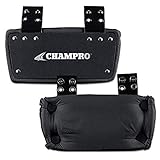
Not everyone needs premium features, and not every program has a pro-level budget. The CHAMPRO AirTech Back Plate delivers solid protection at a friendlier price, making it a smart pick for newcomers, multi-sport athletes, or backup gear. Despite its budget tag, the plate covers the essentials: a curved plastic shell, cushioning foam, and mounting hardware that fits many common pads.
The AirTech name speaks to its ventilated feel. The plate is perforated to help airflow and decrease sweat accumulation, which makes a difference during long practices. The overall profile is moderate—enough coverage for meaningful protection without a bulky footprint that can snag on jerseys.
Performance is very respectable for the cost. While the shell and foam are not as elevated as the premium plates above, the AirTech softens routine hits and reduces the sting of unplanned falls on your back. For players in youth and high-school programs who need a dependable plate without breaking the bank, CHAMPRO fulfills the brief.
Be realistic about expectations. If you are a heavy varsity player who takes frequent heavy contact to the back, you may outgrow this plate and want a Douglas or similarly rugged option. But for many players and parents looking for safe, sensible value, this is a very easy recommendation.
How to Choose the Right Back Plate for Your Body and Position
Think about your size, your position’s contact profile, and your comfort preferences. Bigger athletes or those who initiate lots of contact benefit from stiffer shells and denser foam. Skill players who rely on speed often prefer a lower-profile plate that flexes with the torso and stays quiet when running at top speed. If you are a quarterback, prioritize a plate that does not ride up or interfere with your throwing motion.
Look closely at coverage and contour. A taller plate shields more of the lower back, but you do not want it to push against the top of your pants or restrict your hip hinge. The best fit sits just above the waistline when you are standing and continues to cover the lower back when you bend. If you feel the bottom edge digging into your belt line, lower the attachment point or consider a slightly smaller plate.
Compatibility matters. Most modern plates include multiple holes and come with a set of screws, washers, and spacers. Verify that your shoulder pads have rear slots or holes for mounting. Schutt plates fit Schutt pads especially well; Xenith’s universal plates and Battle’s hardware adapt easily to many brands. If your pads are older, measure the hole spacing and compare with the product photos on Amazon.
Weight and ventilation contribute to comfort. Light, well-ventilated plates stay more comfortable during hot practices. Dense, less ventilated plates absorb impact better but can trap heat. Players with a history of back soreness often choose a bit more padding to dull repetitive shock during the season.
Sizing Guide: Adult vs. Youth and Finding Your Coverage
Back plates generally come in adult and youth sizes. Youth models are shorter and narrower to match smaller torso lengths and shoulder-pad backs. If you are a younger player or have a short torso, a youth plate prevents the bottom edge from hitting your waistband. Taller high-schoolers and adults usually choose the adult size for fuller coverage.
When in doubt, check the product’s listed dimensions on Amazon. Measure from the bottom edge of your shoulder pads to your belt line. If the plate’s height is longer than that measurement, you might need to mount it higher or choose a shorter plate. Most plates allow you to select one of two or three mounting heights, which offers wiggle room to fine-tune your coverage without changing sizes.
Installation Tips for a Secure, Rattle-Free Setup
Install the back plate with your pads on a flat surface and good lighting so you can easily see the holes and hardware. Identify the correct mounting holes on the back of your pads. Many pads have multiple rows; start with the middle-height option. Thread the bolts from the outside-in, add washers on the inside, and secure with locknuts. Do not overtighten to the point of crushing the plastic; snug plus a quarter turn usually holds well.
Put your shoulder pads on and clip your straps as you would for practice. If the plate sits too high and exposes your lower back when you bend, drop to a lower hole. If the plate touches your belt or pants while standing, move to a higher hole. Your goal is full coverage without riding or clacking against your equipment.
After your first practice, recheck the hardware. New hardware sometimes settles and needs a tiny retighten. If you notice rattling, add a washer or a small piece of dense foam between the plate and pad back to quiet it.
Care and Maintenance to Extend Your Plate’s Life
Back plates are low maintenance, but a few habits keep them in top shape. After games and practices, wipe the outer shell clean with a damp cloth to remove dirt and sweat. Let the foam padding air-dry fully before storing your pads to prevent odor and breakdown. Every few weeks, check the screws and nuts; vibrations can loosen them over time. If your plate ships with extra hardware, keep it in your gear bag for quick fixes on the sideline.
Inspect for cracks after hard falls. Small hairline cracks in plastic can grow under repeated impact. If you find structural damage, replace the plate promptly. Foam that has permanently flattened or torn should also be replaced because it will not absorb shock as designed.
Rules, Safety, and What to Expect
Back plates are widely accepted at youth, high-school, and college levels. Always keep the plate fully covered by your jersey to meet uniform standards and to prevent the plate edge from catching on contact. Pairing a back plate with a rib protector can improve overall torso protection; just ensure both pieces fit comfortably together and do not restrict breathing or rotation.
Remember that no gear can eliminate all injury risk. A quality back plate reduces the severity of routine impacts and helps you bounce back faster after awkward landings. Combined with smart tackling, proper falling technique, and strong core training, it is one of the best investments you can make for season-long durability.
Which Back Plate Should You Buy? Position-Based Recommendations
If you are a running back or linebacker who sees constant traffic and heavy hits, the Douglas DP Series offers the stoutest feel and impact resistance. If you want a balanced option that works for nearly everyone with great comfort and easy installation, the Battle Sports Back Plate is the most universally satisfying choice. Schutt’s plate is an excellent fit-first pick, especially if you wear Schutt shoulder pads already, while Xenith’s Universal plate is ideal for speed athletes who prize a light, low-profile feel. If you are budget-conscious or buying for a fast-growing youth player, CHAMPRO’s AirTech delivers protection at a very approachable price.
Frequently Asked Questions
Do back plates fit all shoulder pads?
Most modern plates include multiple mounting holes and ship with hardware that fits a wide range of shoulder pads. If you use a less common pad or an older model, compare hole spacing before you buy. Schutt-to-Schutt and Xenith’s universal solutions are especially easy fits, and Battle’s hardware is versatile.
How low should a back plate sit?
When standing, the bottom edge should sit just above your waistline. When you bend forward or tuck to take a hit, your lower back should remain covered. If it hits your belt or pants while upright, it is mounted too low. If it rides high and exposes your lower back when you bend, drop it a notch.
Is a stiffer plate always better?
Not always. Stiffer plates like the Douglas DP Series are great for heavy contact, but lighter, more flexible plates like Xenith or Battle can feel better for speed positions and players who value mobility. Choose based on your size, position, and how much back contact you typically take.
Can youth players use adult back plates?
Some taller youth athletes can, but most should choose youth-specific plates for correct coverage and comfort. Adult plates are longer and heavier, which can cause interference at the waist and reduce mobility for smaller frames.
Do I need a back plate if I already have a rib protector?
A rib protector focuses on the sides and front. A back plate shields the lower back and kidney area. Many players wear both for complete 360-degree torso coverage, especially in positions with high-risk contact from multiple angles.
Final Verdict
If you want the easiest recommendation for most players in 2026, choose the Battle Sports Football Back Plate. It nails the balance of protection, comfort, and universal fit, with color options that make it fun to wear. For maximum protection on heavy contact, go with the Douglas DP Series. If you wear Schutt pads and want a smooth, dependable fit, Schutt’s back plate is a strong match. For speed-first athletes seeking a barely-there feel, the Xenith Universal plate is a top pick. And if budget is your key concern, CHAMPRO’s AirTech delivers reliable coverage at a friendly price.
A good back plate lets you move freely, stay confident through traffic, and walk away from awkward falls with a shrug instead of a wince. Pick the plate that matches your body and role, install it carefully, and train with it until it feels like part of you. Your lower back will thank you in the fourth quarter.